
Today’s customers expect a seamless experience when engaging with a business. When they move from a text conversation to email or a phone call with an agent, they expect their context to carry over seamlessly without having to repeat themselves. Every time a detail is dropped or a question is asked again, it becomes a point of friction that erodes the customer’s patience and may even affect their willingness to engage with the business in the future.
A modern omnichannel messaging strategy can turn these potential points of failure into opportunities to build stronger relationships with customers and prospects, foster loyalty and trust, and drive further engagement. Omnichannel messaging bridges the gaps between communication channels, making it easier to share information from one channel to another without losing anything. This consistency can help deliver a more cohesive communications experience, one where the recipient feels as though the business really knows them and not only understands but also anticipates their wants and needs.
But where does Rich Communication Services (RCS) fit into an omnichannel messaging strategy? Let’s explore what RCS messaging is, how it can elevate omnichannel marketing, and some best practices to help you take advantage of this highly engaging form of messaging.

What Is RCS Messaging and Why Does It Matter in Omnichannel Marketing?
RCS messaging is a modern standard for mobile messaging that allows you to send dynamic and personalized rich-media messages directly to customers. Unlike Short Message Services (SMS) and Multimedia Messaging Services (MMS), RCS supports high-resolution media up to 100 MB, texts up to 3,072 characters, and custom-branded chats. The technology also supports communications over the internet, read and delivery receipts, location sharing, message encryption, and a variety of media types, including images, videos, audio, GIFs, and more.
The advantages of RCS messaging can benefit omnichannel marketing in multiple ways. For example, the ability to share longer messages with rich media means you can enhance your visual storytelling and deliver a more app-like experience through texting without requiring recipients to download anything (they can also opt in and out as desired). This can help cultivate a more immersive chat experience, and with support for message reactions, typing indicators, and read/delivery receipts, it can make conversations feel more personalized and one-on-one.
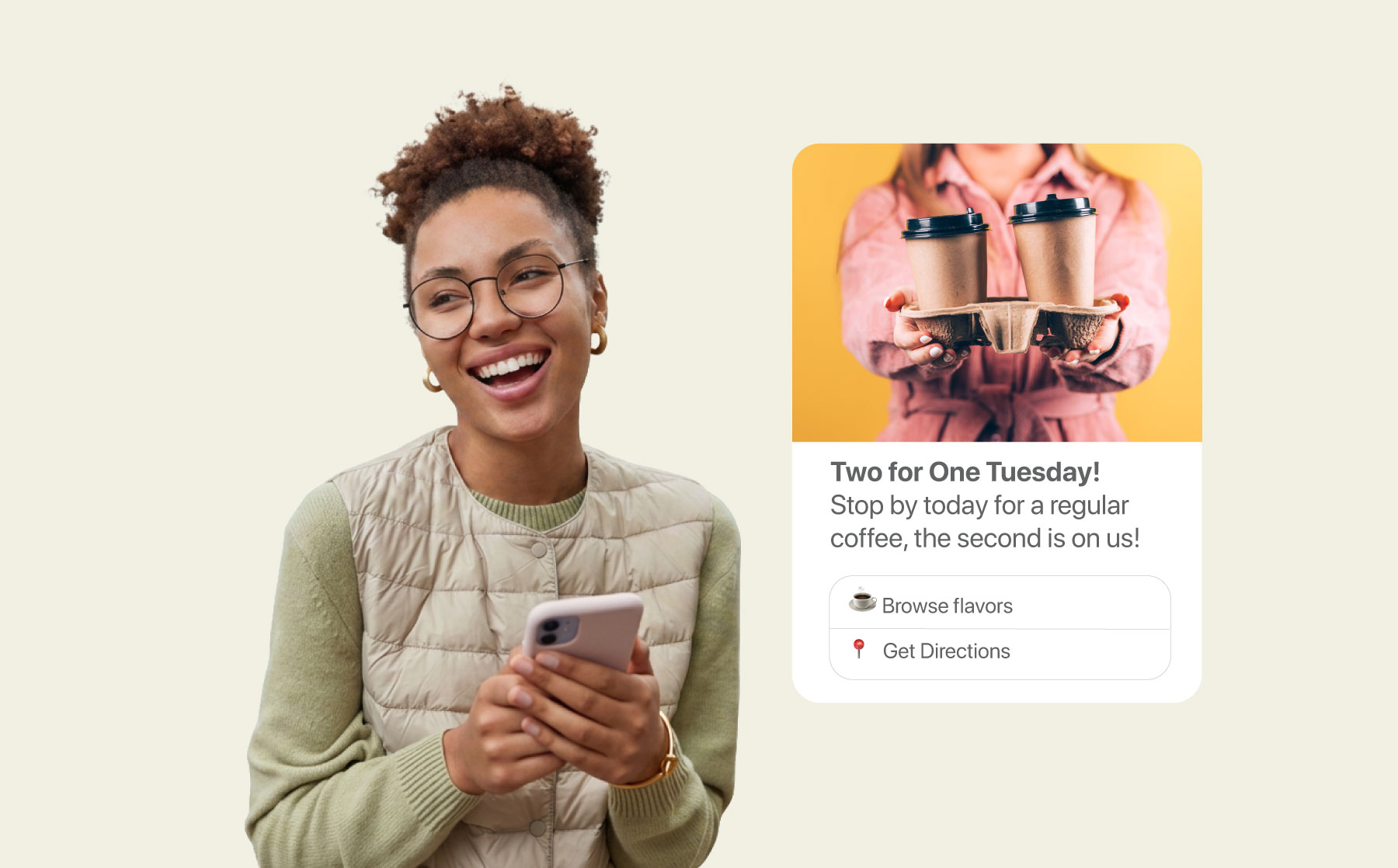
The flexibility and customizability of RCS messaging can also deliver a more seamless cross-app experience. With RCS, you can send messages that include map or location information based on GPS navigation, CTAs with actionable buttons that open into your brand’s browser experience, and links that can drive to other apps without losing any data between touchpoints. This can help deliver more timely and relevant messages and curate more valuable promotions, which can drive higher conversion rates.
For omnichannel marketing, RCS can be a powerful differentiator that helps establish your brand’s legitimacy, enhances the quality of your marketing efforts, strengthens communication, and bridges the gap between channels.
Where RCS Fits in a Modern Messaging Strategy
RCS offers unique advantages over SMS and MMS, but should it replace them entirely? And if not, where does it fit in a broader messaging strategy?
RCS does not need to replace SMS or MMS; it can work in concert with them. The purpose of an omnichannel messaging strategy is in the prefix, “omni,” which means “all.” In other words, you need all the bases covered in your strategy, including support for every messaging channel. By combining the advantages of RCS, SMS, and MMS, you can provide better coverage across the customer journey, so no touchpoint is overlooked or unattended, and you can offer better, more cohesive services to the customer.
What does this look like in practice? Imagine this: Your marketing team is preparing an SMS re-engagement campaign targeting prospects who have disengaged and customers who have lapsed. The first SMS message you send reads something like, “We’ve missed you! Check out our latest product launches and see what we’ve been up to.”
As an SMS message, it’s not that exciting, but it might pique the recipient’s interest and get them to re-engage. However, with an RCS agent, you can enhance the message with more dynamic content, such as a carousel with high-quality images of your newest products, complete with easy-to-digest descriptions and branded visuals. You can even use RCS to send a customizable CTA button, enabling the recipient to simply click and take action. The personalized messaging, rich media, and interactive features of RCS can enhance the impact of your SMS marketing campaign and increase the likelihood of re-engagement.
This is just one example of how RCS can support omnichannel messaging, but the use cases are many. When designing your messaging strategy, consider all the opportunities where RCS can work in kind with SMS and MMS to drive further interaction and engagement.

How RCS Supports Customer Journey Orchestration
Customer journey orchestration is the process of coordinating a seamless communications experience, where every touchpoint leads to the next in a way that feels natural for the customer. The interactivity of RCS is key to maintaining the momentum of the customer journey and providing the connective thread between messaging channels.
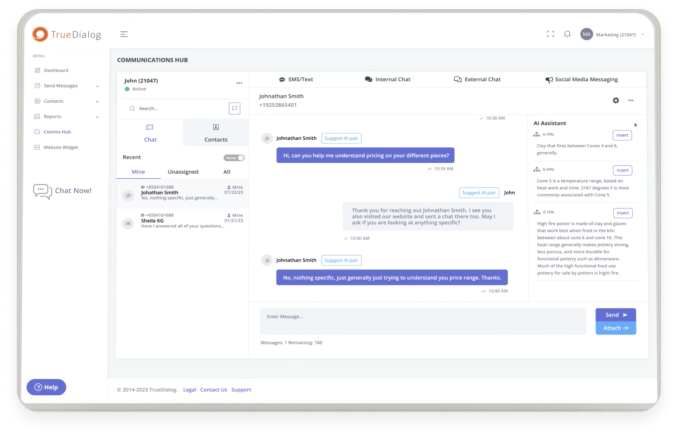
Given how complex customer journeys can become, managing customer journey orchestration may feel intimidating. However, modern tools like the TrueDialog RCS composer can help. For example, the TrueDialog RCS composer enables you to plan campaigns with multimedia content, set triggers to deliver timely notifications or relevant brand assets, and preview messages to experience what it’s like to be in your customers’ shoes. The TrueDialog RCS composer is also intuitively designed with a user-friendly interface, so marketers can use it without having to loop in developers. This can go a long way toward simplifying orchestration and delivering engaging messaging experiences with customized buttons and rich content.
RCS also supports customer journey orchestration by falling back to SMS or MMS if RCS isn’t supported on a recipient’s device. In the TrueDialog RCS composer, you can edit the fallback text directly, ensuring consistent communication.
How RCS Can Strengthen Other Marketing Channels
When comparing RCS vs. SMS, RCS has a distinct advantage in delivery speed. SMS messages typically have long codes and strict messages-per-second caps that throttle delivery, while RCS provides high throughput and uses IP delivery, which means fewer volume limits and fast delivery at scale. This means RCS can quickly send messages to customers or prospects to bridge the gap between marketing channels before their interest wanes.
Capitalizing on timeliness and relevancy can help create a more effective marketing funnel, drive conversions, and secure sales. For example, say you send a promotional notification from an app. The customer doesn’t see the notification or dismisses it by mistake. You can deliver a follow-up RCS message with a CTA button to re-engage the customer and provide an easy way for them to go straight to their cart to redeem the promotion before it ends.
RCS can also work well with social media ads. For instance, if a customer clicks one of your paid ads on Instagram, you can set it up to automatically trigger an RCS message that sends a discount code to the customer. If they were on the fence, a 10% discount delivered straight to them during their decision-making phase could convince them to buy.
You can even integrate RCS messaging into your content marketing strategy. If someone downloads a gated asset on your blog or attends one of your webinars, you can use RCS to follow up with some recommendations of what to read or listen to next. This can help keep them going down the content marketing funnel, and when the time comes, you can send them directly to a landing page, a product page, a demo page, or even a scheduling tool to set up a meeting with sales.
Once again, these are just a few examples of how RCS can support your other marketing channels. When used strategically, it can be the glue that strengthens your marketing campaigns, creates a more cohesive customer journey, and seamlessly connects all marketing channels in a way that feels natural and purposeful.
Best Practices for Building an Effective RCS Messaging Strategy

Integrating RCS into your messaging strategy comes with its own set of challenges. To avoid common pitfalls and build a strong foundation for RCS messaging success, follow these best practices:
-
Map out the customer journey.
Before designing your RCS messaging strategy, take the time to map out your customer journey exhaustively. It’s important to understand the many paths your customers can take, the touchpoints along those paths, and how to nurture the customer at every step of your product or service lifecycle, including the post-sale experience.
-
Define RCS message types.
Not all RCS messages are the same; you can use different types to serve specific needs. For example, reminders and notifications can be short, basic RCS messages that just need to be infused with some verified branding. More complex RCS messages can support product marketing campaigns with product carousels or promotional events with CTA buttons to RSVP or book an appointment. You can even designate a more conversational format for RCS messages to support customer service interactions. Bucketing messages into categories and establishing goals for each can help keep your strategy organized and targeted to specific needs.
-
Identify where RCS messages can fill gaps and support initiatives.
Once you have your customer journey mapped out and your message types defined, it’s time to identify where messages can bridge communications channels, fill gaps left between touchpoints, strengthen marketing campaigns, and enhance the customer experience. This step is key to building your RCS messaging strategy and elevating your omnichannel marketing efforts. It can also help identify where technical integrations and API connections are needed.
-
Create SMS/MMS fallbacks.
Since RCS support is not universal across devices, you must establish a fallback strategy to ensure communications hit their mark. Create SMS/MMS fallbacks for every touchpoint and define what triggers a fallback message. Make sure the system is set up to always check for delivery receipts before sending a fallback message.
-
Track and analyze performance.
Set up your RCS messaging with engagement indicators to track how users interact with messages and measure performance. As you gather performance data, look for trends, analyze patterns, and identify areas of improvement. Then, bring these insights back to the drawing board and create a plan of action to refine your messaging strategy and develop more targeted and effective tactics.
Where RCS Adds the Most Value in an Omnichannel Strategy
RCS messaging provides many benefits, but its impact can be felt most in three areas: brand verification, communications coverage, and customer engagement.
Mobile marketing messaging is often fraught with distrust, largely due to SMS spam and phishing attacks. RCS allows you to overcome that barrier by infusing messages with branding and trust signals that bolster confidence. This can have a measurable impact on clickthrough rates and encourage interactivity.
Since RCS can be used alongside other types of messaging, such as SMS and MMS, it can help provide more comprehensive market coverage. While not all recipients will have devices that support RCS, the ability to fall back to SMS or MMS can ensure your messaging always gets through to the right person. Plus, RCS serves as a great way to bridge the gap between channels, forming a safety net you can rely on to maintain momentum and ensure no customer gets dropped between touchpoints.
And finally, RCS messaging can foster engagement and encourage action. For example, RCS messages that contain rich media, like carousels, allow prospects and clients to browse products or pricing plans directly in a conversation thread without leaving to open an app, making it easier to make a decision on the spot. Instant reminders and notifications with quick and simple CTA buttons also simplify action and capitalize on interest before it falls off. The speed and quality of RCS messages are key to moving prospects through the marketing funnel, transferring them to other communications channels without losing anything in between, and driving conversions with trust, confidence, and convenience.
Getting Started with RCS Messaging
Integrating RCS into your omnichannel messaging strategy can help refine your prospect and customer experience by adding a layer of legitimacy and trust to your brand and smoothing out the bumps between communication channels. Recipients will be able to jump from a high-quality, app-like experience on mobile to wherever you want them to go next, whether that’s a signup page for a live event, your blog to learn more about a product, or the web store to make a purchase.
RCS allows you to embrace a new level of interactivity and engagement, and by taking advantage of the technology and its many benefits, you can transform potential points of friction in the customer journey into opportunities to drive conversions and foster loyalty.
Curious to see how RCS messaging can fit into your marketing workflow and elevate your omnichannel strategy? Request a Demo.
FAQs
What is RCS messaging in an omnichannel marketing strategy?
RCS messaging in omnichannel marketing can fill the gaps between communications channels and elevate messaging with more interactive and visual elements. When comparing RCS vs. MMS or SMS, its advantages are distinct: RCS allows you to infuse messaging with branded visuals, rich media, and app-like capabilities without requiring users to download anything. Marketers can use the technology to send more timely, relevant, and dynamic messages to prospects and customers, build more cohesive and interconnected marketing campaigns that encourage action, and ultimately, drive more conversions.
When should businesses use RCS instead of SMS or MMS?
Businesses should use RCS instead of SMS or MMS when they want to send longer messages with rich media over an internet connection. RCS supports high-resolution media up to 100 MB, texts up to 3,072 characters, custom-branded chats, read and delivery receipts, location sharing, message encryption, and a variety of media types, including images, videos, audio, GIFs, and more.
That said, RCS doesn’t need to replace SMS or MMS messaging; you can use RCS in conjunction with SMS and MMS. For example, if a recipient’s device doesn’t support RCS, you can set it up to automatically fall back to SMS or MMS. Each messaging type serves its own unique purpose, and using all three can provide better communications coverage.
How does SMS fallback work in an RCS campaign?
If a recipient’s device doesn’t support RCS messaging, you can create a fallback message that automatically delivers via SMS instead. In a marketing campaign, SMS fallback can help ensure consistent communication and uninterrupted reach without sacrificing the advanced messaging capabilities of RCS.
RCS is available on both Android and iPhone devices, but older devices may not be compatible with the messaging protocol, and some smaller carriers may not support it. SMS is still the universal standard, which is why RCS is typically set to fall back to SMS.
How can RCS support promotions, announcements, and website traffic?
RCS can support high-impact marketing campaigns through more engaging mobile experiences. For example, you can share timely announcements that push directly to recipients’ devices and relevant promotions based on their location via RCS messaging tools. These messages can contain branded buttons, CTAs, and other interactive elements that encourage action and drive traffic to your website. RCS can also bridge communications channels, so each customer touchpoint feeds into another, creating a more cohesive and, thus, more effective marketing funnel.