

Those of us who remember the dark days of T9 and pay-per-message plans know how quickly things can change in the world of text messaging. And today, we’re on the precipice of an even bigger evolution.
Over the past few years, OTT apps like iMessage and WhatsApp ushered in an era of richer, more immersive messaging that feels lightyears away from the days of a “c u l8r” text. And now Rich Communication Services (RCS) offers users a similarly slick and modern experience directly within their native texting app.
In short, consumer expectations have shifted dramatically, and there’s no going back.
The next text revolution is here, and the way your brand responds in the coming months will have a tremendous impact on how well your brand can engage audiences via text in the year ahead. To help you prepare, we’re covering a few of our top predictions for RCS and giving you a glimpse of what’s on the horizon.
Why 2027 Could Be A Turning Point for RCS Business Messaging
RCS isn’t new. (In fact, it’s been widely available for more than a decade across the pond.) So, why is 2027 projected to be such a banner year for this technology?
It all boils down to the convergence of three key trends:
Consumer Expectations Have Evolved A Lot
Years of using OTT instant messaging applications have shown consumers what’s possible. The idea of sharing a high-definition video, using message “reactions,” and knowing when your recipient is typing a response isn’t exactly novel. Today, users expect these things.
Businesses Have Discovered the Power of RCS
Since Apple added RCS support for iOS in 2024 (and significantly advanced RCS adoption), businesses have begun to uncover the power of RCS for business (RBM). But, aside from a few early adopters, we didn’t see a massive wave of interest until this year. Now that we have reached the halfway point of 2026, organizations of all sizes are wondering how to prepare for greater success in 2027.
Brands are Under Pressure to Rebuild Trust
Thanks to an explosion of text-based spam and fraud, as well as broader concerns about cybersecurity and the use of personal data, earning audience trust has become an uphill battle. Organizations are looking for new ways to regain consumer confidence, and RCS makes that easier. (At least on the text messaging front.) Having the ability to display trust signals, such as your brand logo, colors, and a verification checkmark (which proves mobile carriers have given your organization their seal of approval), helps your audience feel more comfortable engaging with your communications.

Prediction 1: RCS Reach Will Expand as Carrier and Device Support Improves
For years, the biggest obstacles to RCS’s mass adoption (at least in North America) were device compatibility and carrier support. Even would-be early-adopter brands hesitated to invest in RBM because RCS messaging experiences varied so much across carriers and devices, and all the fragmentation made it just a little too risky.
Fortunately, those hurdles have largely disappeared. While some older devices and smaller carriers still don’t support RCS, adoption has spread like wildfire over the past couple of years, and RCS is no longer a niche channel reserved for a select few. And while SMS is still the universal protocol, RCS isn’t quite as far behind. And as reach continues to grow, there are fewer reasons to hold out and plenty of benefits for brands that opt to dive in.
Moreover, you don’t have to abandon SMS to leverage RCS. With SMS fallback, you can deliver more modern and engaging messaging experiences to contacts who can receive RCS, and those who don’t have RCS-compatible devices or carriers will receive an SMS version instead. (Our recent blog post Will RCS Replace SMS delves into this further.)
Prediction 2: Verified Brand Messaging Will Matter More
According to FTC data, consumers lost a whopping $470 million to text message scams in 2024 alone. And texts impersonating banks, package delivery services, job recruiters, and toll collectors are among the most popular. Unfortunately, despite regulators and mobile carriers cracking down on fraudulent behavior, SMS scams and other text-based cybercrimes continue to grow.
Meanwhile, consumers are becoming more wary of text messages from unfamiliar numbers and more concerned about how organizations are using their personal data. And, as a brand, it’s up to you to build trust with your audience and prove your messages (and identity) are legitimate.
One distinct advantage of RCS is that it makes it much easier for organizations to prove their identity and earn recipients’ confidence. Verified sender profiles allow you to display your business name, logo, and brand colors in the messaging experience and include a check mark indicating your brand has been verified by mobile carriers. (Similar to the blue check mark we’re all accustomed to seeing on a brand’s social media profiles.)
Having these trust signals will undoubtedly set brands apart from organizations without verification and become increasingly important as consumers become more skeptical of messages from numbers they don’t recognize.
Prediction 3: RCS Will Grow Fast, But SMS Will Still Matter
Some brands treat RCS as a full replacement for SMS, which can be dangerous. Cutting out SMS often means curbing your reach.
Although RCS adoption has grown significantly, SMS is still the universal messaging protocol for a reason: it’s available on nearly every device and supported by every carrier on the planet. Plus, unlike RCS, SMS is transmitted via a cellular signal, so recipients can still receive your messages even if they don’t have reliable internet access.
The bottom line is that SMS still has a place in marketing and communications in 2027 (and beyond). And that’s why, instead of approaching messaging as RCS vs. SMS, we recommend a hybrid strategy.
As we mentioned above, setting up an SMS fallback via your enterprise texting solution ensures that if a recipient can’t receive a message in RCS format, they’ll receive it as a standard text message. And while the message won’t include the rich media or interactive elements available in an RCS experience, it will help ensure no one is left out of the loop.
Prediction 4: Rich Cards, Buttons, and Carousels Will Become More Common
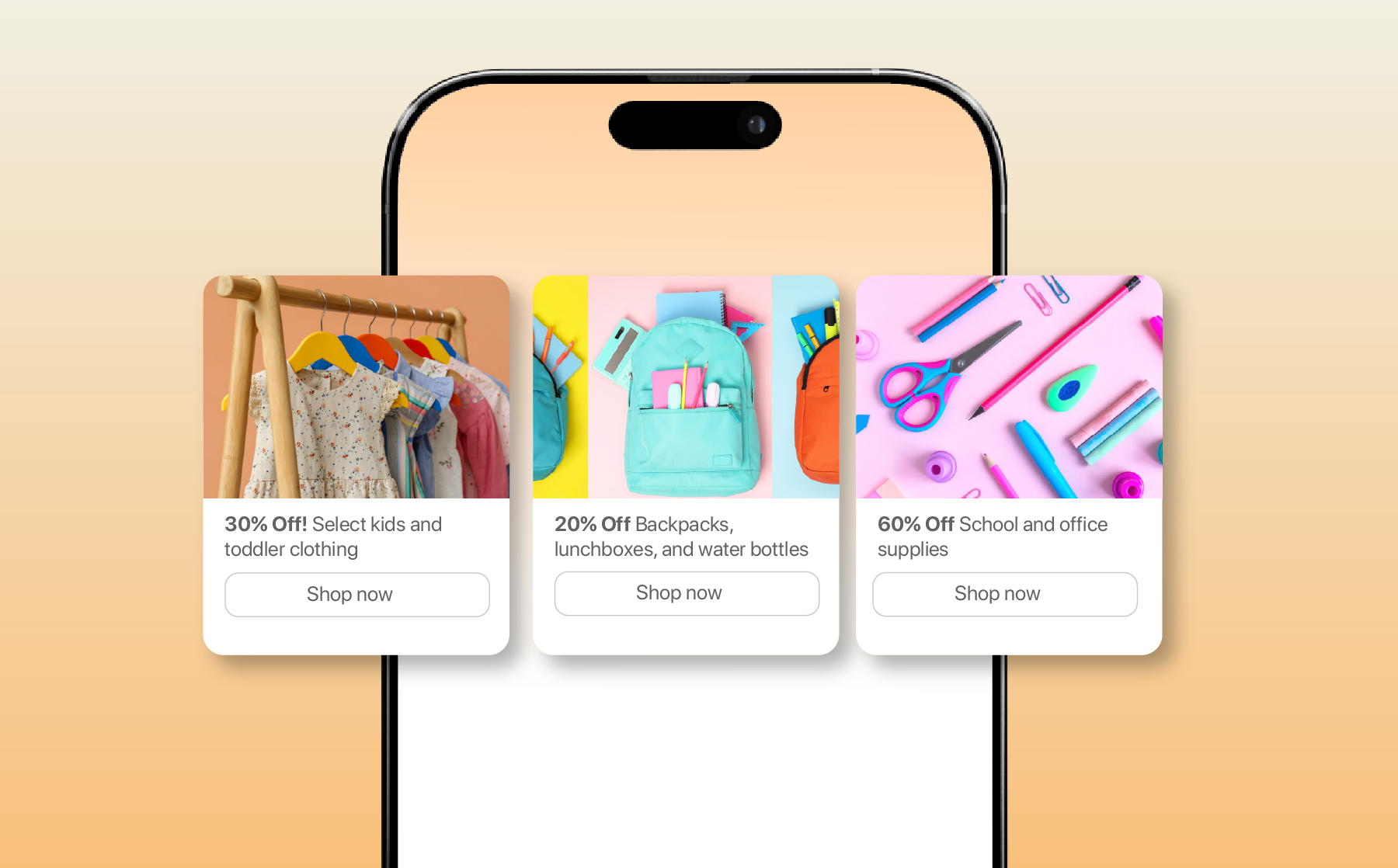
In the past, brands sent texts. But today, you can deliver experiences.
Instead of plain-text messages with strict character limits, RCS enables richer, more visually immersive messaging, and that can make a world of difference when it comes to standing out from the crowd and keeping your audience engaged. And we predict that we’ll see many more brands leveraging these three visual features:
-
-
Rich cards
A rich card is a media-rich message that can include images, videos, quick replies, and call-to-action (CTA) buttons. It’s a great way to showcase a new product or service, or announce a special offer. It looks a lot like a concise, well-designed marketing email, but delivered directly to your audience’s text message inbox.
-
Customized buttons
With RCS, you can customize the copy and appearance of your CTAs and quick reply buttons (i.e., tappable buttons that appear at the bottom of a conversation with a pre-written reply that recipients can choose instead of typing their own message).
-
Carousels
A carousel is a set of multiple rich cards, delivered as a single, horizontally scrollable unit. Brands often use this feature to highlight key benefits of a new product or share a series of related products or services tailored to each recipient or segment’s unique needs or interests.
-
Prediction 5: AI and Automation Will Make RCS More Useful for Brands
2026 has been a banner year for AI, with many organizations finally moving from theoretical to practical application. It’s also been a year of learning as brands discover the limits of AI (and realize how crucial it is to keep humans at the center of their marketing and communications efforts).
In 2027, we expect that organizations will continue growing more adept at applying AI in sensible ways. And in messaging, that means using tools that streamline workflows and make it easier for marketing, service, and sales teams to deliver high-caliber experiences. Instead of relying on static campaigns and one-way alerts, brands can combine smart automations with RCS to create more dynamic and useful conversational experiences.
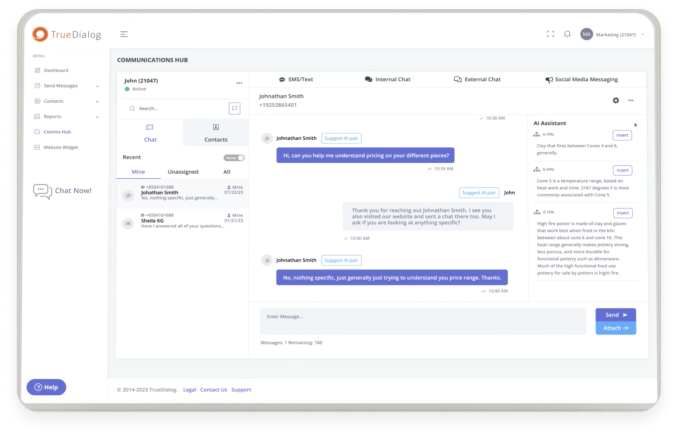
For example, TrueDialog equips brands with a library of AI-generated (and completely editable) responses that are custom-built to your business. This way, your team can respond quickly without taking time to type up individual replies. Additionally, by connecting the platform to your CRM and marketing automation tools, you can set up custom workflows that are triggered by predefined actions (such as a customer making an appointment or completing a purchase).
Prediction 6: More Brands Will Use RCS For High-Intent Customer Journeys
At first, most brands use RCS for awareness campaigns, such as announcing a new product or generating buzz around an event. However, as more businesses master RCS, we expect to see brands using it for more mid- to bottom-of-the-funnel experiences.
For example, a healthcare organization might leverage RCS to guide patients through booking their first appointment and completing intake forms, while a software company might create personalized experiences to onboard new users and nudge them to explore product upgrades. A university might use RCS campaigns to support prospective students throughout the application and enrollment process by delivering well-timed tips, resources, and deadline reminders.
And because RCS allows brands to include so many visual elements and personalize experiences, and is delivered via a channel people check countless times a day, it’s perfect for keeping audiences engaged through multi-step journeys. (Especially when compared to emails, which often get lost in crowded inboxes.)
Prediction 7: Performance Tracking Will Shape RCS Investment Decisions
One thing that likely won’t change in 2027 is the pressure on marketers to prove the business value of their efforts and stretch their budgets as far as they can. Prolonged economic uncertainty and rapidly changing consumer expectations mean brands are in a never-ending balancing act between investing in new tech and reducing their spend, and we don’t expect that to change anytime soon. Business leaders will undoubtedly become even more judicious about marketing channels and less likely to approve efforts that can’t be precisely measured.
Fortunately, RCS makes it easy to monitor performance and track ROI. Unlike with standard texting, brands gain insight into a wealth of engagement data, including opens, responses, conversions, and click-throughs. Plus, RCS allows marketers to track engagement with specific elements. For example, you’ll be able to see whether recipients scrolled through a carousel or how many people used your quick-reply buttons.
With this level of visibility, you can quickly identify what’s working and what’s not, and course-correct in real time. Armed with this information, you can continually optimize your campaigns to drive exactly the results you’d like to see and have the data points you need to defend your spend.
What Brands Should Do Now to Prepare For 2027
Without a crystal ball, it’s impossible to say exactly what’s in store in the year ahead. But as we assess the last several months and keep a finger on the pulse of emerging trends, we feel confident saying RCS will help brands boost engagement and overcome several of the challenges associated with reaching today’s ultra-busy, hyper-distracted audiences.
Here are a few things we recommend doing now to make sure you’re ready to hit the ground running with RCS in 2027:
Choose the Right RCS Provider
One factor that can make or break your RCS success is the platform you choose to manage your enterprise messaging efforts. Make sure the provider you select has plenty of experience supporting RCS for organizations in your industry, offers SMS fallback support, and integrates with the CRM and marketing automation tools already in your tech stack.
Apply to Be a Verified Sender ASAP
If you haven’t already done so, be sure to create and register your RCS Agent as soon as possible. This involves collecting documentation and information about your business, building your agent on your RCS provider’s platform, and submitting your profile for approval with the mobile carriers. Keep in mind that it can take 8 – 10 weeks to receive approval, so the sooner you get started, the better.
(If you’re not sure where to start, be sure to check out our comprehensive resource: Your Ultimate Guide to Getting Started with RCS.)
Explore, Experiment, and Optimize for Success
As with any new tech, RCS comes with a slight learning curve. (Though having an intuitive enterprise messaging platform can certainly help speed up the process.) So, it’s important that you dive in and get comfortable with its features and capabilities now. Explore what’s possible, test new ideas, and keep a close eye on performance metrics to identify what works so you can replicate it in future campaigns.
FAQs
Will RCS replace SMS by 2027?
No. RCS adoption has grown considerably, but SMS is still the universal protocol, and we don’t expect that to change in the year ahead. There’s a good chance that at least some portion of your audience uses a device or carrier that doesn’t support RCS. So, instead of choosing between RCS and SMS, we recommend a hybrid approach that uses SMS as a fallback.
How should brands prepare for RCS business messaging in 2027?
The best way brands can prepare is to find an enterprise messaging platform provider with extensive knowledge and experience in helping brands like yours send RCS messages. A great provider will equip you with the technology and guidance you need to build and launch your first RCS campaign, and the tools to continue building upon your success.
Is RCS worth investing in now if SMS still has a broader reach?
Yes! Even though SMS remains the universal standard, organizations that incorporate RCS into their strategy are poised to rapidly boost engagement and leapfrog the competition. As more consumers expect richer, more modern messaging experiences, the brands that master RCS today will have a clear advantage.