
Coupons have long been an effective strategy for driving purchases and brand engagement, and you don’t need a degree in consumer psychology to understand why. Who doesn’t love saving a little bit of cash?
But if you’re still not convinced, consider this: 93% of Americans used a coupon in the past year, according to Capital One Shopping, and 86% of online shoppers are more likely to try a new business when they receive a coupon.
Whether you want to entice new customers, nudge on-the-fence buyers towards a decision, or build your text subscriber lists (or all of the above), we’re sharing guidance on how to use text coupons to your advantage.
What Are Text Coupons?
Text message coupons are special discount offers delivered to a recipient’s text inbox via SMS (or RCS) via your mass texting service. Usually, they provide a percentage or fixed amount off a single product or purchase, free shipping, or exclusive early access to events (such as a ticket pre-sale), and are formatted as a code that users can enter during an online checkout or a barcode or QR code they can scan at the register.
Unlike other coupon formats (like paper coupons or email promo codes), text coupons live in a place where your contacts already spend a lot of time. In fact, nearly 94% of digital coupon users redeem their coupons with a smartphone, according to the Capital One Shopping resource linked above. (Likely because text coupons are delivered instantly on a channel most people check countless times per day.)
Making your coupons readily accessible helps drive the action you want to achieve.
How Text Coupons Work (Step-by-Step)
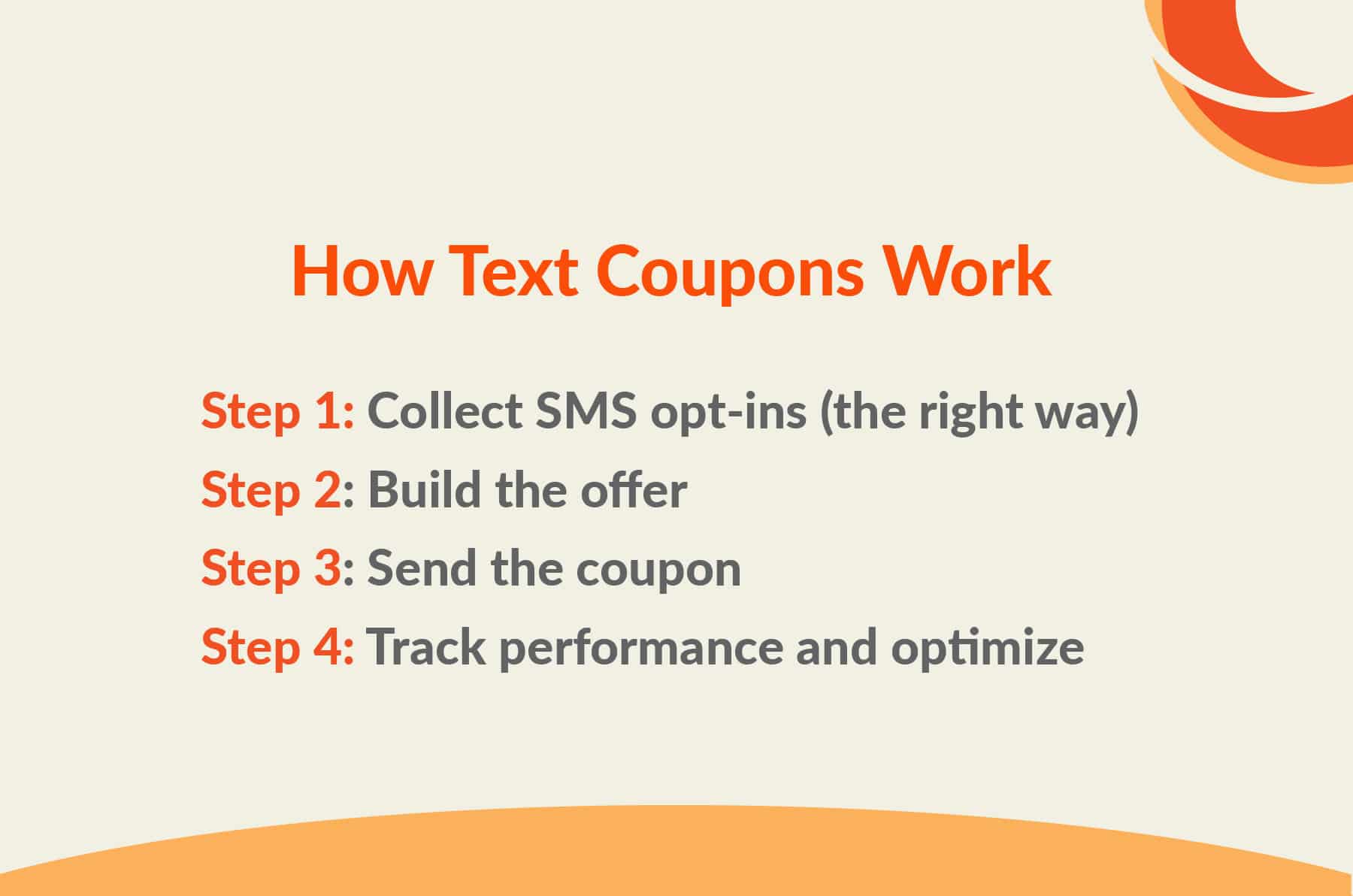
Here’s a helpful breakdown of how to send coupons by text message:
Step 1: Collect SMS opt-ins (the right way)
The first and arguably most important step in this process is gathering text message opt-ins. Since it’s against industry regulations to text contacts without their explicit consent, skipping this step can lead to legal trouble for your brand. Be sure to use proper methods, such as website forms or text-to-join campaigns, with all required disclosures. (Learn more about text marketing compliance here.)
(Note that offering a coupon in exchange for subscribing is also a great way to persuade your audience to sign up for texts.)
Step 2: Build the offer
Next, create a coupon that’s simple, high-value, and easy to redeem. For example, a sports team might offer fans a coupon code for 15% off an online merch purchase when they subscribe to texts. Or, for existing contacts, the organization might send a code for a reduced price on season passes.
Step 3: Send the coupon
Once you’re satisfied with your offer, deliver it via text and include concise copy and a clear call to action. If you’re offering the coupon in exchange for subscribing to texts, you might set up a workflow in your SMS marketing software to automatically deliver the code after the new subscriber completes the double opt-in process. If you’re sending a coupon to existing customers, you might plan it around key shopping moments or to re-engage inactive users.
Step 4: Track performance and optimize
After launching your coupon campaign, keep a close eye on relevant metrics, such as click-throughs, coupon redemption rates, and subscriber growth. Additionally, consider A/B testing different offers to determine which types of coupons are most likely to drive action.
Text Coupon Types and When to Use Each
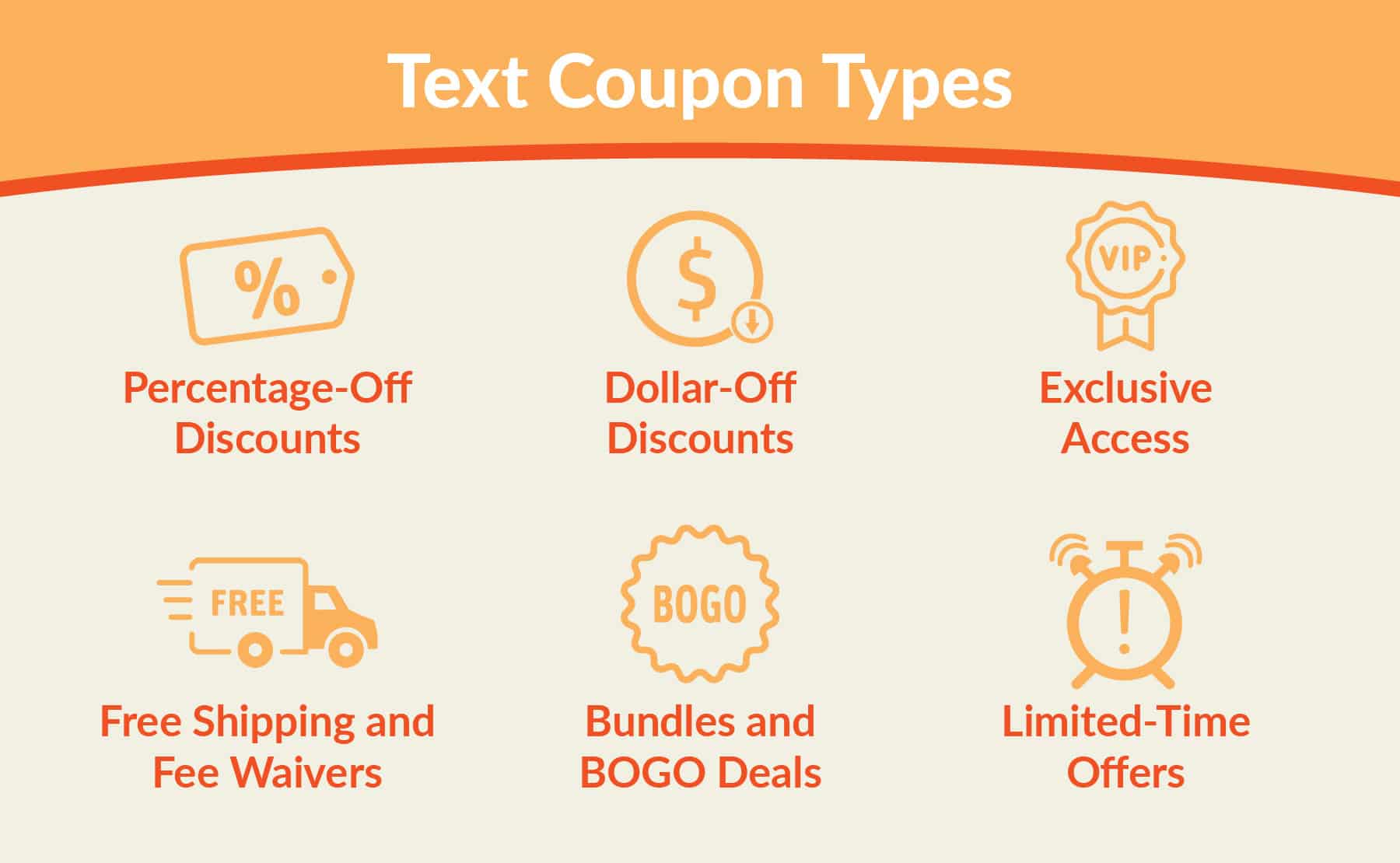
There are several different types of textable coupons your brand can use. Here’s a high-level overview of each, along with example scenarios when they might be most effective.
-
Percentage-Off Discounts
These flexible offers give recipients a set percentage off a purchase or one specific product, and are especially useful for encouraging activity during seasonal slumps or attracting new customers. (Example: “15% off your first purchase”)
-
Dollar-Off Discounts
Fixed discounts create clear value and can also boost order size. They’re particularly beneficial when you want customers to spend above a certain threshold. (Example: “$10 off $50”)
-
Free Shipping and Fee Waivers
Shipping and additional fees can often act as barriers, making would-be customers second-guess their decisions. Removing this obstacle can drive action, and making your coupon time-bound can be particularly motivating. (Example: “Application fees waived through Sunday”)
-
Bundles and BOGO Deals
Buy-one-get-one and bundles can drive higher order volumes and are an excellent option when you need to clear inventory or increase purchases on a given day. (Example: “Get a free parking pass with the purchase of any VIP ticket”)
-
Limited-Time Offers
If you need to create urgency and drive immediate action, flash offers can help do the trick. These kinds of coupons are useful during product launches or for same-day event purchases. (Example: “20% off tickets for today’s game”)
-
Exclusive Access
Special VIP offers can go a long way toward boosting loyalty and making your subscribers feel appreciated — especially when you want to increase retention or re-engage customers at risk of leaving. (Example: “Renew your membership and get 3 months free”)
Additionally, keep in mind that codes can be personalized for each subscriber or used generically for all recipients. Also, coupons can be single-use (meaning they can be applied to only one purchase or activity) or reusable (meaning recipients can use them unlimited times).
Best Practices for High-Performing Text Coupons
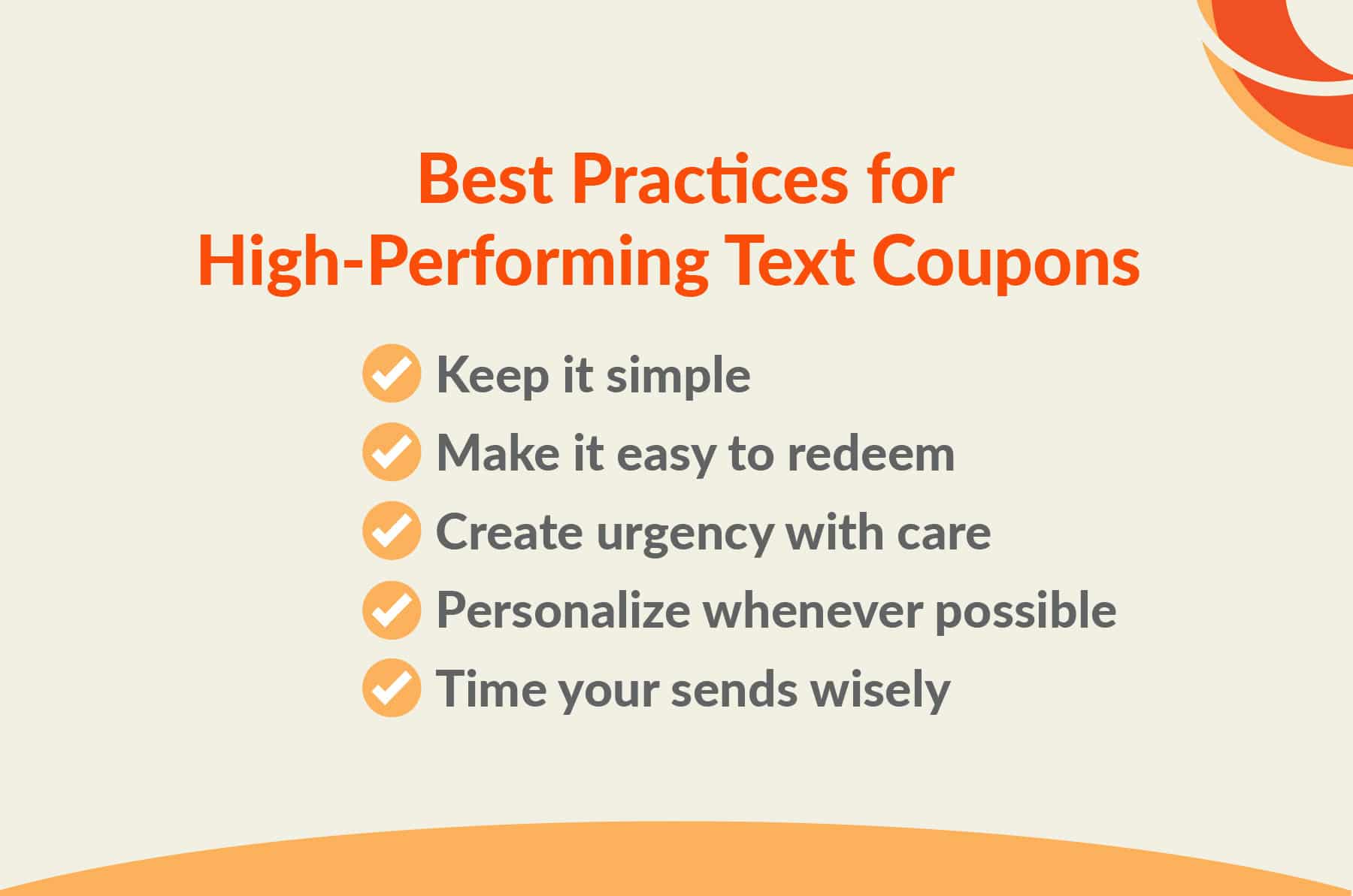
SMS coupon marketing can be a highly effective tool — but only when you get it right. Here are a few proven tips to help you drive the most success with your coupon campaigns.
Keep it simple
Don’t overcomplicate your text coupons with too many instructions or make recipients jump through too many hoops to enjoy the benefit. Your audience should understand the offer’s value and application at a glance and be able to redeem it in as few steps as possible.
Make it easy to redeem
The less friction, the more likely your audience is to actually use your offer. Short, easy-to-remember promo codes, clickable links, and scannable QR codes are all great methods for sharing a coupon customers can access in just a couple of taps.
Create urgency with care
Time-bound offers are great motivators, but make sure the timeline is reasonable. For example, offering a 24-hour discount is fair, but a 5-hour flash sale is easy to miss and could leave recipients feeling rushed or disappointed rather than excited.
Personalize whenever possible
With the right enterprise SMS platform, you can easily segment offers by relevant criteria, such as geographic location, behavior, or preferences. Additionally, it’s helpful to use your recipient’s name in the message and even create custom codes for a more VIP experience.
Time your sends wisely
Strive to align your coupon delivery with anticipated customer intent. For example, you might send discounts just ahead of a weekend event or after someone abandons a cart. (For example: “Forgot something? Complete your purchase and save 10% with code 10OFF”)
Examples and Templates You Can Swipe

If you’re still stumped on how you can use an SMS coupon, here are a few industry-specific use cases and examples to get the creative juices flowing:
Higher Education
Use text coupons to engage new students as soon as they arrive, and introduce them to campus services and offerings.
Example:
Hi Jax! Welcome week special: Get 15% off at the campus bookstore now through Sunday! Use code WELCOME15 online or scan the barcode below in-store.
Sports and Entertainment
Send coupon text alerts to drive more sales during events and show fans you appreciate their attendance.
Example:
Psst! Tonight only: Show this text for $5 off ANY combo at Stadium Pretzels. See you at kickoff!
Financial Services
Special offers delivered via text are an excellent way to reward customer loyalty and drive interest in additional products and services.
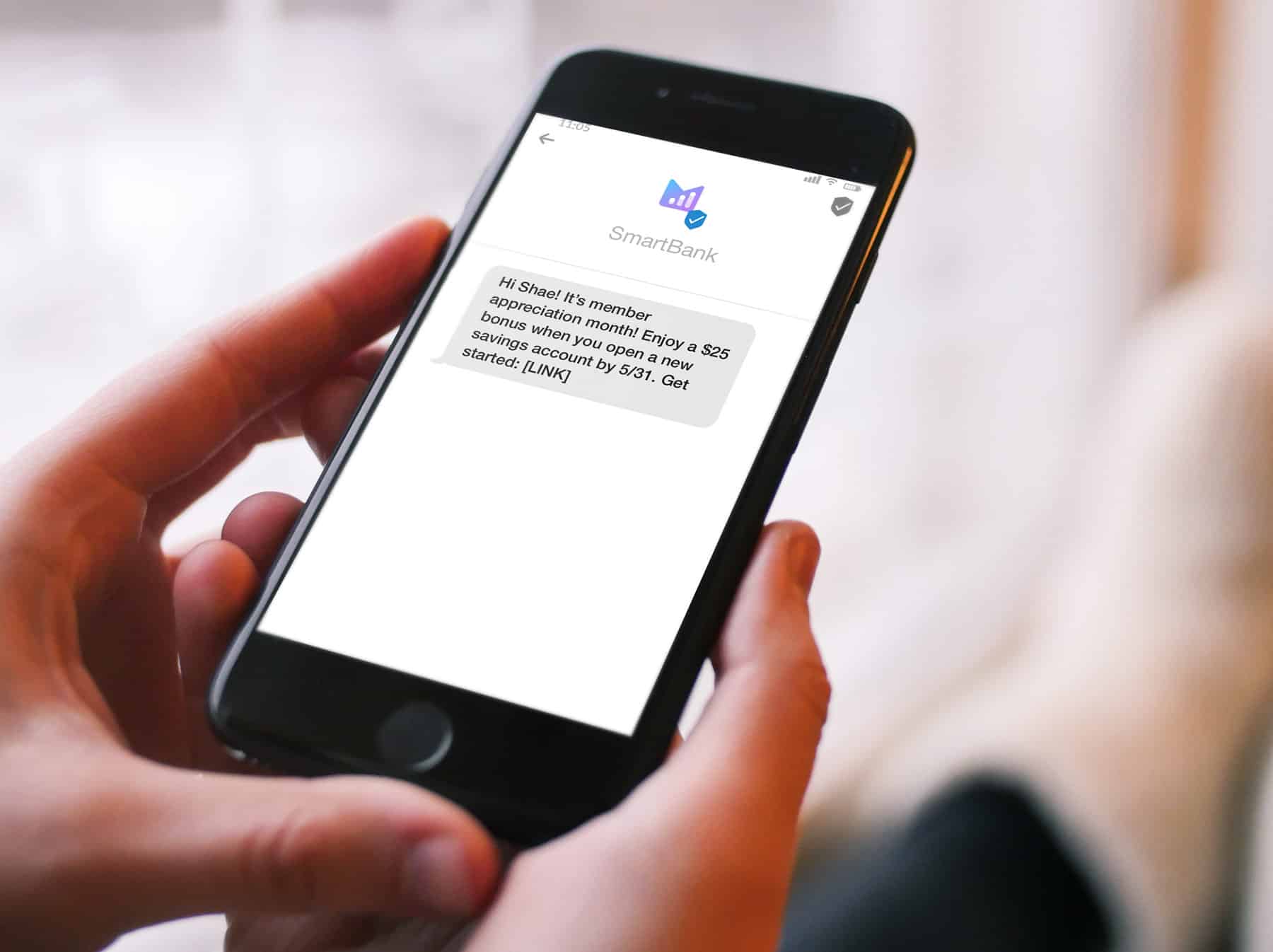
Example:
Hi Shae! It’s member appreciation month! Enjoy a $25 bonus when you open a new savings account by 5/31. Get started: [LINK]
B2B Software
B2B coupons work well when tied to demos, trials, or events, and can be a great way to engage prospective customers.
Example:
Hey Josh! This week only: Book an intro call and get a $100 Visa gift card after your walk-through. Schedule here: [LINK]
Healthcare
Use text coupons to celebrate new patients/customers or re-engage those who are inactive or overdue for a service.
Example:
Hi Al! Reminder: New clients get $50 off their first DEXA scan. Book now and use code SAVE50 to redeem: [LINK]
FAQs
Here are our answers to a few of the most common questions about text message coupons:
-
What are text message coupons, and how do they work?
Text message coupons are discounts or promotional offers that brands deliver directly to their subscribers via SMS (or RCS). They can come in the form of a code or link for online redemption, or as a scannable asset (such as a barcode or QR code) for in-person use.
Because these offers can be customized, personalized, and delivered almost instantly, they’re a handy tool for driving quick engagement and motivating your audience to take action.
-
Are text coupons reusable, or should you use single-use codes?
It’s up to you whether you want your text coupons to be reusable or single-use — and the right choice depends on your goal.
For example, reusable codes are great for broad campaigns and simple promotions (such as limited-time offers or BOGO deals). In contrast, a single-use code is more appropriate for personalized, high-value offers (such as a percentage off a first purchase or a hefty dollar-off discount).
-
How can you prevent text coupon abuse (sharing, screenshots, multiple redemptions)?
Coupon abuse can be frustrating for your brand and make it harder to track campaign performance.
One of the best ways to reduce the risk of coupon sharing is to create customer-specific codes that an individual can only apply when logged into their account, or to set strict redemption parameters (such as limiting how many times a coupon code can be used).
-
What metrics should you track to measure if text coupons are actually working?
Tracking your coupon performance is key to understanding audience preferences, campaign success, and which types of offers drive the best results. A few metrics we recommend include coupon redemption rate, click-through rate, conversion rate, and subscriber growth.
Of course, the right KPI depends on your ultimate objective. (For example, if you’re using a text coupon to motivate first-time buyers to complete a purchase, you’d want to track first-time conversion rates or your subscriber-to-customer rate.)
-
Can text coupons drive SMS subscriptions?
Coupons can be an extremely powerful incentive for driving subscriptions to your text program. However, it’s crucial that you promote your offer well and follow best practices for opt-ins.
Additionally, keep in mind that some customers may plan to unsubscribe after redeeming the offer, so it’s important to demonstrate value as quickly as possible. Personalize your messages, remind new contacts what to expect from you, and give them a reason to stay beyond their first purchase. (For example, you might invite them to a loyalty program, share early access to big events, or provide tailored recommendations.)