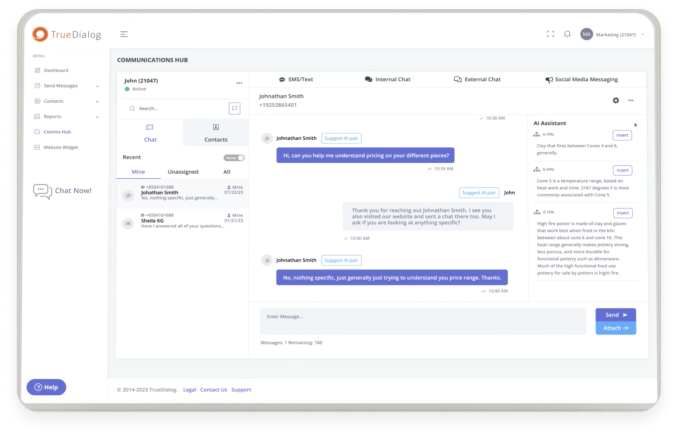
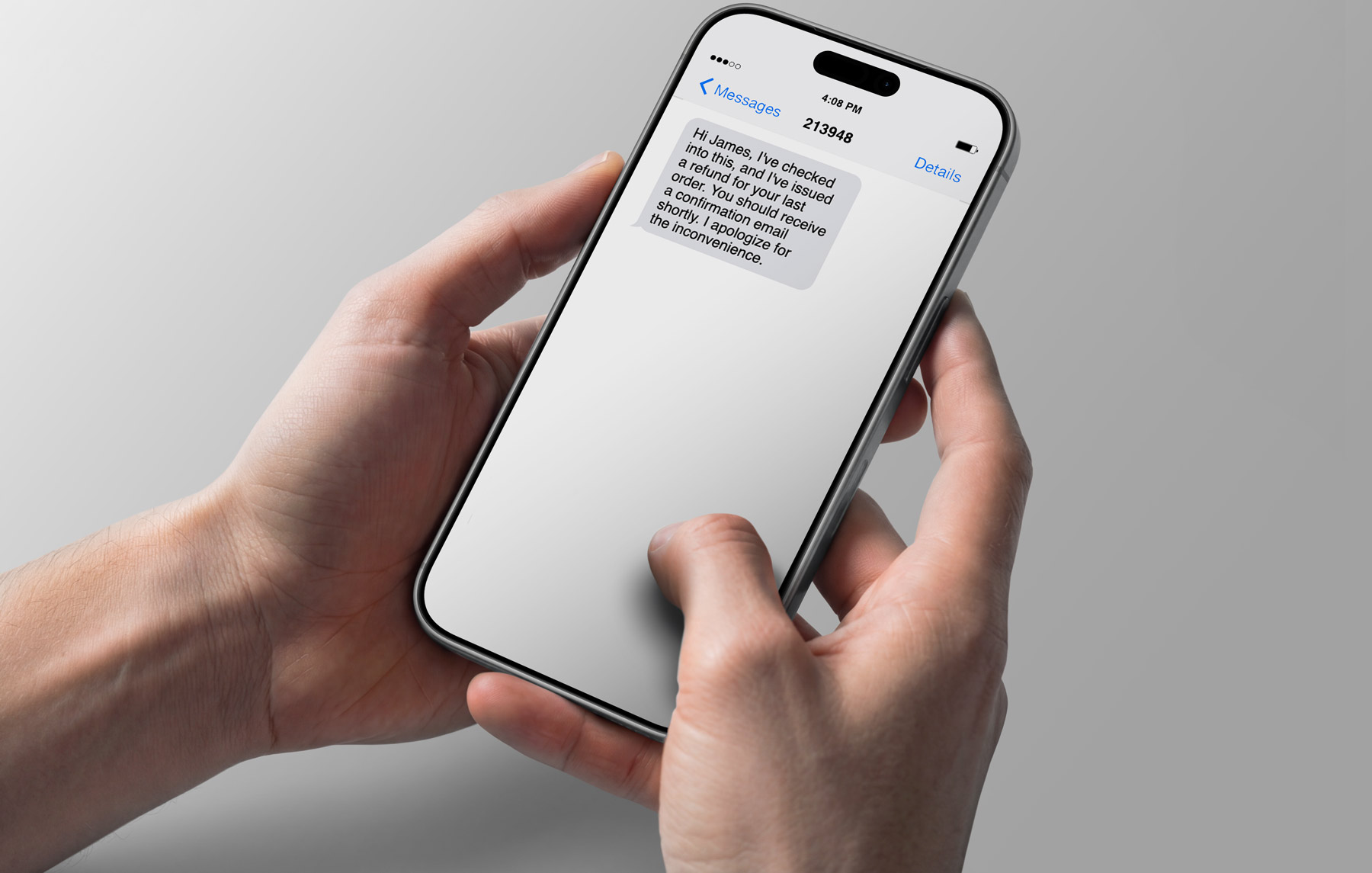
If you stumbled into a call center in the early 2010s, you’d find rows of agents with headsets, dutifully handling inbound and outbound phone calls alongside the occasional email. But today’s contact centers operate more like multichannel hubs, with agents distributed across cities and time zones and trained not only in voice and email but also in texting, chatbots, social media, and more.
And the transformation is far from over. With new tech at our fingertips and constantly changing audience expectations, we’re predicting even more major shifts ahead.
Here are a few of the biggest call center trends on the horizon, and a few things you can do to prepare.
The Big Shift: From Voice-First to Conversation-First Support
For several decades, voice calls were the unrivaled champion of customer service. If you had an issue, you picked up the phone, navigated an [often needlessly complex] phone tree, and waited on hold until, with any luck, you reached someone qualified enough to resolve your concern. Eventually, email also grew in popularity as a support channel in the contact center industry. Though with so much hang time between messages, it certainly isn’t ideal for those more urgent, “I need an answer now” moments.
But as texting and live chat grew in popularity, so did the demand for a more asynchronous customer service communication experience. (And one that didn’t require listening to several minutes of hold music.) By offering support via these channels, organizations had an opportunity to delight customers in a whole new way: by addressing their questions and concerns without disrupting their day. With conversational messaging options on the table, users could connect with customer support while multitasking at work, watching TV, or waiting in the school pick-up line.
The bottom line is, almost everything about how we communicate has evolved over the past decade, so it makes sense that call centers have changed too. And while voice calls are still a popular option, they’re no longer the entire backbone of customer service. Now, it’s simply one channel in a growing web of increasingly convenient, modern customer communications. Meanwhile, in the contact center of the future, messaging will continue to gain momentum.
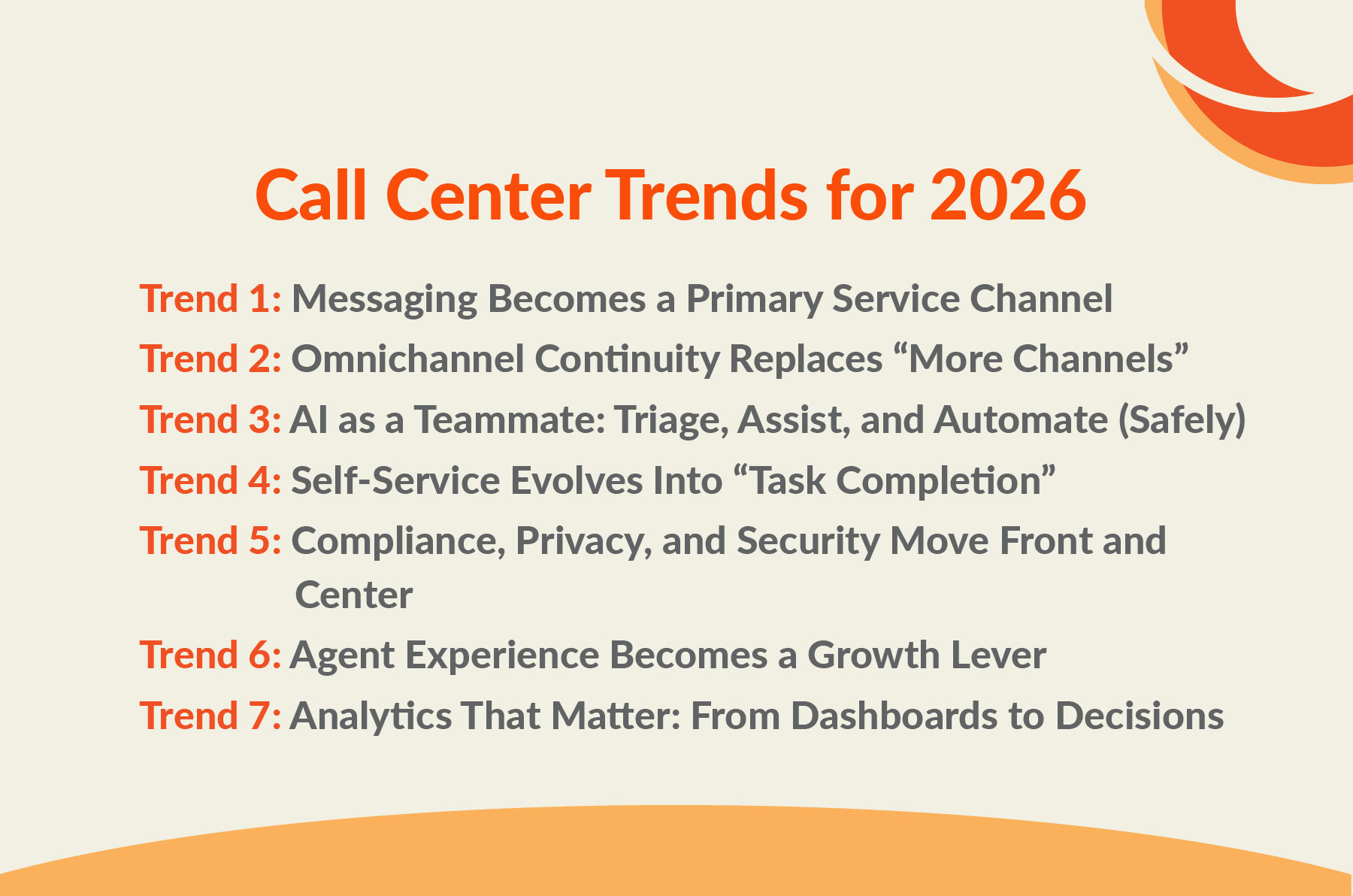
Trend 1: Messaging Becomes a Primary Service Channel
When we gaze into our proverbial crystal ball for call center industry trends, we see messaging, like SMS and RCS, overtaking voice calls as the primary service channel.
This may seem like a bold statement, given that data shows many people still opt for a live phone call over other support channels. But the balance has already tipped in favor of messaging — especially among younger generations.
According to data from McKinsey & Company, there’s an 82% likelihood that millennials will reach out to customer care via messaging, compared with an 81% likelihood that this generation will pick up the phone. And Gen Zers are 3% more likely to use messaging over live calls when reaching out to support. Meanwhile, data shared by SMS Comparison shows 90% of of customers prefer text messages over direct phone calls.
With more “digital native” consumers in the market who are especially comfortable with the speed and convenience of texting, over-indexing on voice and email support is a big miss. Brands that want to boost customer loyalty and satisfaction in the years ahead will need to treat SMS and RCS as core service channels rather than add-ons. Moreover, given the asynchronous nature of texting, agents can handle multiple messaging threads simultaneously, resulting in greater coverage and more resolutions.
In other words, contact centers that prioritize investing in the right messaging infrastructure, like a reliable SMS platform, will be better positioned for success in the months and years ahead.
Trend 2: Omnichannel Continuity Replaces “More Channels”
Over the past few years, we’ve watched contact centers add more channels in an effort to meet varying customer demands. But this year (and the years to follow), it’s not just about how many channels you offer, but how well those channels work together.
After all, your customers don’t think in terms of channels, but in terms of conversations and getting a resolution to their problems in the most convenient way possible. For modern consumers, having the ability to start a conversation in one channel and continue it on another (without having to repeat themselves each time) is a dream come true. And the brands that focus on building a true omnichannel experience will come out on top.
Of course, delivering true omnichannel support isn’t just about shifting your mindset. You’ll also need to integrate systems and use a more intentional approach when designing your user journey. And to build these connected experiences, you need to invest in communication platforms that meld seamlessly into your existing tech stack.
For example, when looking for an enterprise SMS solution, choose software that natively integrates with your CRM and marketing automation tools, as well as a powerful SMS messaging API for more niche workflows (e.g., connecting texting with your ticketing solution).
Trend 3: AI as a Teammate: Triage, Assist, and Automate (Safely)
Today, AI is everywhere, including the contact center. But, despite fears that it will replace human agents, we predict call center automation trends that are much less sinister (and much more strategically sound): leveraging AI to triage customer inquiries, automate routine interactions, and support agents in real time — all while keeping humans at the helm.
When used wisely, AI-powered solutions can help detect the intent of incoming messages and instantly route them to the appropriate specialist or team. This way, customers don’t have to bounce from one agent to the next and can get their issues addressed by the right individual the first time. Additionally, AI can help speed up conversations by equipping agents with personalized suggested responses or surfacing relevant knowledge base content, so agents don’t have to spend precious minutes manually digging through libraries.
That said, it’s important that brands adopt AI support mindfully. While these tools can certainly boost efficiency and speed up communications, they’re far from perfect, and you still need human agents to fact-check responses and lead conversations with empathy and compassion — especially when customers reach out in high-stress or emotionally tense situations. (Plus, according to SurveyMonkey, a whopping 79% of Americans strongly prefer interacting with a human rather than an AI agent.)
Additionally, organizations should prioritize safe automation with strict guardrails to protect customer data, especially in highly regulated industries like healthcare and financial services.
Trend 4: Self-Service Evolves Into “Task Completion”
Another one of the top call center technology trends? Self-service isn’t going anywhere, but it will get a much-needed glow-up.
According to data from Nextiva, 55% of Gen Zers say they either “often” or “always” do their own research before contacting support. So, there’s plenty of evidence to support offering content and tools (like basic chatbots). While self-service tools can be great in some scenarios, they can also introduce unnecessary friction and leave customers even more frustrated. And the difference in these experiences comes down to “task completion” (i.e., successfully resolving an issue or request).
The current challenge with self-service tools is that, more often than not, they only get customers partway there.
For example, suppose a student wants to reschedule their appointment with their academic advisor. So, they open the school’s student support chatbot and type, “I need to change my appointment,” and the bot responds with a link to an FAQ page about how to reschedule.
While the chatbot may have answered the student’s question, they still have to take multiple steps to address their issue, which may involve logging in to and navigating an online portal, emailing the advisor, or waiting on hold with the department’s front desk.
A better workflow would allow the student to complete their rescheduling without having to go elsewhere. For example, they might text an RCS Agent to change their appointment time, and the system surfaces a few upcoming appointment slots. Then, the student taps the preferred time, receives a confirmation, and moves on with their day.
Trend 5: Compliance, Privacy, and Security Move Front and Center
As we touched on earlier, customers are becoming increasingly aware of data privacy and security and are taking extra measures to ensure their sensitive information doesn’t fall into the wrong hands. (Especially with impersonation scams and other types of cybercrime on the rise.)
Meanwhile, regulators are taking numerous steps to protect consumers from fraud and cracking down on businesses that fail to comply with the laws and guidelines governing data use. (And that’s in addition to the numerous regulations that dictate how organizations can use various communication channels for marketing and promotions efforts, which can occasionally coincide with customer service.)
All of that to say: While the best contact centers have always prioritized privacy, security, and compliance, those efforts will likely become even more important to businesses in the years to come.
And as brands and contact centers expand the channels they use to connect with customers, it’s crucial that they take time to consider channel-specific compliance. Additionally, you’ll want to make sure that your organization only uses platforms with built-in security that meet industry standards.
Trend 6: Agent Experience Becomes a Growth Lever
While most of our predictions have focused on contact center technology trends, it’s important to acknowledge that having the right tools and software in place is only part of the battle. Even with the most advanced tech on your side, you still need highly skilled and capable human agents on your side if you want to deliver the types of experiences that keep customers coming back. And as more and more businesses over-index on AI in customer support, brands that offer a more authentic, conversational, and human-first customer service experience will pull ahead.
Of course, this all starts with good hiring practices. Today, agents need a unique mix of soft skills (such as active listening, problem solving, and empathy) and hard skills (such as proficiency with enterprise-grade digital communication tools). Fortunately, hard skills are much easier to teach, and investing in user-friendly tech (like intuitive SMS for customer service) can help shorten the learning curve.
Additionally, given how much agent burnout can negatively impact customer experiences (and, by extension, organizations’ bottom lines), it’s crucial that contact centers take time to rethink workforce management. Smarter scheduling, more balanced workloads across channels, and stronger incentives tied to clear performance metrics can all help boost morale and agent retention.
In other words, by hiring highly skilled agents, training them well, equipping them with the right tools, and helping to alleviate burnout, contact centers can differentiate themselves from competitors that invest less in their people.
Trend 7: Analytics That Matter: From Dashboards to Decisions
As with most modern businesses, contact centers have no shortage of data at their fingertips. But in the year ahead, we predict that organizations will make a greater effort to turn that raw information into actionable insights.
More often than not, this means relying on modern platforms that allow team leaders to more easily track the metrics that matter most to them, and on software that integrates with other platforms (so everyone has access to a unified view of performance). In other words, instead of data on customer support conversations staying siloed within the contact center, this information is also available to marketing, product, and sales teams. This way, everyone can align on shared objectives and understand their role in improving the customer journey.

Tips to Modernize Your Call Center for 2026
So, what should you do with these contact center industry trends? Here are a few tips and best practices to help you prepare for the shifts ahead:
-
Make Messaging a Core Channel
If you’re still treating messaging as a support add-on, it’s time to uplevel your approach. Given Gen Zers’ and millennials’ preference for messaging, especially via SMS and RCS, it’s wise to begin leveraging texting as a primary service channel. That means investing in a reliable, user-friendly enterprise messaging platform and integrating it into your CRM and support workflows. Additionally, take the time to design intentional messaging experiences with clear workflows (rather than simply retrofitting voice-based customer service processes to text messaging).
-
Build Seamless Omnichannel Experiences
Remember that today’s customers expect a connected, seamless, and conversational experience that follows across platforms. The best way to achieve this is to leverage tools that are easy to integrate into your existing tech stack and that allow you to unify data. This way, customers don’t have to rehash their concerns each time they engage with your brand on a different channel.
-
Use AI to Support (Not Replace) Human Agents
AI can add significant value to your contact center, but only if you use it thoughtfully (rather than as a panacea for all communications needs). Instead, apply AI tools where they can best support your agents, such as triaging incoming questions and concerns and offering suggested responses based on pre-approved scripts and knowledge base content. Your customers want to engage with a human, and leveraging AI strategically can help human agents work more efficiently.
-
Focus on Journeys that Help Customers Complete a Task
Chatbots and FAQs certainly have their place, but simply sharing the steps to a process isn’t always enough. Consider how to go the extra mile for your customers by making it easier to complete tasks in as few steps as possible. For example, connect your RCS texting solution to backend payment or appointment scheduling platforms so customers can complete those tasks without leaving the conversation.
-
Prioritize Compliance from Day One
Don’t let compliance become an afterthought. Ensure you’re working with platforms that make it easy to comply with industry regulations and come equipped with built-in enterprise-grade security. For example, TrueDialog meets rigorous SOC 2 Type II and TX-RAMP standards, and keeps your customer data safe in an ISO-certified cloud data center.
FAQs
How does SMS support improve call center performance?
Text messaging, including SMS and RCS, is helping contact centers provide more convenient support and deliver faster, more efficient resolutions to customer concerns. Unlike voice-based support, texting allows agents to engage with multiple customers simultaneously, reducing hold times and enabling customers who prefer to speak with an agent via phone to reach them more easily. Additionally, texting makes it easy for brands to automatically send reminders, alerts, and appointment conversations at scale, freeing up agents to focus on more complex issues.
What metrics should modern contact centers track?
As call center trends continue to drive organizations toward providing more omnichannel customer service experiences, it’s a good idea to move beyond measuring only traditional metrics (such as call volume and handle time) and begin including outcome-based metrics (such as time-to-resolution and first-contact resolution), as well as channel-specific performance metrics.
How is AI changing call centers in 2026?
Today, AI is helping contact centers become more proactive and efficient without sacrificing the human touch customers prefer. One way to benefit from AI is to adopt communication tools that already include AI to streamline specific processes. For example, TrueDialog equips brands with a customized library of AI-generated responses, so agents can send personalized, brand-aligned answers to customers’ questions in just a few clicks.