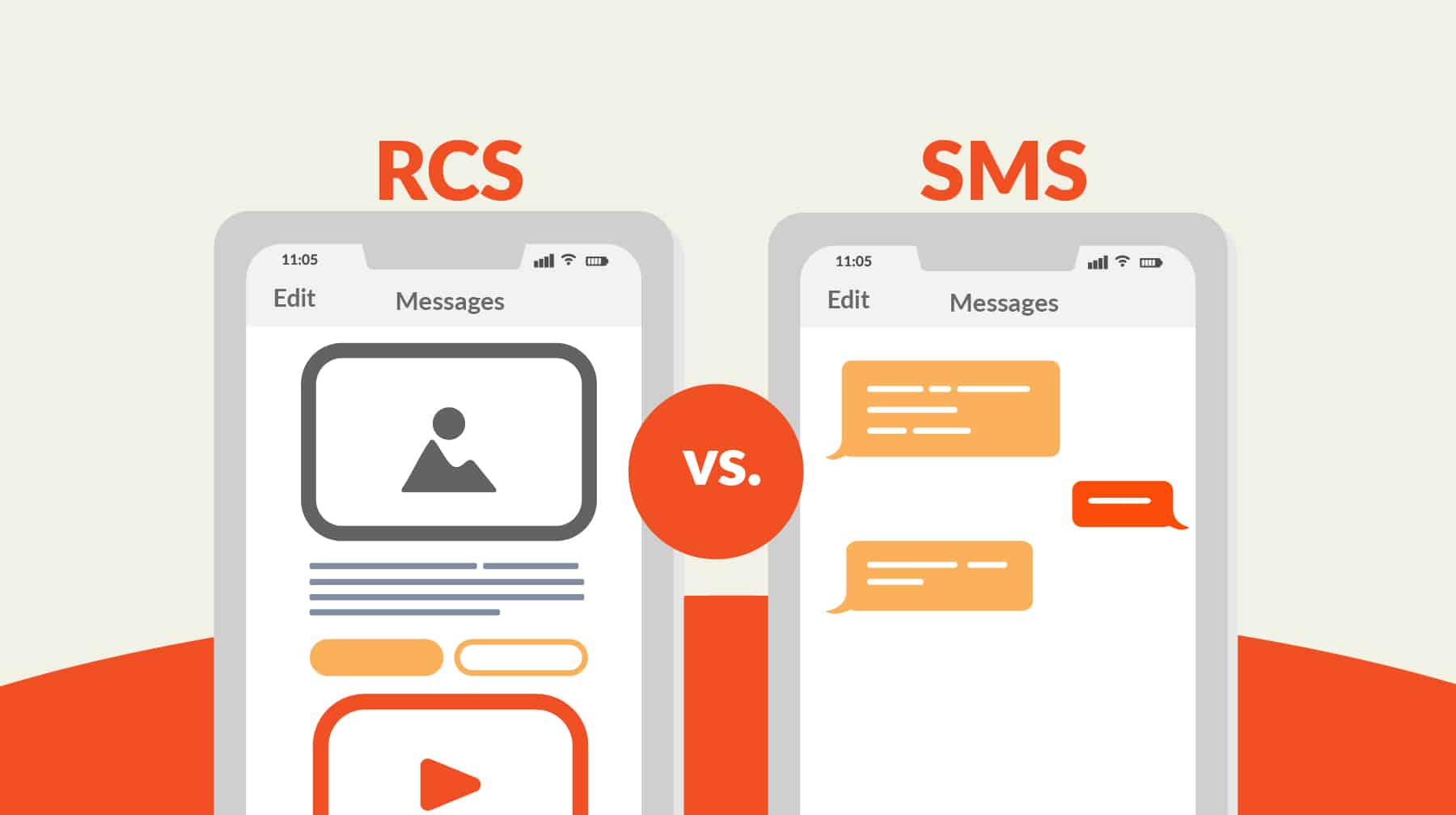
By now, you’ve probably heard the hype about Rich Communication Services (RCS) — the newer messaging protocol that allows you to deliver highly polished, visual, and interactive experiences to your audience right in their native text messaging inbox. With RCS, the opportunities for brands are practically limitless, and there’s no denying its power to boost engagement.
But, is RCS messaging secure? And how can brands use it without violating compliance requirements?
For today’s organizations — and especially those in highly regulated industries like healthcare, finance, and education — the answers to these questions can make or break the decision to move forward with RCS.
The good news is that RCS is incredibly secure and, by taking the right steps, you can keep your communications compliant, too. But there’s a lot to consider as you prepare to launch RCS, and a few critical steps you’ll need to take to enjoy all the benefits of this modern messaging without inadvertently putting your organization at risk.
Today, we’re covering the basics of RCS security and compliance to make sure you’re well-prepared to launch and scale without worry.
What RCS Compliance Means for Regulated Industries
As marketing leaders in highly regulated industries are already well aware, compliance often goes beyond simply following a few rules. With regulatory bodies always watching, and your brand’s reputation hanging in the balance, you and your team have to be especially vigilant. That means keeping industry regulations, data privacy requirements, and internal governance processes top of mind across all efforts, including when engaging with customers via RCS.
Much like SMS compliance, RCS compliance requires you to take extra steps to ensure you’re covering your bases, such as getting explicit consent before engaging with contacts, honoring opt-out requests (immediately), protecting sensitive data, ensuring message content complies with regulatory standards, and properly documenting your efforts.
Staying compliant also means creating channel-specific policies around collecting and storing data, managing message content, and overseeing how different teams use RCS messaging to connect with your audience. One of the best ways you can prepare is to create a strategic framework (which we’ll cover later in this guide).
Is RCS Secure Enough for Regulated Business Messaging?
One of the first questions business leaders ask about RCS is whether it’s secure. And they’re usually comforted to know that not only can RCS be an incredibly secure way to engage with audiences, but it also offers even more security advantages than standard SMS messaging.
Here are two ways RCS helps strengthen trust and data protection:
Verified Sender Profiles
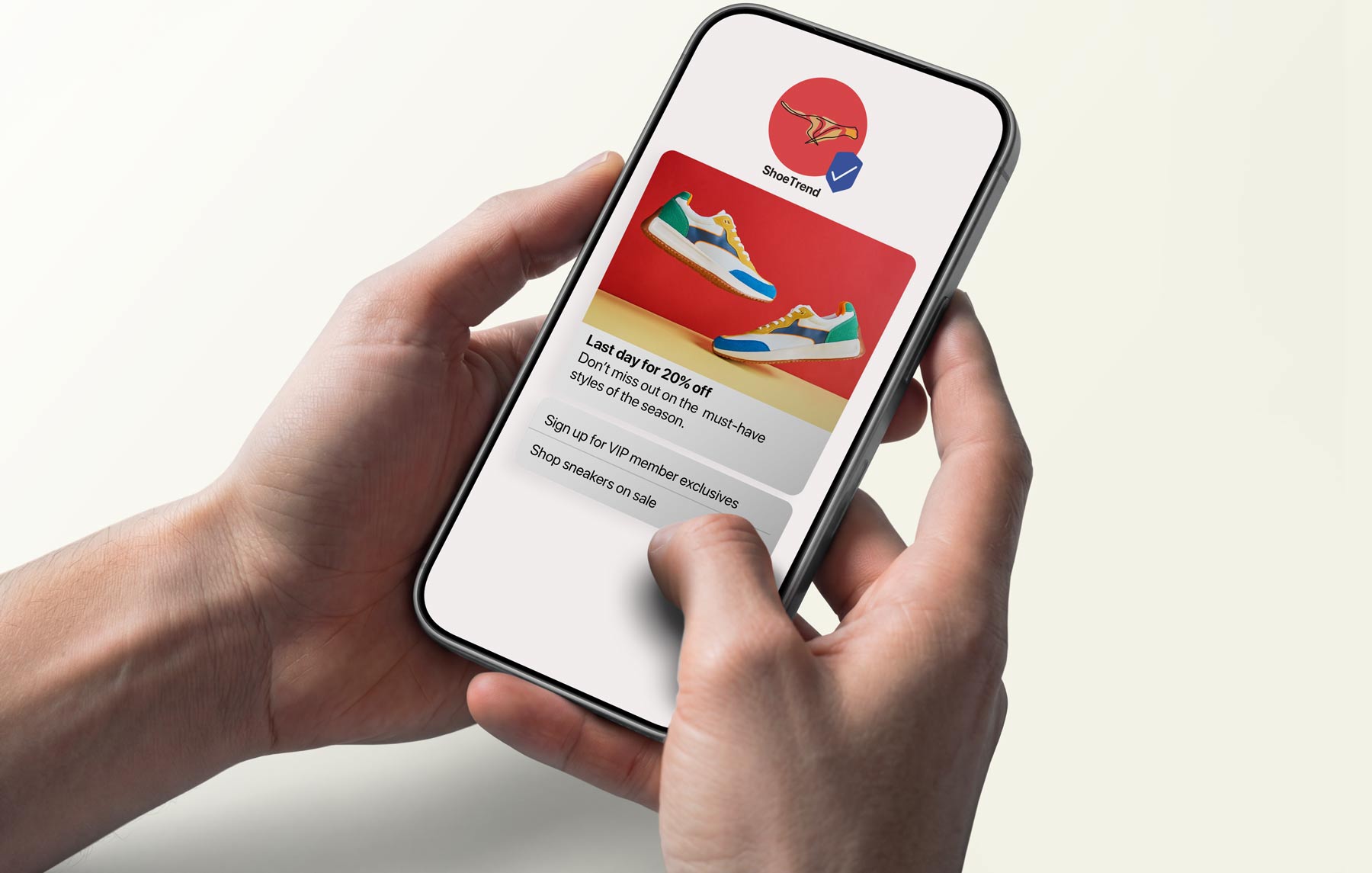
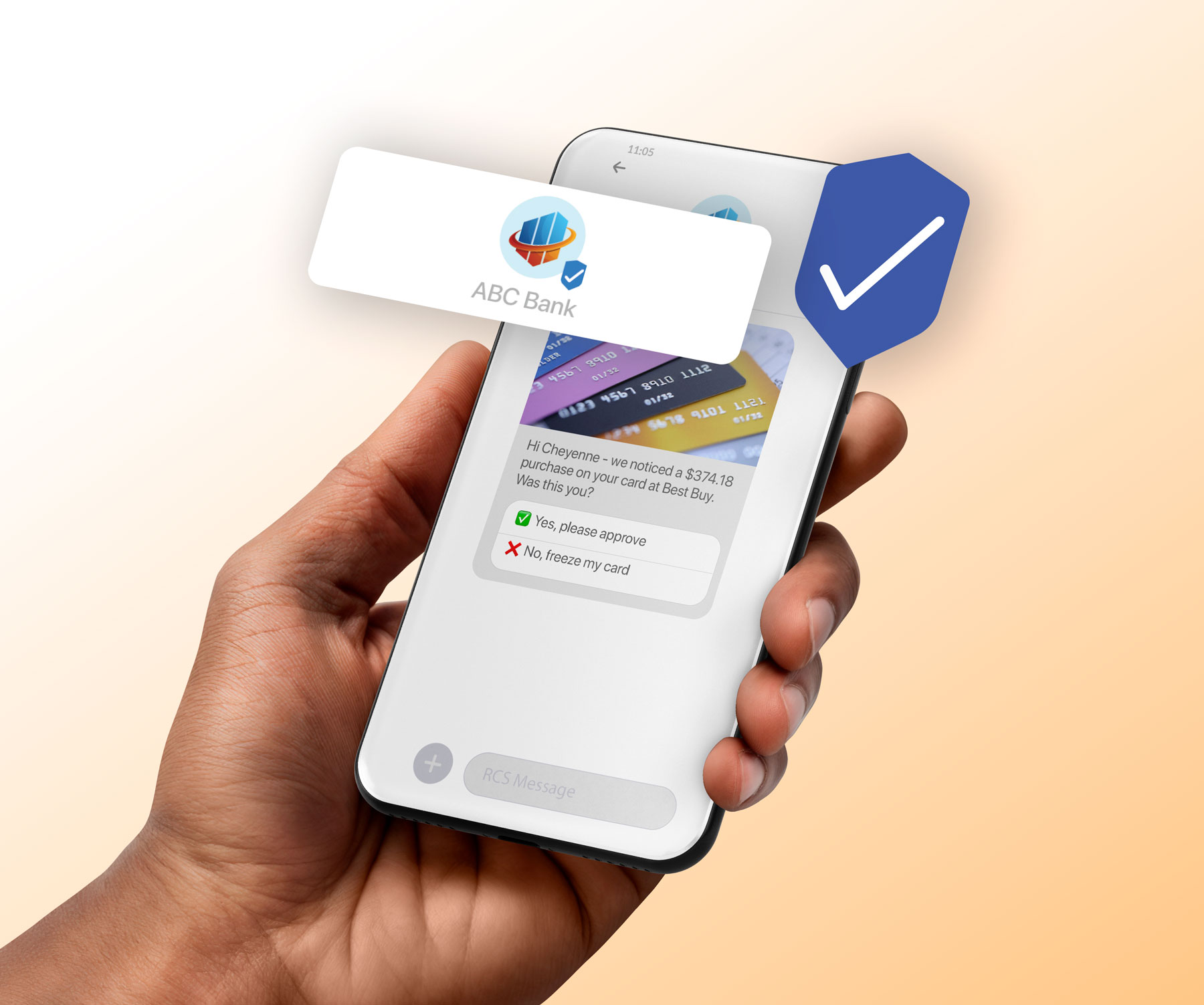
One of the best features of RCS for businesses is the ability to send messages using a verified sender profile. This profile displays your brand name, logo, and colors in the messaging experience, along with a check mark that proves mobile carriers have verified your brand’s identity, and helps recipients feel comfortable engaging with your brand.
Having these additional trust signals is particularly important for highly regulated brands since they’re also often the ones most frequently impersonated. Scammers tend to target customers of financial services and healthcare providers at higher rates because these industries deal with a lot of sensitive information (which can fetch a pretty penny on the dark web).
Message Encryption
Unlike SMS, RCS messages are encrypted in transit, which means they are protected as they move between devices, carriers, and messaging infrastructure (including your enterprise texting solution). This helps prevent messages from being intercepted. Additionally, some providers, such as Google, can ensure end-to-end encryption, meaning RCS messages are encrypted in transit and on the sender’s device (and can only be decrypted on the recipient’s device). Business RCS platforms, like TrueDialog, offer additional data security protections to reduce the risk of your audience’s data falling into the wrong hands.
Of course, even with encryption in place, you still shouldn’t send highly confidential information (such as account numbers, social security numbers, or sensitive medical data) via text message. Instead, use these messages to direct your audience to higher security environments, such as their patient portal, student portal, or online banking platform.
Key RCS Compliance Risks Businesses Need to Review
Before you launch your RCS program, you’ll want to take some time to assess a few core risk areas that can affect your compliance posture (and overall success):
Consent, Opt-In, and Opt-Out Requirements
Consent is vital to compliance and, in many ways, foundational to your entire program. (In addition to making sure your program aligns with regulatory requirements, getting explicit consent from your audience before sending messages to their devices is simply good business practice.) If you already have an SMS program in place, you’re likely already capturing and documenting consent, but it’s always a good idea to double-check.
Additionally, make sure you have mechanisms in place to stop messaging immediately when a contact unsubscribes. Continuing to send messages to someone who has opted out can also land your brand in legal trouble. Per new Federal Communications Commission (FCC) regulations, businesses must honor a contact’s opt-out request (whether SMS, MMS, or RCS) within 10 business days. However, the sooner you cease communications, the better.
Data Privacy, Message Content, and Access Control
Because RCS can support richer content, such as higher-quality images and videos, as well as significantly more characters per message, it allows you to convey much more information. So, it’s even more crucial that you take time to ensure you have checks in place to govern what you send over this channel and who has access to it. (In other words, just because you can share more information doesn’t mean you necessarily should. Context is important.)
Protecting your audience’s sensitive data should always be a top priority. And, as mentioned above, even if a channel is encrypted, it’s not necessarily safe to use for highly confidential information. In fact, transmitting sensitive data via RCS could violate your industry’s regulations (such as HIPAA, FERPA, or the GLBA). So, make sure you’re putting strict guardrails around data use and ensuring everyone who can send messages to your audience is well-aware of what can be shared via RCS and what can’t.
Recordkeeping, Monitoring, and Internal Governance
Compliance isn’t one-and-done. After you’ve put the right processes in place, you’ll need to regularly check in to ensure your team members are still following these requirements and that any automations you’ve implemented (such as recording opt-ins and opt-outs) are still functioning properly.
It’s helpful to have a designated point person who takes ownership of RCS compliance, handles all monitoring, maintains records, sets permissions within your enterprise messaging solution, and ensures your program is prepared for audits or external policy reviews. Ideally, this person can stay in contact with your organization’s legal and compliance team so that, should any new regulations or changes arise, they can guide your team through the necessary steps.
How to Use RCS Safely in a Regulated Environment
Protecting your audience and your organization from security risks and keeping up with industry regulations can often feel overwhelming. But, so long as you have the right processes in place and approach RCS mindfully, it’s not as difficult as it might sound.
Here are several things you can do to make sure you’re leveraging RCS to the fullest without jeopardizing your organization or your contacts’ data:
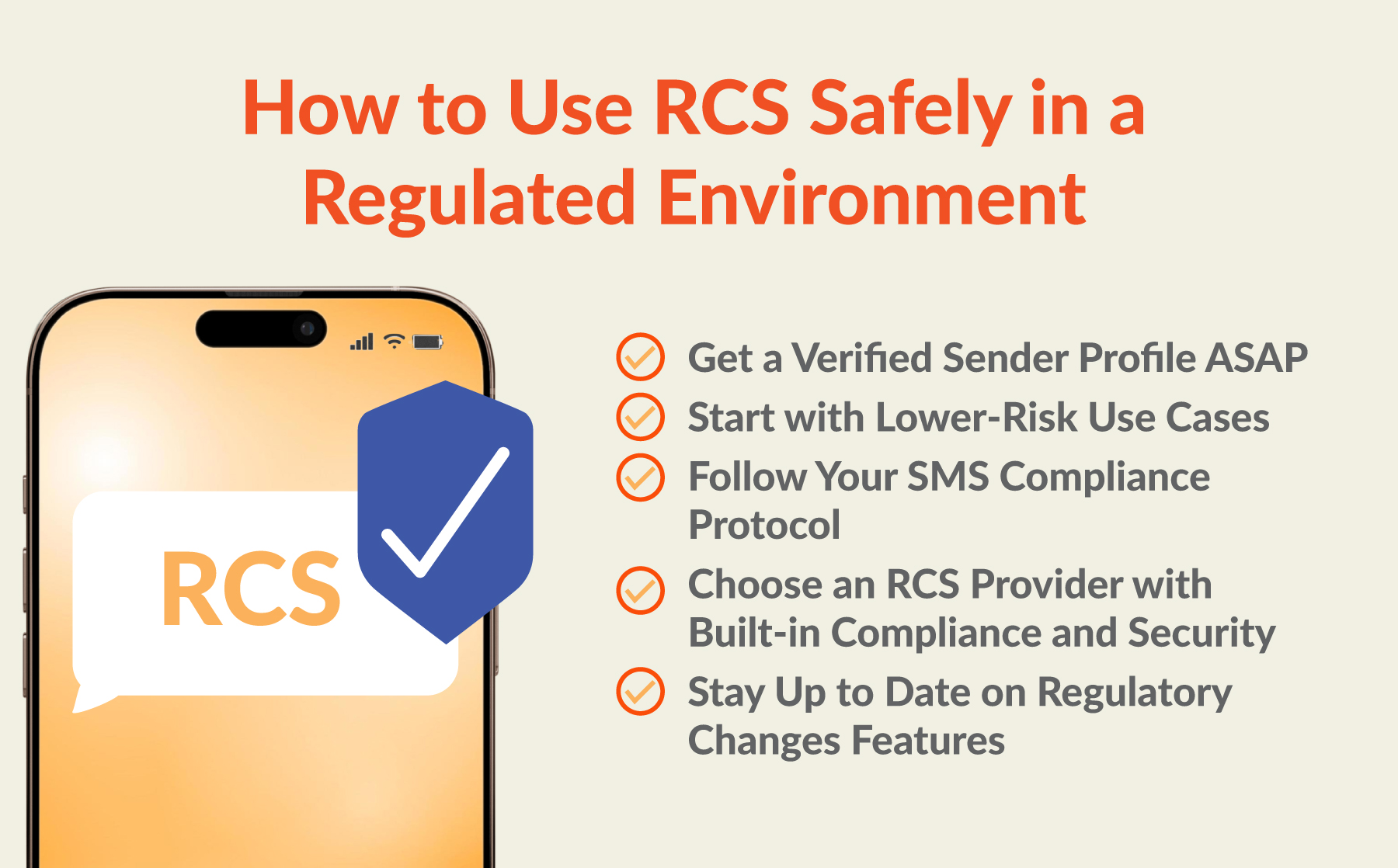
Get a Verified Sender Profile ASAP
Even if you’re not ready to dive into RCS headfirst or feel like you’re still months away from being able to send an RCS campaign, it’s wise to start the process of submitting your verified sender profile (also known as your RCS Agent) for approval. Here’s how:
-
Choose your RCS service provider
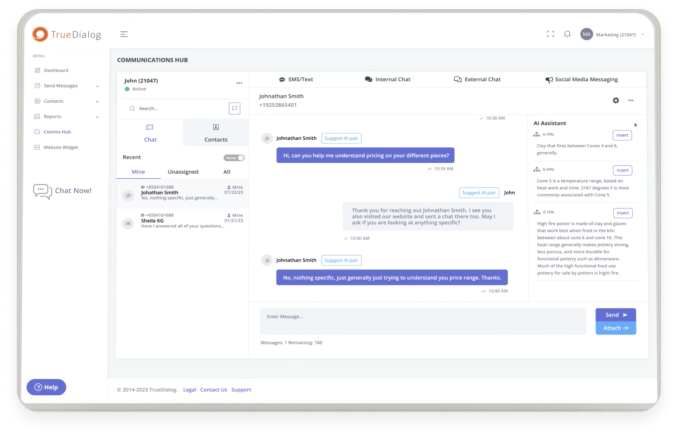
If you haven’t already, start by selecting a business texting solution that supports RCS. Depending on the platform you choose, this can streamline the verified sender approval process. For example, TrueDialog guides users through every step so you can get your program up and running fast.
-
Gather the necessary documentation
Collect all of the required information, including your business contact details, legal proof of your organization’s registration, verification of the phone numbers you’ll use for SMS fallback purposes, examples of the types of messages you intend to send, and details about your opt-in/opt-out process, privacy policy, and terms and conditions.
-
Register your RCS Agent
Create your RCS agent (which usually involves uploading your logo and selecting your brand colors, as well as noting whether you’ll be using your agent for promotional or transactional messaging (or both). Additionally, create an example campaign that showcases the type of content you’ll be sending.
-
Wait for verification
It takes about 8-10 weeks to receive approval after submitting all necessary details and documentation. (Which is why we recommend getting started as soon as possible.)
Start with Lower-Risk Use Cases
Test out RCS with a few lower-risk (but still high-value) use cases, such as appointment reminders or event updates. Then, as your comfort and experience with RCS improve, you can roll it out to more advanced use cases, such as personalized onboarding workflows, interactive self-service journeys, product announcements, and more.
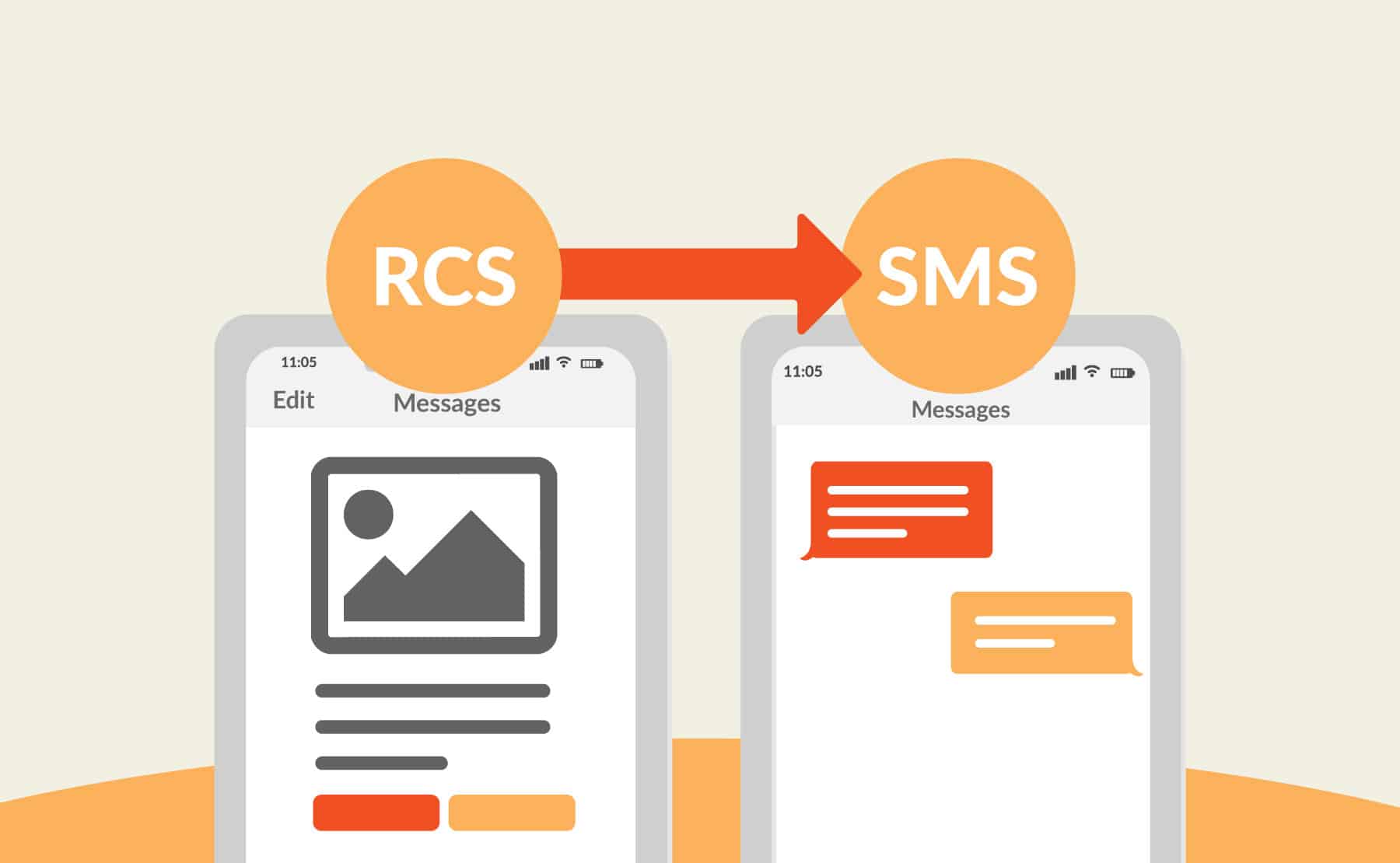
Also, keep in mind that RCS is not yet available on every device or supported by every carrier, and SMS is still the universal standard. So, take a few minutes to study up on how to change RCS to SMS and set up SMS fallback. This way, if someone can’t receive a message via RCS, they’ll receive it via SMS instead.
Follow Your SMS Compliance Protocol
RCS is still relatively new as a business communication channel, but we expect regulatory bodies to release more specific rules and guidelines as adoption increases. In the meantime, it’s wise to follow SMS compliance protocols — particularly around consent, opt-outs, timing, frequency, and disclosures. Additionally, make sure you’re taking the necessary steps to protect your audience’s data and privacy.
Choose an RCS Provider with Built-in Compliance and Security Features
Staying on top of security and regulatory compliance is much easier when you’re using an RCS platform designed for highly regulated industries. When you compare options, look for built-in features such as multi-factor authentication, comprehensive activity logs, and admin controls that let managers set permissions and limit the data each user can access. Additionally, make sure the provider you choose meets the security frameworks required by your industry and has enterprise-level data protection in place.
Stay Up to Date on Regulatory Changes
As technology evolves, so do the steps carriers and regulators take to protect consumers. And, over the past few years, the threat landscape has become more complex, especially with the rise in text-based scams and AI-powered fraud. There’s a good chance we’ll see new regulations governing direct messaging rolling out in the coming months and years.
Of course, marketing leaders in highly regulated industries are no strangers to strict compliance requirements, and you and your team are likely already taking more precautions than most organizations. By staying on top of regulatory changes, you can ensure your SMS and RCS programs remain aboveboard.
RCS Security and Compliance Checklist for 2026
Before you get started with RCS, take a moment to run through this checklist and make sure you’re taking all of the necessary steps:
Strategy and risks
- Connect with legal, compliance, and senior business stakeholders
- Review industry regulatory requirements
- Create clear policies for data use in RCS to help avoid potential data exposure
Customer permissions and consent
- Confirm your opt-in processes meet the Telephone Consumer Protection Act (TCPA) and Cellular Telecommunications Industry Association (CTIA) guidelines
- Ensure your opt-out process is clear for your audience and honored consistently
- Review your disclosures, terms, and customer communication preferences
Data security and governance
- Verify encryption and data protection across platforms
- Submit your RCS Agent for approval
- Implement role-based access controls and user permissions to limit who can see customer data and send RCS campaigns
- Create a review process to ensure RCS campaigns meet your policies before sending
Vendor readiness
- Ensure your RCS provider has the proper security controls and compliance support in place
- Confirm you’re properly documenting and storing opt-ins and activity records
- Validate your SMS fallback process is fully functional
Final Takeaways for Businesses Evaluating RCS Compliance

RCS is an extremely powerful method for engaging your audience and allows you to deliver more immersive, personalized experiences that were previously available only on custom apps. Fortunately, it can also be incredibly secure and won’t violate industry regulations — so long as you take the right steps. By following the best practices outlined above and staying ahead of new regulatory changes, you can reduce your risk and keep your business and audience well protected.
FAQs
-
Is RCS secure enough for regulated industries like healthcare, financial services, and higher education?
Yes, so long as you deploy RCS with the right considerations and controls in place, you can meet even the most strict industry regulations. In fact, features like verified sender profiles and encryption can make RCS even more secure than older messaging protocols. Additionally, working with an RCS platform that offers access controls and enterprise-level security will further help your organization stay compliant.
-
Does RCS encryption protect sensitive business messages?
RCS messages are encrypted in transit, which means they’re significantly less likely to be intercepted by a third party. However, even with encryption in place, sharing sensitive data via RCS could violate certain regulations. Instead, it’s best to avoid sending confidential information via text message and direct your contacts to more secure, purpose-built environments (such as a patient portal or an online banking platform) if they need to access sensitive data.
-
What should businesses check before using RCS in regulated industries?
Before you send your first RCS campaign, take time to review your messaging consent requirements, data privacy controls, access permissions, and recordkeeping processes. Additionally, ensure you’ve submitted your RCS Agent for verification and that you’ve chosen an RCS provider with the tools and infrastructure to support your security and compliance efforts.
Discover what RCS can do for your brand. Request a demo today!