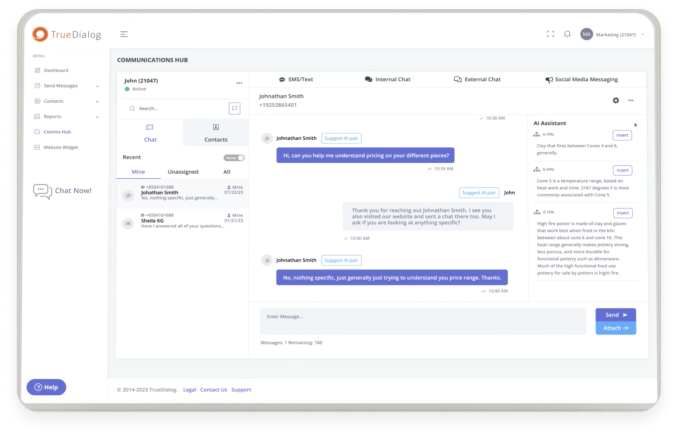


Today, healthcare teams are being asked to do more than ever — and often without additional support or resources.
In hospitals, clinicians frequently juggle administrative tasks alongside patient care, while front desk professionals in private practices and clinics are perpetually facing backlogs of patient communications, billing duties, and jam-packed waiting rooms.
Fortunately, automation in healthcare industry administrative efforts has become more common and accessible, helping staff boost productivity and quality of care. With the right tools, like automated two-way texting, healthcare organizations can alleviate major headaches and help everyone thrive.
What Is Automation In Healthcare?
Automation in healthcare is a broad term that encompasses a range of tools and approaches. But generally speaking, it refers to using technology to complete repetitive, time-intensive tasks and reduce manual efforts. So, instead of handling every process by hand, healthcare teams can introduce software and AI-powered healthcare automation solutions to streamline their workflows.
For example, rather than calling every single patient with an appointment scheduled in the week ahead, a doctor’s office might automate text message reminders for those who have opted in to receiving texts.
Ultimately, the goal of healthcare automation is to ease staff’s administrative burdens so they can spend more time interacting with patients. By freeing up healthcare professionals’ time and energy, they can provide more of the direct, one-on-one attention that leads to better health outcomes (and more satisfied patients).
Why Healthcare Automation Matters: The Benefits That Move The Needle
Over the past several years, healthcare teams have faced ever-growing workloads while also navigating staffing shortages, increased demand (especially amid the pandemic), and tighter budgets. As a result, more healthcare professionals are experiencing professional burnout, which could lead to even more staffing difficulties — especially if organizations don’t find a way to curb administrative challenges soon.
In fact, according to a recent survey by Grant Thornton, 38% of healthcare workers say inefficient systems and processes have contributed to their burnout. On the flip side, 93% said technology has had a positive or slightly positive effect on their daily duties.
While it’s certainly not a panacea, healthcare automation could solve at least some of the growing issues teams face and improve experiences for everyone — from clinicians and admin staff to the patients they serve.
Here are a few goals automation can help your organization achieve:
Reduce Administrative Burden And Errors
Automating text-based appointment reminders, payment notifications, intake forms, and post-appointment follow-ups can help free up several hours for your front-desk staff every week. It can also reduce the risk of human error, such as missing important communications or forgetting to share pre-check-in paperwork with patients before their arrival.
Improve Scheduling And Reduce No-Shows
Scheduling is a massive burden, and no-shows cost U.S. providers billions of dollars every year (not to mention the frustration of disrupted schedules and the concerns about delayed care). By automating this process and making it easier for patients to confirm, cancel, or reschedule their appointments, healthcare organizations can keep their calendars balanced and help everyone work more efficiently.
Boost Patient Experience And Satisfaction
It’s easy to assume that introducing more technology into healthcare might make experiences less human. But when automation is done right, it actually accomplishes the opposite. For example, encouraging patients to complete paperwork and submit insurance information in advance can speed up check-ins. And sending personalized text messages before, during, and after appointments can make patients feel more valued by their provider.
Strengthen Revenue Cycle Performance
Automating part of the billing process by sending payment links and reminders can help healthcare teams accelerate payments. And automating pre-check-in processes to gather insurance details before appointments can help speed up and streamline billing processes (and, in turn, insurance reimbursement).
Improve Staff Productivity And Retention
As mentioned earlier, administrative overload is stressing out healthcare professionals and worsening burnout. (Which, in turn, negatively impacts retention.) But automation in hospitals and private practices has already been shown to ease staff workloads, giving them more time and energy for the work they’re most passionate about — like helping patients.
Types Of Automation In The Healthcare Industry
There are several different ways you can leverage automation to improve processes in a medical setting. Here are a few examples of automation in healthcare to help inspire your strategy:
Patient Communication Automation: Reminders, Confirmations, Follow-Ups, Alerts
Patient communication is one of the most vital elements of healthcare, and it’s also among the most time-intensive. But, while some types of communication should always happen face-to-face, there are plenty of opportunities for automation. (And, in many cases, automating routine communication can give your team more time for those more urgent or sensitive conversations.)
Automating communications like appointment reminders, prescription refill notifications, and post-visit follow-ups can help keep patients engaged without requiring staff to manually contact each patient.
Example: A doctor’s office might automate SMS appointment reminders to deliver one week and 24 hours before a patient’s appointment.
Reminder: Your appointment with Dr. Martin is scheduled for Dec. 3 at 1 p.m. Reply C to confirm or R to reschedule.
Scheduling Automation: Self-Scheduling, Waitlists, Reschedules
The easier you can make it for your patients to schedule, reschedule, and cancel their appointments, the fewer no-shows and last-minute cancellations you’ll have to endure. Many patient portal solutions include scheduling features, such as automated waitlists that help fill open appointment slots.
Example: An urgent care might automatically alert the next patient in line via text if the previous patient left or no-showed.
Hi Sanjay, an appointment at ABC Urgent Care has opened up at 2 p.m. today. Reply YES to move up to this time slot or NO to keep your existing appointment.
Intake And Paperwork Automation: Forms, Check-In, Consent Collection
Check-ins can be a major source of friction that disrupts schedules, increases wait times, and leaves patients frustrated. But adding in automating the collection of intake forms, insurance information, and consent documents in the days and hours leading up to an appointment can overcome this hurdle. By encouraging patients to complete their paperwork online in advance through automated reminders, you can improve both the patient experience and your data accuracy.
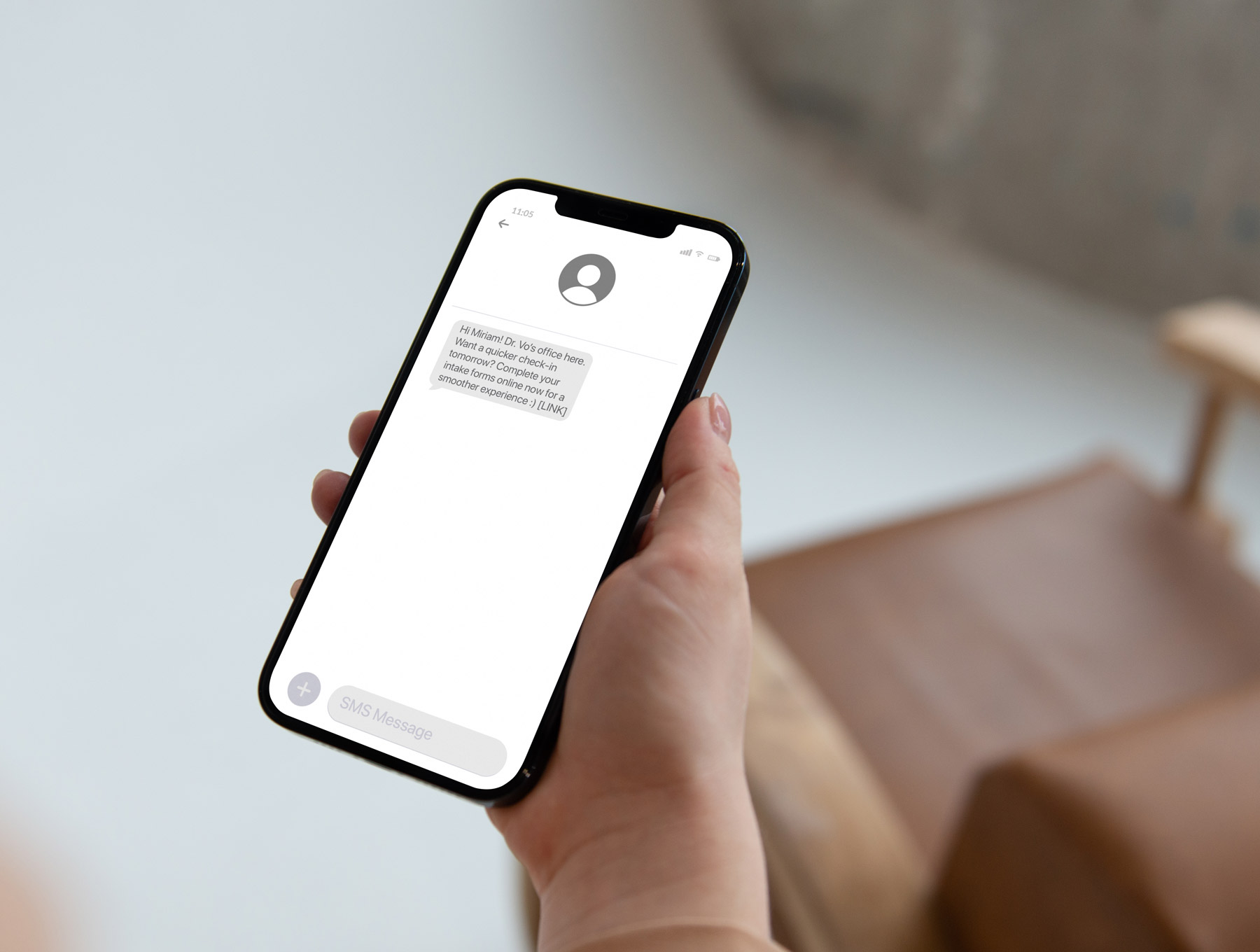
Example: Before an appointment, your patient receives a text reminding them to complete their intake forms along with a link to log in to the patient portal.
Hi Miriam! Dr. Vo’s office here. Want a quicker check-in tomorrow? Complete your intake forms online now for a smoother experience 🙂 [LINK]
Patient Outreach Automation: Education Campaigns, Preventive Care, Recalls
The old saying, “an ounce of prevention is worth a pound of cure,” still rings true. But while clinicians know that taking a proactive approach is critical to improving healthcare outcomes, they don’t always have the bandwidth to provide personalized education or remind patients when it’s time to book routine checkups. Fortunately, this is one area where automation can do a lot of good. Automatically sending educational content, recall notifications, and annual reminders to schedule an appointment can go a long way toward early detection and disease prevention.
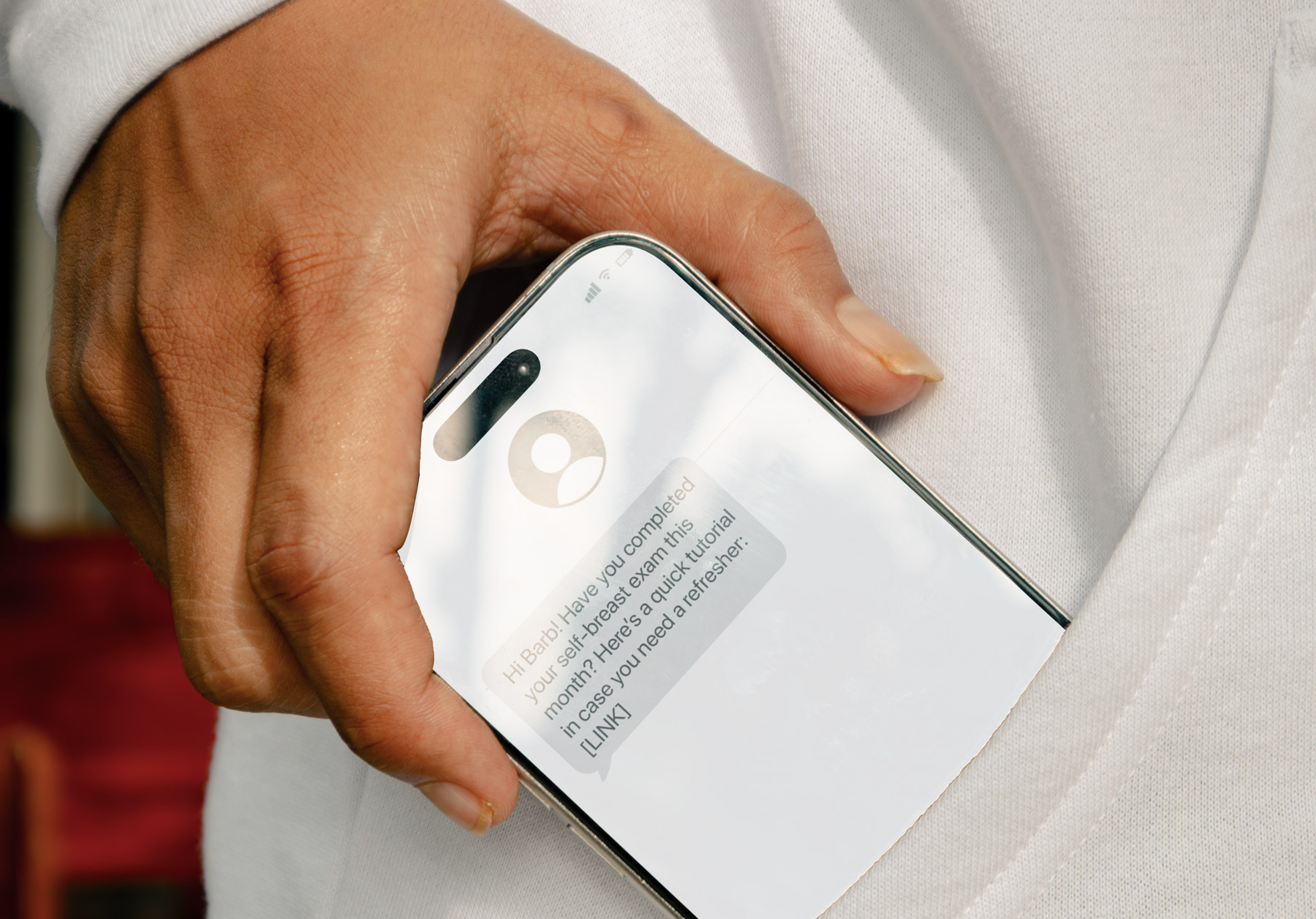
Example: A hospital system might use its bulk SMS service to send personalized reminders tailored to each patient’s needs. For instance:
Hi Barb! Have you completed your self-breast exam this month? Here’s a quick tutorial in case you need a refresher: [LINK]
Billing And Collections Automation: Statements, Payment Reminders, Follow-Ups
Billing automation helps healthcare organizations improve their payment collections and also simplifies the process for patients. Automatically sending statements, payment links, and balance reminders can reduce the need for manual outreach and help ensure patients are informed about their financial responsibility long before their payment is due.
Example: After processing insurance, a dentist’s office might send patients a link to pay their bill online.
Hi Ren! Ellie from Dr. Park’s office here. Your statement is ready for review. Please let us know if you have any questions! [LINK]
Contact Center And Support Automation: Triage, Routing, FAQs, Callbacks
For hospital systems that handle a high volume of patients and daily communications, automation can help ensure nobody falls through the cracks. It can help your route inquiries to the right departments or experts and reduce hold times so staff can address more complex or urgent issues faster.
Example: A patient who texts a hospital about visiting hours might receive an automated response, while a patient who reaches out about a health concern is immediately routed to live support.
Compliant Texting As A Common Automation Path (Keep It Simple)

Healthcare leaders are no strangers to compliance, and usually aren’t surprised to learn that automations come with their own rules and regulations. For example, organizations that send text messages to their audiences are required to adhere to the Telephone Consumer Protection Act (TCPA), which is enforced by the FCC, as well as the guidelines set by the Cellular Telecommunications Industry Association (CTIA). (And that’s in addition to any healthcare industry-specific regulations, like HIPAA.)
While it’s a good idea to familiarize yourself with these laws and guidelines, here are a few best practices that can help your organization stay compliant:
- Never send text messages to individuals without obtaining their explicit consent (i.e., a clear affirmative, such as checking a box on a form or texting a keyword to your number). Keep in mind that a patient providing their phone number for another purpose (such as during check-in) does not count as consent to receiving texts.
- Provide clear disclosures in your first message to let contacts know what to expect regarding message timing and frequency, and that message and data rates may apply:
Bella MedSpa here! You’re subscribed to marketing SMS & account alerts. 2 – 4 msgs/month. Reply HELP for support or STOP to cancel. Msg & data rates may apply. - Make it easy for patients to unsubscribe from your texting program, and honor opt-outs quickly. In other words, if someone unsubscribes, cease all text messaging immediately.
- Avoid messaging contacts too frequently, and beware of quiet hours. Keep in mind that the TCPA prohibits any business from sending marketing messages between 9 p.m. and 8 a.m. (in the recipient’s local time zone). That said, transactional messages (such as appointment reminders) can be sent outside of quiet hours, but it’s still a good idea to avoid messaging patients too early in the morning or too late at night.
(For more tips, be sure to check out our SMS compliance guide.)
Automating Healthcare Processes for Better Outcomes
The healthcare industry is facing many challenges, and demand is projected to increase in the years ahead. Meanwhile, healthcare workers are battling burnout, patients are growing more frustrated with their experiences, and clunky, outdated processes are holding everyone back. Fortunately, by introducing more automation into your processes, you can help staff save time and energy while providing patients with a streamlined, personalized care experience that boosts satisfaction scores.
Discover how automated texts can help your healthcare organization excel. Request a demo today!