
For many of us, our text message inboxes are sacred spaces reserved for friends, family, colleagues, and a few trusted brands. Receiving an unexpected text from an unknown number feels intrusive — the digital equivalent of a door-to-door salesperson interrupting dinnertime.
So, it’s understandable that, despite the massive growth of texting as a legitimate marketing channel, you might feel a little bit apprehensive about leveraging enterprise SMS to connect with your audience.
We hear you loud and clear, and we’re here to share some data to reassure you and show you how to use texting to engage directly with your audience in ways they’ll appreciate and welcome.
Why Many Brands Feel Hesitant About SMS Marketing
In our experience working with brands, there are typically three primary reasons that leaders feel uncertain about launching a text marketing program:
- You’re worried about being seen as invasive
One of the greatest benefits of texting is also one of the reasons some brands have held off: it feels personal. The idea of sliding into a prospect or customer’s text inbox can seem like crossing a line, especially for people who are extra-protective of their own digital spaces. The good news is, today’s audiences are much more receptive to SMS than you might expect. - You’re concerned about violating compliance regulations
Regulators and mobile carriers go to great lengths to help protect consumers from mobile scams and text-based spam. And, as you might’ve heard, breaking SMS marketing laws and guidelines can lead to legal trouble, fines, and a negative impact on your sender status. Fortunately, while this is a valid concern, legitimate brands that play by the rules and comply with regulations have nothing to worry about. - You’re not sure it’s worth the investment
Spending your precious resources spinning up a new channel can seem unnecessary, especially at a time when marketing departments are stretched especially thin. But while there are up-front costs associated with text marketing, the returns are remarkable. (And if you don’t believe me, check out these SMS success stories.)
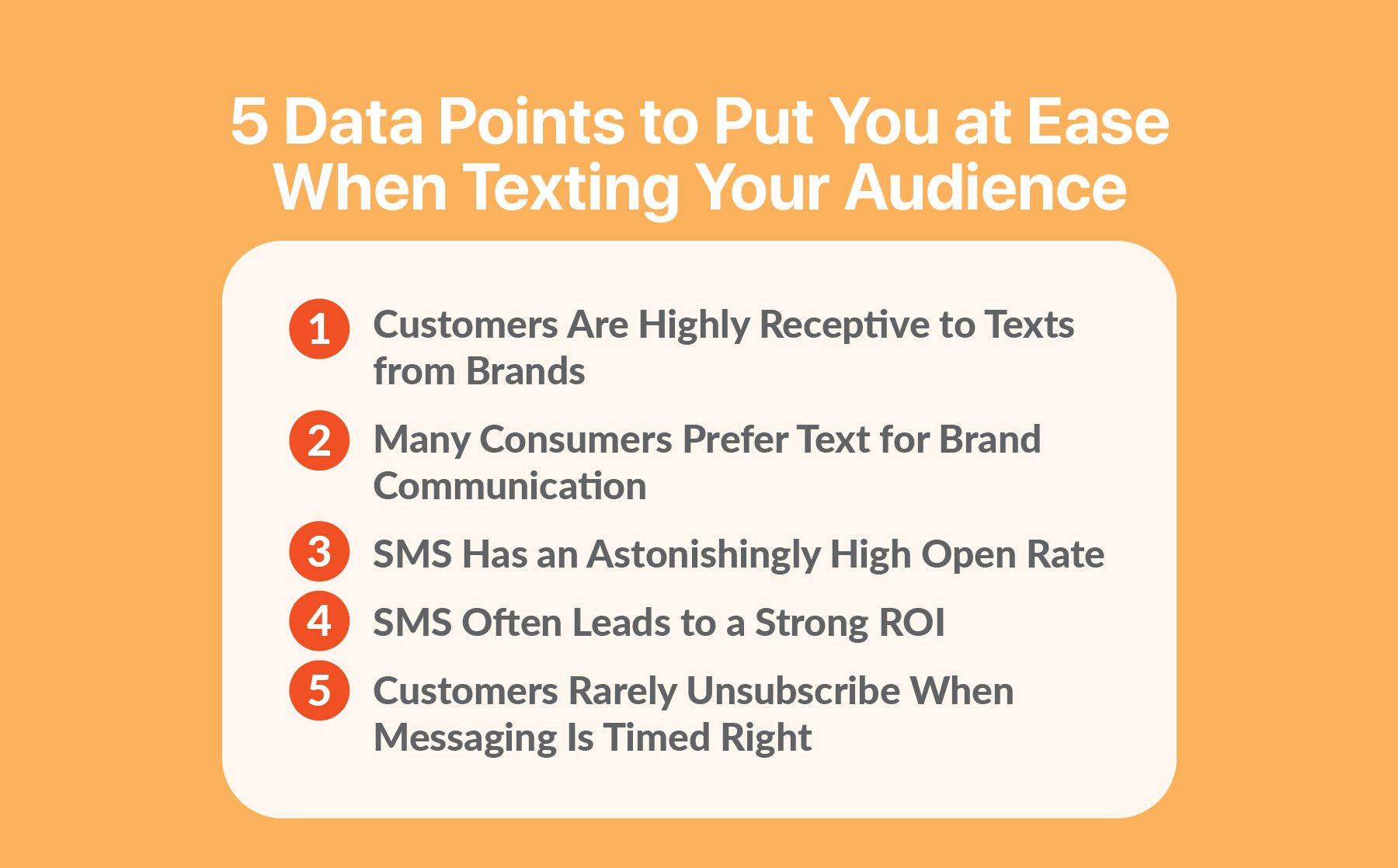
Data Point #1: Customers Are Highly Receptive to Texts from Brands
After sending more than 1 billion texts, we’ve learned quite a bit about what works and what doesn’t. (In fact, a few months ago, we published an entire report with our findings.)
One of the most reassuring pieces of data? When we evaluated responses to text messages, we found that the overwhelming majority (94%) were neutral to positive. In fact, after accounting for opt-outs, we found that only 1% of responses were negative.
Furthermore, over the course of a 7-day conversation with a brand, a whopping 87% of recipients did not opt out.
Data Point #2: Many Consumers Prefer Text for Brand Communication
It’s helpful to know that recipients are open to receiving texts (and aren’t as quick to opt out as you might have predicted). But what’s more, today’s audiences aren’t just accepting of texts — many actually favor this type of communication. According to Emarsys, 91% of consumers said they’d opt into a brand’s SMS communications if it would improve their experience.
Additionally, Retail Customer Experience reports that four out of five consumers want to receive text messages from their preferred brands at least once per week.
H3: Data Point #3: SMS Has an Astonishingly High Open Rate
One SMS marketing statistic we often reference is that this channel has a shockingly high, borderline unbelievable open rate of 98%. But while that might sound extreme, take a moment to consider your own texting habits. If you’re like most users, you always keep your phone within grabbing distance and rarely let new texts go unread for more than a few minutes (even if you don’t necessarily respond right away).
Now, compare this to your email habits. Many of us let brand emails marinate for hours or even days before sneaking a glance, and some get buried under so many new messages that we never even read them at all.
Data Point #4: SMS Often Leads to a Strong ROI
Now for the number that really stands out in the C-suite: return on investment. According to G2, every $1 spent on SMS marketing earns brands an average of $71 in revenue, which tallies up to an ROI of about 7000%. This is a substantial difference from other channels (such as social media, which yields just a $3 return for every dollar invested, according to SEO.com).
And RCS, a newer texting protocol that allows brands to send richer, more visually immersive messages from a verified sender profile, stands to boost this even farther. According to Master of Code Global, one brand drove a 17% increase in sales revenue with RCS and achieved a 6.2x higher ROI than other conversation channels.
Data Point #5: Customers Rarely Unsubscribe When Messaging Is Timed Right
As with all marketing channels, timing your messages can be challenging. And, as our data shows, the time of day your messages arrive on your contacts’ devices will have a tremendous impact on whether your subscribers continue to allow you into their text inboxes.
For example, we found that opt-outs are most likely to occur when a brand initiates a conversation at night. (More specifically, brands that sent messages at 6 p.m. PT/9 p.m. ET saw unsubscribe rates exceed 22%.)
On the flip side, people are much less likely to unsubscribe when brands reach them in the afternoon, with a super-low number of opt-outs occurring between 1 p.m. and 3 p.m. PT (4 p.m. to 6 p.m. ET).
That said, every audience is different, and it can take some trial and error to determine when your contacts want to hear from you the most (and the least). Additionally, always be sure to consider federal and local quiet hours regulations and avoid sending promotional messages during these times.
How to Start Texting Customers With Confidence

Texting your audience can be an excellent way to deepen engagement, but it’s crucial to take the time to develop a thoughtful, brand-aligned strategy before you dive into the deep end with this channel. Here are a few things you can do to make sure your texts improve audience relationships and drive the ROI you want:
Keep Your Texts Relevant and Useful
Audiences are highly receptive to receiving texts from brands, but there’s a caveat: these texts have to be worth their while. In other words, make sure your messages are always helpful and meaningful, and will enhance their experience with your organization. That means tailoring promotions to each segment of your audience, focusing on creating value, and keeping your texts straightforward and easy to consume.
Respect Timing and Audience Preferences
As you already know, texting your audience is a privilege, and your contacts can revoke it at any time. And the best way to make sure you can continue showing up in their texting inboxes is to be respectful of their space. In addition to observing quiet hours laws, it’s also important to consider things like cultural norms and audience habits.
For example, a B2B tech company might choose to only text clients during the workday, while a university might find that students are most receptive to texts in the early evening. When in doubt, use A/B testing to find your ideal timing.
Leverage the Right Enterprise Texting Platform
When it comes to selecting your SMS solution, choose wisely. Look for a 2-way messaging service provider with experience serving your industry, helping clients navigate regulatory compliance, and staying up to date on the latest trends and audience expectations. Additionally, be sure the platform you invest in fits within your existing tech stack, so you can easily build automated workflows.
For example, TrueDialog natively integrates with leading CRMs and marketing automation platforms, and also offers a robust SMS API for more bespoke use cases. Additionally, the TrueDialog team has plenty of expertise in helping clients adopt newer approaches, like RCS, and continually evolves the solution to stay ahead of texting trends.
FAQs
Do people actually open marketing text messages?
Yes! Not only do contacts open marketing text messages, but they also engage with them. MessageDesk found that links within SMS messages earn a click-through rate of about 36%. Since consumers have to opt in to receive texts from your brand, you can rest assured they want to hear from you and will be eager to see what you have to say.
What types of messages work best in SMS marketing?
The types of messages that work best vary by brand and audience, but the most important thing to consider is whether your messages provide value. For a sports venue, that might mean sending texts with special offers for events or sales on team merchandise. But for a bank, that might mean sending only balance notifications, fraud alerts, and highly tailored content about relevant financial products.
How often should businesses send marketing texts to customers?
While the ideal frequency can vary by industry and recipient, a good rule of thumb is to limit texts to about six messages per month, or one to two texts per week. That said, transactional messages like multi-factor authentication codes or safety alerts might exceed this number, but always keep a close eye on the number of promotional messages you send to make sure your communications aren’t bordering on intrusive.
Interested in learning more stats and best practices? Be sure to check out our latest report: What We Learned From Sending 1 Billion Texts.