
Over the past couple of decades, we’ve witnessed an explosion of new communication channels and a rapid evolution of those that already existed. Today, there’s no shortage of ways you can connect with your audience.
And while it might seem easier (and cheaper) to invest in just one high-performing channel and give it your all, it’s become increasingly clear that a multichannel communication strategy is much more effective — particularly in an era when technology and algorithms are constantly changing, and audience preferences are perpetually in flux.
Of course, you don’t want to spread your resources too thin by trying to master every channel at once, either. So, what should you do?
In this article, we’ll take a deeper look at what successful multichannel communication looks like today and what it takes to build a strategy that drives powerful results for your organization.
What Is Multichannel Communication?
Multichannel communication is the practice of using multiple different platforms to connect with an audience. Instead of relying on a single method, multichannel efforts leverage a variety of channels (such as email, SMS, RCS, voice, and social media) so organizations can reach audiences where they’re most likely to engage. This approach also reduces the risk of missing a vital message. For instance, while a recipient might overlook an email in a crowded inbox, they may catch a message delivered via text.
Additionally, operating across multiple channels gives your customers the ability to reach out on their preferred platform. For example, some people may prefer to contact customer support via email, while others are more likely to opt for live chat.
In other words, a multichannel communication strategy helps you cover your bases.
How Multichannel Communication Works
There are four steps to creating and executing an effective multichannel strategy:
-
Choose your platforms
First, your organization has to decide which channels or platforms are most relevant to its audience. For example, a university admissions department might opt to connect via SMS, RCS, email, Instagram, and TikTok.
-
Create your communication content
Next, you’ll need to craft messaging for each channel. Keep in mind that what works for one medium may not perform as well for another. In other words, while a highly detailed, step-by-step explanation of the admissions process might work well via email, SMS requires a much more concise message.
-
Distribute your messages
After you’ve developed your messaging and any supporting visuals, you’ll need to determine how to get them in front of your audience. In most cases, this requires special, purpose-built solutions, such as marketing automation software and an enterprise text messaging platform. Ideally, these tools will allow you to track and measure each channel’s performance.
-
Manage your two-way communications
You’ll also need a plan for handling inbound messages to make sure you and your team can address audience questions or concerns promptly. This often involves tapping a few team members to monitor incoming messages and using the appropriate communication tool(s) to respond.
Why Multichannel Communication Matters for Modern Organizations
For budget-conscious marketers who are aiming to accomplish more with fewer resources, spreading your energy across multiple channels can seem counterproductive. If you know everyone in your audience uses email, then why bother investing your precious time and money delivering messages on other channels too?
The answer is simple: Brands that use multi-channeled communication strategies see better results. In fact, campaigns that use three or more channels earn 287% higher purchase rates than single-channel efforts, according to data shared by Landbase.
Here’s why multichannel wins:
Better Reach Across Different Audiences
Today, most people use a variety of channels to communicate, and their preferred channel can vary depending on when, where, why, and with whom they’re communicating. For example, when engaging with a B2B software provider, a customer might use SMS text messaging to chat with their sales contact, email to connect with the billing department, and RCS for tech support.
Alternatively, someone may use email to communicate with a brand while at their desk during work hours, but switch to a more mobile-friendly channel for support while waiting in the school pick-up line or lounging on the couch after dinner.
In other words, multi-channel communication broadens your reach and helps your organization connect with your audience no matter where they are or what they’re doing.
More Flexible Customer and Team Communication
Each channel adds a unique value. Email, for example, is perfect for sending longer, more detailed communications, and a voice call may be more appropriate when a situation demands more personalization and real-time dialogue. SMS is great for time-sensitive notifications, while RCS excels when communications demand rich visuals and more interactivity.
With multichannel communication, you can choose the best channel for the specific purpose rather than trying to force a certain kind of message into a medium that won’t do it justice. (Such as a healthcare provider attempting to send a series of long, complex pre-appointment instructions via SMS.) This flexibility keeps your communications effective and convenient for everyone involved.
Multichannel Communication vs. Omnichannel Communication
If multichannel means using multiple channels in your communication strategy, then what does “omnichannel” mean?
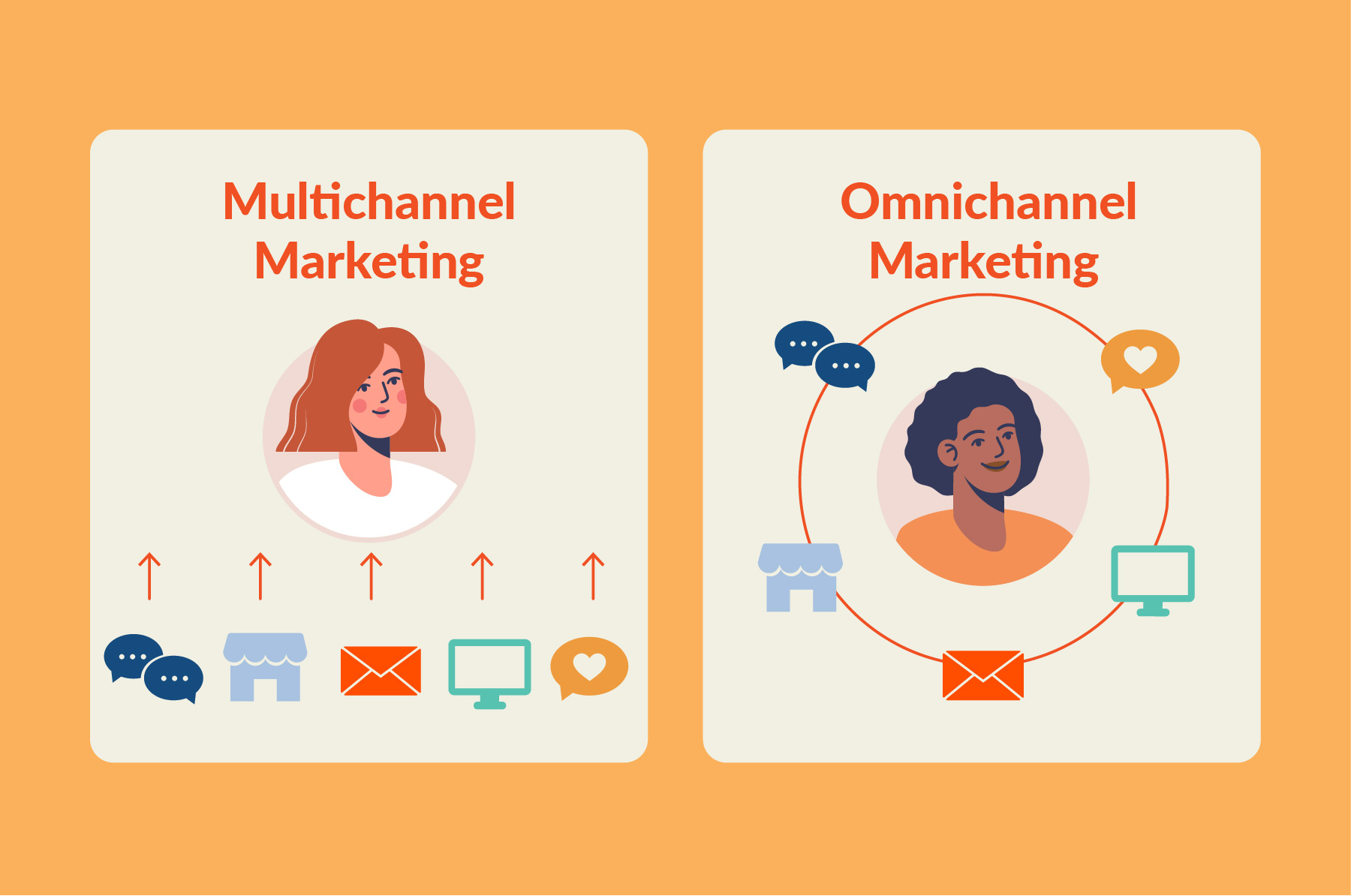
You’ve probably heard both buzzwords floating around the marketing world, and it’s easy to assume they’re interchangeable. However, while both approaches involve using more than one channel to reach an audience, omnichannel takes multi-channel marketing communications to the next level.
Rather than using multiple channels and platforms independently, omnichannel integrates them into a single, unified strategy. For example, instead of sending an SMS message to a list of numbers and an email campaign to a separate list of email addresses, and not knowing whether (or if) there’s any overlap between the two, you can create one interconnected experience.
With an omnichannel strategy, a sports venue might send an email for a presale on season tickets, and then a follow-up RCS message to fans who clicked the link but didn’t finish their purchase. Or, the venue might send a confirmation text to fans who bought season tickets, with a link to download their mobile passes.
For customers, omnichannel communication means a more seamless experience. And for marketing and comms teams, it means more streamlined campaign management and synchronized data (i.e., a more holistic view of overall campaign performance). Instead of monitoring each channel individually, you’ll have insight into how an effort performs across channels, platforms, and touchpoints.
A unified view also helps teams identify weak spots in their campaigns and opportunities to customize engagement experiences based on each segment’s preferred platform(s).
But to achieve true omnichannel communication, you need the right tech and integrations in place, like connecting your enterprise text messaging with your CRM and marketing automation platform.
(For example, TrueDialog seamlessly connects with leading marketing automation and CRM software solutions like Salesforce, HubSpot, Marketo, Eloqua, and more.)
Common Channels Used in a Multichannel Communication Strategy
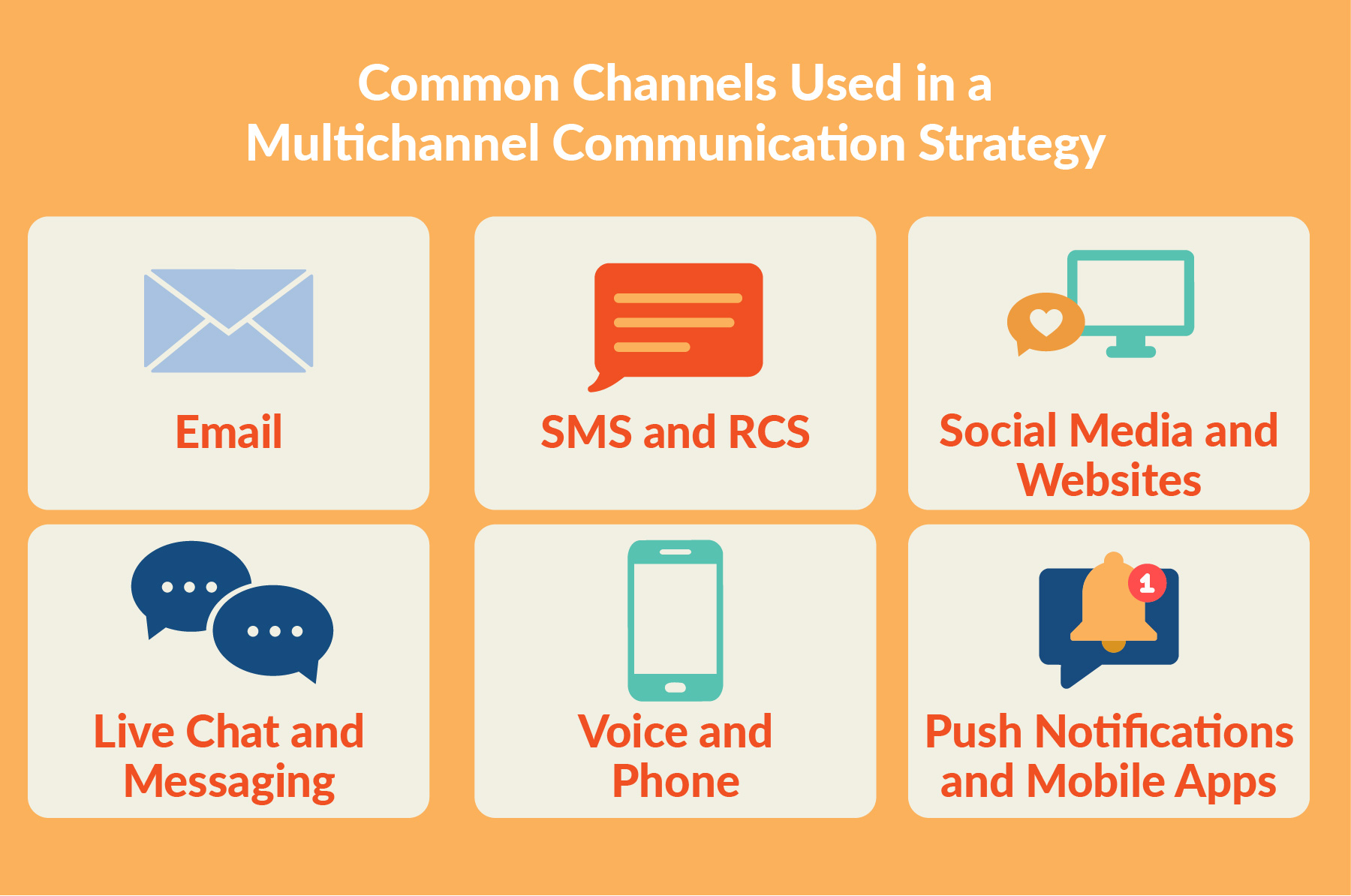
Of course, regardless of whether you’re launching a simple multichannel effort or a more modern omnichannel campaign, you’ll first need to determine which channels perform best with your audience. After all, you don’t want to put all of your eggs in one basket, but it’s also nearly impossible (and incredibly expensive) to spend equal energy on all channels.
For example, a university likely wouldn’t want to rely too heavily on direct mail when most students prefer to connect via digital channels.
Here are several channels you should consider:
SMS and RCS
Text messaging is, hands down, one of the fastest and best ways to reach your audience. With a 98% open rate, you’d be hard-pressed to find another channel that delivers the reach and results organizations see with SMS. And RCS, the newer messaging protocol that brings a richer, more interactive experience to the texting inbox, can boost engagement even further.
Two-way SMS is a great tool for sharing concise, timely communications — especially because it can deliver messages even if your recipients don’t have data or a reliable internet connection. RCS, on the other hand, allows organizations to send rich media (like high-resolution images, videos, and GIFs) and supports interactive features (such as scrollable image carousels, typing indicators, and read receipts).
And both of these messaging standards have their place in modern communications. For example, a bank might use SMS to alert customers to potential fraud on their account, but leverage RCS to introduce its audience to a new product offering.
Despite more than a decade of thought leaders forecasting its decline, email remains a powerful communication channel for reaching nearly every type of audience. According to data shared by YOCTO, about 88% of users check their email at least once per day.
This channel is especially useful for delivering longer-form content, such as newsletters, instructional material, event information, and updates to legal agreements. For example, a healthcare organization might use email to send updates to its patient portal privacy policy or a monthly roundup of wellness content.
Voice and Phone
No matter how effective asynchronous digital communication becomes, some situations benefit from a real-time conversation and the familiarity of another human voice. And this is true even among younger demographics. According to data shared by Nextiva, 72% of Gen Zers say they’re likely or very likely to choose phone support.
Voice and phone are excellent for more urgent situations or issues that require more sensitivity and a reassuring, human presence. For example, a healthcare company might use phone calls primarily to discuss lab results or care plans, while a financial planning firm might reserve phone calls for in-depth investment portfolio reviews.
Live Chat and Messaging Apps
Sometimes, people want to engage with a team member directly without making a phone call. Live chat and third-party messaging apps offer your audience all of the benefits of real-time conversations without requiring them to navigate a phone tree or sit on hold.
This channel is useful for basic troubleshooting, general customer support, and sharing educational resources (like FAQs and how-tos). For example, a B2B software company might offer live chat to guide new users through account setup and onboarding. However, relying on a third-party app to manage live chat can make communication tricky, especially if customers have to download a new app to connect with you or inadvertently close the conversation by navigating away from the window (as is the case with some web-based live chat solutions).
Social Media and Websites
Today, it’s essential to maintain a website and a presence on relevant social media platforms. In many cases, these are the first places your audience goes to find basic details about your organization, contact information, and updates on your products, services, and events. Additionally, many social media platforms offer a messaging feature for one-on-one conversations.
For example, a university’s website might provide insight into everything from admissions and enrollment to campus life to areas of study. And its social media platforms might highlight recent goings-on, awards, and upcoming events. Additionally, social media messaging may give current and prospective students another way to connect with university staff, but only if the school has designated personnel to monitor and respond to direct messages.
Push Notifications and Mobile Apps
Like websites, mobile apps are also a great place to share vital information and updates. And app push notifications can help organizations deliver timely messages directly to audiences on their mobile devices.
For brands that see strong engagement in their app, push notifications can be a useful channel. However, you’re likely competing with dozens of other brands and apps sending push notifications to the same audience. And, given the barrage of notifications most people receive at any given time, it’s becoming increasingly difficult to cut through the noise. (Additionally, it’s incredibly easy for users to silence or delete new notifications, and many people may choose to opt out altogether.)
Common Multichannel Communication Challenges
Of course, multi-channel communications aren’t infallible. Here are a few issues that can undermine an organization’s success:
Data Silos
One problem with traditional multichannel communication (as opposed to a modern omnichannel approach) is that each channel operates independently through disparate systems. This creates fragmented data and an incomplete picture of how each recipient has interacted with your organization. When you only have data on one channel’s performance at a time, it can be difficult to judge your multichannel approach as a whole or understand how different channels influence each other or the overall customer journey. Teams may also focus on optimizing for channel-specific KPIs rather than broader business goals.
Additionally, siloed data can lead to frustrating customer experiences, such as receiving redundant alerts or being forced to rehash the same concern each time they engage with an organization’s support team on a new channel.
Inconsistent Messaging
When organizations operate each channel on its own, audiences may receive conflicting information or messaging that feels out of step with other branded communications. And without a centralized single source of truth, customer experiences can feel disjointed, which can negatively affect your audience’s perception of your brand and their confidence in your offerings.
Too Many Messages Across Too Many Channels
When channels aren’t unified, it’s easy to overwhelm audiences with too many communications. For example, a healthcare organization might unknowingly send an appointment reminder via SMS, email, push notification, and automated phone call in the same few hours. This barrage of alerts can lead to what experts call “notification blindness,” causing recipients to tune out from a sender. And, if they’re really frustrated, your audience might unsubscribe from one or more channels altogether.
What To Look For In A Multichannel Communication System
So how do you avoid the challenges listed above while creating a harmonious, engaging omnichannel experience?
In addition to aligning teams around a shared goal, you’ll also want to adopt the right technology to manage your multichannel efforts.
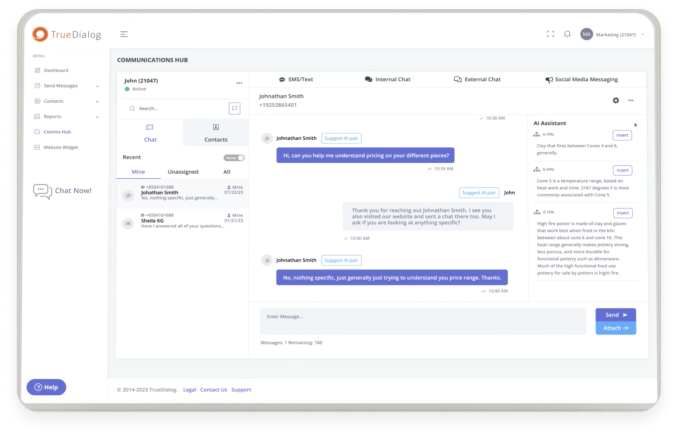
A powerful multichannel communication system usually consists of a powerful CRM (like Salesforce), a marketing automation platform (like HubSpot), and an enterprise messaging platform like TrueDialog that can connect directly to your legacy systems.
Moreover, TrueDialog’s TrueConnect® adds a no-code layer on top of the solution’s native integrations so all of the messages you send will be automatically added to the right record and appropriate connected system. That way, your sales team will know that a customer engaged with customer support, your marketing team can see when a contact has texted with a salesperson, and so forth. It offers full visibility into all incoming and outgoing text messages so teams have all the context they need to make the right decisions and support a true omnichannel experience.
A multichannel communication strategy is crucial to keeping your audience engaged and driving forward momentum, especially as technology continues to advance. By choosing the right mix of channels and making sure you’ve set up your tech stack for success, you can build better customer experiences and improve your ROI.
Ready to learn more about how TrueDialog can support modern multichannel campaigns? Request a demo today.
FAQs
What does multichannel communication mean?
Multichannel communication refers to using multiple platforms to connect with an audience, such as email, SMS, RCS, voice, and social media. This is an evolution of traditional communication, which relies on a single mode or platform at a time.
What is the difference between multichannel and omnichannel communication?
Multichannel communication uses multiple channels to connect with an audience, but omnichannel communication goes further by integrating all channels into a single, unified strategy.
Which channels are commonly used in a multichannel communication strategy?
A multichannel communication strategy can involve any digital and traditional channels that make sense for your brand and audience. For example, a brand might use email, social media, text messaging, and direct mail in a single campaign.
How can businesses create a strong multichannel communication strategy?
To build a strong multichannel communication strategy, brands should choose channels that align with their audience’s behavior and preferences, tailor the content to each medium, and use the right technology to distribute messages and monitor campaign performance.