Building a quality SMS (Short Message Service) list is no easy feat. Each new subscriber you earn is a valuable opportunity to build a relationship that inspires long-term loyalty. That makes unsubscribes especially frustrating. Once you’ve lost a subscriber, there’s not a lot you can do about it. Instead, your goal should be trying to keep them to begin with.
But it’s important to be realistic about this — a certain number of opt-outs is inevitable. Getting your unsubscribes down to zero isn’t a practical goal, but bringing your opt-out rate down likely is.
5 Proven Ways to Lower Your SMS Unsubscribe Rate
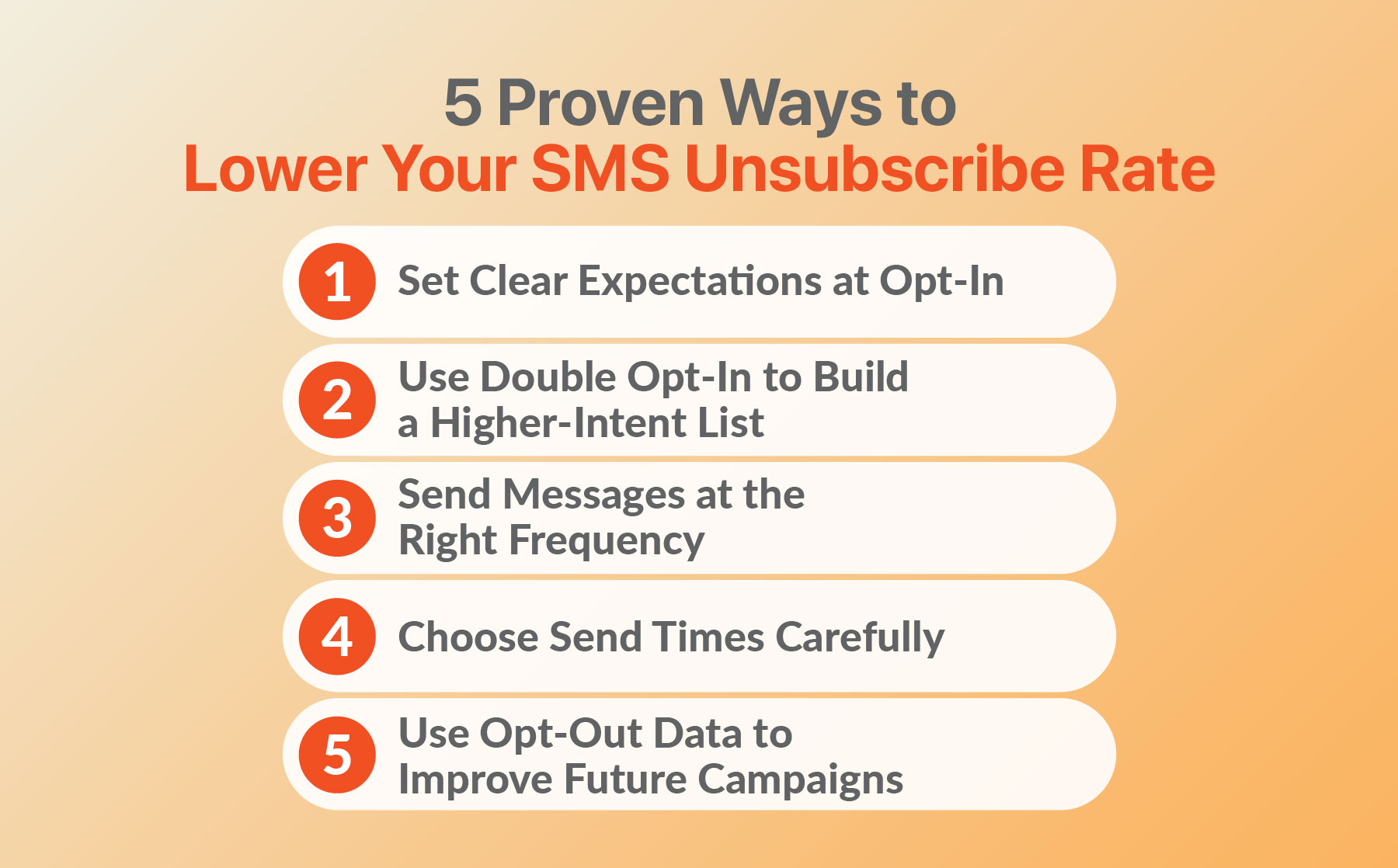
Getting your SMS opt-out numbers down is all about putting the subscriber first and centering their needs and preferences in how you shape your SMS program. There are a few main best practices that help with this.
1. Set Clear Expectations at Opt-In
You want to be clear from the beginning about what people can expect from your text messages. Include information in your opt-in forms like:
- What kind of text messages recipients can expect – What topics or product types will they get messages about?
- Why they should sign up – How will being on your list benefit them?
- How frequent texts will be – Can they expect to receive text messages from you daily, weekly, monthly, or some other cadence?
2. Use Double Opt-In to Build a Higher-Intent List
Have you ever gotten a text from a business you don’t remember signing up with? Chances are, you weren’t happy to receive it and promptly unsubscribed or even marked it “junk.” As a business doing legitimate SMS marketing, you don’t want to risk being the brand on the other end of that experience.
Using a double opt-in protects you from that possibility. People not only have to go through the process of signing up for your list, they also have to confirm via text that they actually want to receive your messages (often just by sending the word “yes” or a “y” to your text asking for confirmation). That ensures everyone on your list wants to be there.
3. Send Messages at the Right Frequency
Sending too many texts is one of the easiest ways to lose a subscriber. Only send messages periodically — not too much to annoy, just enough to stay top of mind. There’s some variety in what constitutes the right frequency of messages for different types of businesses. Consider asking your subscribers outright what they prefer via polls or customer interviews, and doing some testing to see what frequency your list responds best to.
4. Choose Send Times Carefully
Our data — based on an assessment of 50 million texts sent using our SMS marketing software — found that people are more likely to unsubscribe when texts are sent at night. When organizations sent texts after 6 p.m. PT/9 p.m. ET, they experienced a 22.5% unsubscribe rate on average for the campaigns sent in the evenings. On top of the risk of opt-outs, nighttime texts can get you in hot water with the law. The TCPA has instituted “quiet hours” from 9 p.m. to 8 a.m. (local time) during which brands are prohibited from sending marketing text messages.
5. Use Opt-Out Data to Improve Future Campaigns
Pay close attention to the analytics your text messaging platform provides for opt-outs. Look for trends in what seems to drive unsubscribes. Are they more common for certain types of messages or times of day? Use what you learn to change up your strategy to minimize future unsubscribes. Aim to continually learn and evolve based on what your analytics show you.
How to Improve SMS performance Without Increasing Opt-Outs
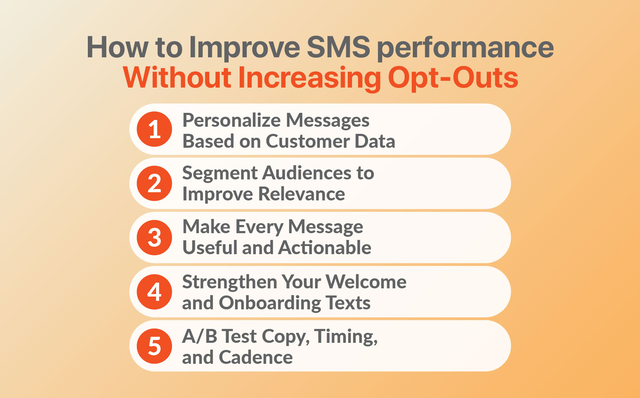
Avoiding opt-outs isn’t all that matters when building your SMS marketing strategy. You want to send messages that inspire loyalty and get recipients to take action while also keeping them on your list. Here are a few strategies that are good for performance, that can help keep unsubscribes low at the same time.
1. Personalize Messages Based on Customer Data
With a good mass texting service, you can connect your SMS program with your CRM (customer relationship management platform) and pull in data to personalize your messages. A platform like TrueDialog lets you use dynamic fields that fill in based on your data, making it easy to include information like a subscriber’s name and location in your messages. That can increase relevance and help customers feel more seen by your communications.
2. Segment Audiences to Improve Relevance
Another good way to increase the relevance of your messages is to divide your audience by lists based on their particular interests and preferences. You can segment lists based on a number of possible categories, such as:
- Lists for each product you sell, so recipients only get text messages about the product they bought
- Lists for different geographic areas, so you can get messages about in-person events or location-specific sales to the right people
- Lists based on text message frequency, if you let recipients choose how often to receive messages from you
- Lists for different types of messages, so if some people only want to receive order confirmations or appointment reminders, but not general marketing texts, you can offer that
The more you can tailor your messages to what people care about, the more they’ll appreciate them, rather than seeing them as a nuisance.
3. Make Every Message Useful and Actionable
While segmentation and personalization can do part of the job of making your messages relevant to recipients, the information in the message itself also has to be valuable. You want every message you send to be something the recipient cares about. That could include:
- Special deals and promotions for the cost conscious
- Information about your products that helps customers get more out of them
- Details about specific orders, like shipping updates and return policies
- Information about limited-time sales and offers
- Alerts about upcoming events or appointment reminders
- Exclusive content and giveaways for subscribers only
4. Strengthen Your Welcome and Onboarding Texts
The first few messages a new subscriber receives from you are some of the most important. A welcome drip campaign can be a good way to introduce new subscribers to your list. Use the opportunity to let them know what kind of text messages they can expect, how often they’ll be hearing from you, and providing something special as a welcome, like a nice giveaway or a discount on their next order.
5. A/B Test Copy, Timing, and Cadence
Never assume you know what your audience will respond to. Develop an SMS strategy based on what you do know, but then test your assumptions. Perform A/B testing for every factor that matters, including:
- The wording, images, and rich features in the messages you send
- The different types of messages you send (e.g. how well do offers perform vs product updates)
- The timing of messages (both times of day and days of the week)
- Message frequency
- Any interactive features you try out, like suggested replies and CTA (call to action) buttons
The more you test, the more data you’ll gain on what your audience responds to. You can adapt your strategy over time to what works and gain better results, including lower SMS opt-out rates.
Why Brands See High SMS Unsubscribe Rates
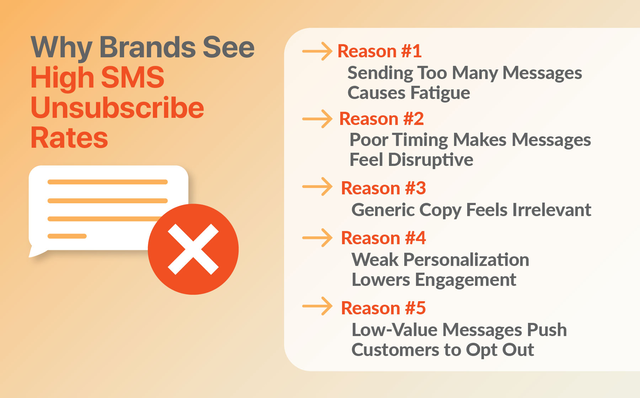
According to benchmarking data, a healthy unsubscribe rate is anything below 1%, with the average being 0.53%. If your rate is much higher than that, you want to identify why. In many cases, one of these reasons is to blame.
Reason #1: Sending Too Many Messages Causes Fatigue
People who are happy to get one message a week from you may bristle if they see texts multiple times throughout the week. Frequency is one of the biggest issues that can take brand messages from a nice-to-have to a nuisance. If you want to maintain the privilege of showing up in subscribers’ inboxes, be cautious about how often you do so.
Reason #2: Poor Timing Makes Messages Feel Disruptive
If you’re old enough to recall the days of landlines, you may remember how people felt about telemarketing calls that interrupted dinner — it was a common enough annoyance to become a cliche. Don’t repeat that mistake with your text messages. We’ve already addressed the importance of avoiding late-night messages, but even going beyond “quiet hours,” think carefully about when your messages are scheduled to go out and how they might impact subscribers.
Reason #3: Generic Copy Feels Irrelevant
Your message can come at the perfect time, but if the message itself isn’t useful, recipients could view it as an annoyance. Don’t text just to text. Make sure every message you send has a point and provides something valuable to the recipient. Consider incorporating RCS (Rich Communication Services) features like images and videos to make your messages more engaging.
Reason #4: Weak Personalization Lowers Engagement
If you don’t use personalization — or worse, if you try and get it wrong (think: a text that starts with “Hi !”) — recipients won’t feel like your messages are meant for them personally. Your attempts to connect will ring hollow. Good personalization isn’t rushed or surface level. It means paying attention to what your customers care about, and addressing that in the messages you send. And if you do make a cringey personalization error (mistakes happen), own up and apologize right away. People are more forgiving if you’re honest and accountable.
Reason #5: Low-Value Messages Push Customers to Opt Out
Your subscribers probably get a lot of text messages every day. If they get too many text messages from you that aren’t providing value, you won’t earn your place in their inbox. This may be the hardest part of effective SMS marketing: making sure every text you send provides something your recipient cares about. But it’s vitally important to keep your SMS unsubscribe rate down.
Start Reducing SMS Unsubscribe Rates with TrueDialog
Some opt-outs may be inevitable, but with a good enterprise SMS platform, you gain the tools to improve your SMS performance and reduce unsubscribes at the same time. TrueDialog’s team and platform help you reduce opt-outs from every angle:
- Segmented lists and dynamic personalization to improve relevance
- RCS support for features like verified sender profiles, rich media, and suggested responses
- Scheduled send to help you reach people at the best times of day
- TrueDelivery® to avoid spam filters and reach more inboxes
Extensive reporting to better identify what’s working and how to improve results
For the times someone does choose to opt-out, you can leverage TrueOptOut, TrueDialog’s AI-powered opt-out intent detection engine. It catches opt-out requests that standard keyword matches miss – like misspellings, emojis, and natural language responses. With decision logging and an audit trail, you can reduce your TCPA exposure and avoid the reputational risks that come from contacting people who don’t want to hear from you.
To see how all these features work, set up a TrueDialog demo.
FAQs
-
What is a good SMS unsubscribe rate?
A good SMS unsubscribe rate is typically anything under 1%, with the average reported as 0.53%.
-
Why do customers unsubscribe from SMS marketing messages?
Some of the most common reasons people unsubscribe from marketing text messages are: sending too many text messages, sending messages at the wrong time (like late at night), and sending low-value or irrelevant messages.
-
How can businesses lower their SMS unsubscribe rate?
Some best practices to keep your unsubscribe rates down include setting clear expectations, using double opt-in, using personalization and segmented lists, not texting too frequently, sending text messages at the right time, making sure every message provides value, and paying attention to analytics to understand what works.
-
How often should brands send marketing text messages?
The right message frequency depends on your brand and audience, but in most cases, aiming for weekly or monthly text messages is a good standard. To find out what your audience prefers, ask them. You can let them select a preference during the signup process or send SMS polls to let them weigh in.