Patient no-shows are frustrating for everyone involved — from the overstretched practitioners rushing between appointments and the staff tasked with managing their schedules, to the patients whose oversight has left them without care and, in some cases, a hefty cancellation fee.
Of course, aside from the administrative headaches, no-shows are also expensive for healthcare organizations. A study published by PubMed found that the average no-show rate across medical specialties has reached a whopping 23%, which, according to some estimates, costs the industry billions of dollars per year.
Fortunately, there’s an easy way to curb missed visits and keep your schedules (and margins) on track.
In this article, we’re sharing how to reduce no-show appointments using a communication tool that’s practically impossible to ignore: text messaging.
Why Patients No-Show: Top Root Causes
Nearly every patient no show can be attributed to one of these five causes:
-
Forgetfulness
Like you, your patients lead busy lives, and it’s not unusual for appointments to slip their minds — especially if they booked weeks or months in advance.
-
Scheduling conflicts
Last-minute work, school, and caregiving responsibilities can sometimes force patients to miss appointments without adequate time to cancel.
-
Transportation issues
Unreliable public transportation, long commutes, inclement weather, and parking challenges can all make it hard for patients to arrive on time (or at all).
-
Medical anxiety
In some cases, patients may become fearful of undergoing procedures or receiving bad news and opt to skip their appointment.
-
Unexpected personal challenges
From sudden medical or family emergencies to financial concerns and changes in insurance coverage, certain unexpected life circumstances can prevent patients from keeping their appointments.
How to Use Text Messaging to Reduce No-Shows

While you may not be able to prevent or control all the reasons patients fail to show up for an appointment, a well-timed, well-written series of text messages can go a long way toward reducing no-shows. (Or, at the very least, ensuring patients cancel or rebook long before their appointment date.)
Here’s how to use mass SMS messaging to improve attendance:
1: Use Reminder Timing That Matches Patient Behavior
Sending a single reminder immediately after a patient books is rarely enough, especially if the appointment date is several weeks away. Instead, time reminders wisely and align them to typical patient behavior.
For example, you might send a series of three reminders: a confirmation message after the patient books, a reminder a week before the appointment, so the patient has plenty of time to plan or reschedule, and a third reminder 24 hours before, along with any helpful details (such as an address they can enter into their GPS app).
2: Use Two-Way Confirmations (So You Catch Issues Early)
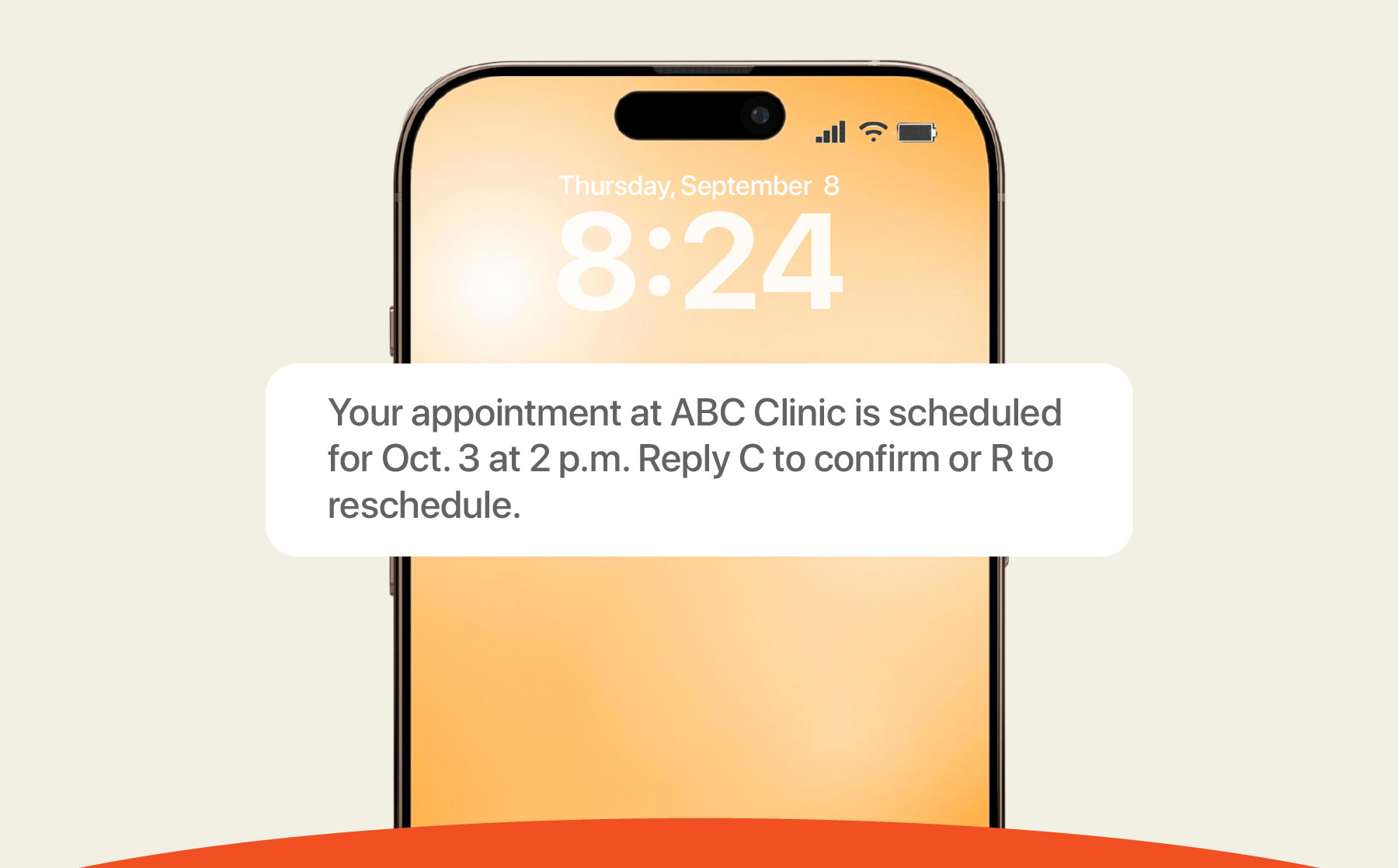
Instead of simply sharing information, send reminder texts that encourage a response. This way, you can verify that your recipient has received and read your message, and has ample opportunity to make changes. Two-way texting also makes it easy for patients to reach out with questions or concerns.
For example:
Your appointment at ABC Clinic is scheduled for Oct. 3 at 2 p.m. Reply C to confirm or R to reschedule.
3: Make Rescheduling the Default (And Make it Easy)
Your patients are often busy people who are balancing numerous obligations and responsibilities. They may intend to call and reschedule, but if the process is too convoluted, they’ll likely put it off and may forget until it’s too late. One of the best ways to reduce no-shows is to remove any friction or obstacles in your rescheduling process.
If they assume that calling, navigating a complex phone tree, and waiting on hold for several minutes is the only way to rebook their appointment, they’ll likely avoid doing so. Instead, share easier options via text.
For example:
Need to reschedule your appointment? Visit the patient portal to choose a new time [LINK]
4: Follow Up on Missed Appointments Without “Ghosting”
When you do have no-show patients, texting can help ensure they still get the care they need — and don’t miss another appointment in the future. Send no-shows a quick text to let them know how to rebook, so they don’t fall through the cracks.
For example:
We’re sorry you weren’t able to make it today! Please call us or visit the patient portal so we can rebook you ASAP.
For patients who aren’t subscribed, be sure your admin team mentions your SMS program when they call to reschedule no-shows. Knowing they’ll receive reminders can be a powerful incentive to sign up for texts.
5: Reduce Late Arrivals and Pre-Visit Friction
As mentioned above, transportation issues are a common reason patients miss appointments. And while you can’t prevent public transit challenges or car trouble, you can make it easy for patients to plan their trip well in advance. Simply send them a pre-appointment text with your address, detailed instructions for finding your office, and any parking information that might otherwise delay their arrival.
For example:
We look forward to seeing you tomorrow at 2 PM at our office on 789 Main St., Suite 3B. Please park on floor 3 of the garage.
6: Help Alleviate Pre-Appointment Anxiety
Connecting with patients before their appointment day is a great way to alleviate pre-appointment nerves and remind them that you’re there to help them get the care they need. This is especially critical when a patient is visiting for a procedure or facing a worrisome diagnosis. The more information and support you provide up front, the more comfortable they will feel about their visit.
For example:
Hi Joy! It’s Eva from Dr. Fox’s office. Just checking in ahead of your appointment next week. Do you have any questions?
Hi Mo! As requested, here’s a quick overview of what you can expect at your appointment with XYZ Gastroenterology: [LINK]
7: Set a Clear No-Show Policy That Patients Actually Understand
One of the best pieces of advice for how to reduce patient no-shows is to give patients a reason not to miss it, such as a late-cancellation policy with a small fee.
Of course, even when a late fee is warranted, it’s still not a pleasant experience and can leave patients with a negative impression of your organization — especially if they weren’t expecting to pay anything. That’s why it’s crucial you clearly explain your no-show policy well before their appointment date. Not only can this help make sure they prioritize their appointment, but it also ensures there are no unwelcome surprises if they don’t.
For example:
Your appointment at Care Center is confirmed for Fri at 9 AM. Please note: no shows and cancellations made within 24 hours of your visit may incur a $30 fee.
A Simple No-Show Reduction Workflow
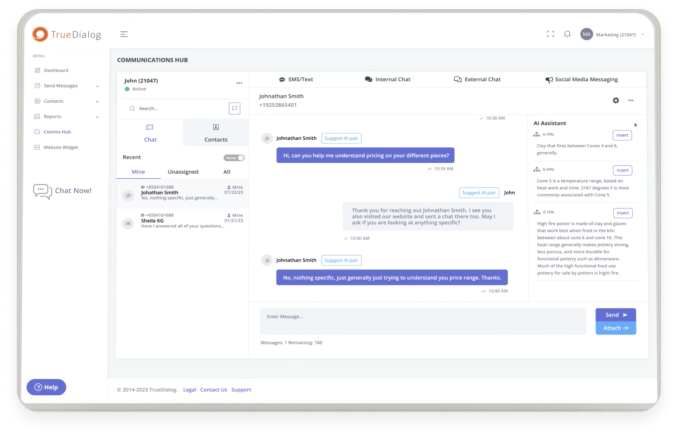
Often, organizations wringing their hands over how to prevent no-shows are surprised to learn it’s a lot simpler (and less time-intensive) than they expect. In fact, with the right SMS messaging platform, you can automate the entire process (and still easily jump in if your patient responds with a question or concern).
Here is an example workflow:

The truth is, there’s no 100% effective method for how to stop no-show appointments. Even with all of the right tools and best practices in place, you’ll still occasionally have patients who fail to show up. However, engaging patients in regular communication can significantly reduce missed visits while improving their experience.
FAQs
-
What is the best reminder timing to reduce no-shows?
The best timing depends on your patients and how far in advance they booked their visit. However, a good rule of thumb is to send patients at least three reminders: immediately after they book, a week before their appointment, and 24 hours before the appointment.
One-week reminders give patients plenty of time to cancel or reschedule if their plans change, and 24-hour reminders serve as a good final touch in case they’ve forgotten their appointment.
-
How do I prevent a no-show appointment without upsetting my patient?
In most cases, patients are happy to have reminders. (After all, contacts who have subscribed to receiving text messages from your organization likely expect these communications.) Be sure to keep the tone friendly, helpful, and informative. While it’s crucial to remind patients about no-show policies, it’s also important to add value by sharing key details and offering easy, hassle-free ways to confirm and reschedule.
-
Are SMS appointment reminders compliant in healthcare?
Sending SMS appointment reminders is a common practice in healthcare today, but it’s important you adhere to industry regulations by obtaining explicit consent before texting a patient, immediately honoring opt-out requests, and complying with data privacy obligations (such as those outlined in HIPAA).
If you haven’t already, take time to familiarize yourself with the Telephone Consumer Protection Act and the guidelines from the Cellular Telecommunications Industry Association. Additionally, be sure to use a platform like TrueDialog with extensive experience supporting healthcare SMS and built-in security and compliance features.
Ready to learn how to reduce no-shows and boost patient satisfaction through texting? Request a demo today!