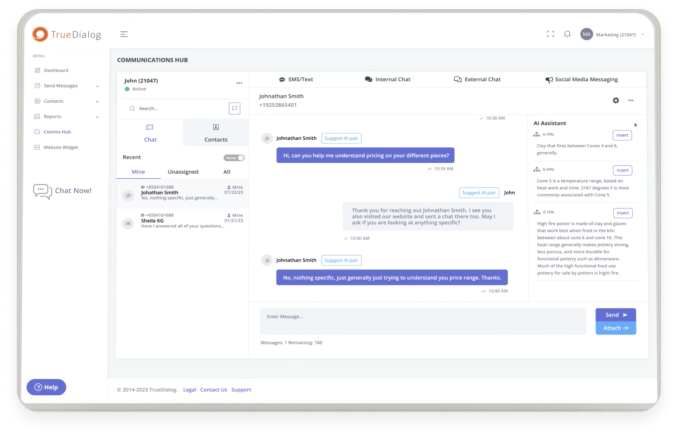


While the insurance industry has changed dramatically over the past decade, one thing remains true: building and maintaining genuine relationships is the linchpin of your agency’s success. And, as any seasoned agent will tell you, the energy you put into cultivating those relationships pays off every time a customer chooses loyalty over a competitor’s enticing offer.
The challenge is that it’s getting harder to establish and maintain personal connections. Today, people are more hesitant to answer phone calls and less likely to open emails. They’re overwhelmed, burnt out, and inundated with distractions.
Fortunately, while most marketing approaches fall short, there’s one channel you can count on to cut through the noise.
Insurance text message marketing is one of the most effective ways to reach current and prospective customers one-on-one, foster genuine relationships, and keep your contacts engaged long term.
What Is Insurance Text Message Marketing?
Insurance text message marketing uses mobile texting to communicate directly with prospects and customers. Today, insurance organizations often leverage text messaging to send renewal reminders, share policy updates, follow up on quotes, confirm appointments, and field policyholders’ questions and concerns.
It’s fast, convenient, less disruptive than a phone call, and, unlike with email, you don’t have to worry about your message getting buried in overcrowded inboxes. With the right SMS platform, agents and other insurance pros can easily engage in the conversations that build trust and drive retention.
Why Insurance Agents Should Use Text Messaging
As you’ve probably noticed, the old insurance marketing playbooks aren’t driving the same results they used to, and that’s for a good reason: people communicate differently today.
Here are a few reasons you may want to consider SMS marketing for insurance agents:
-
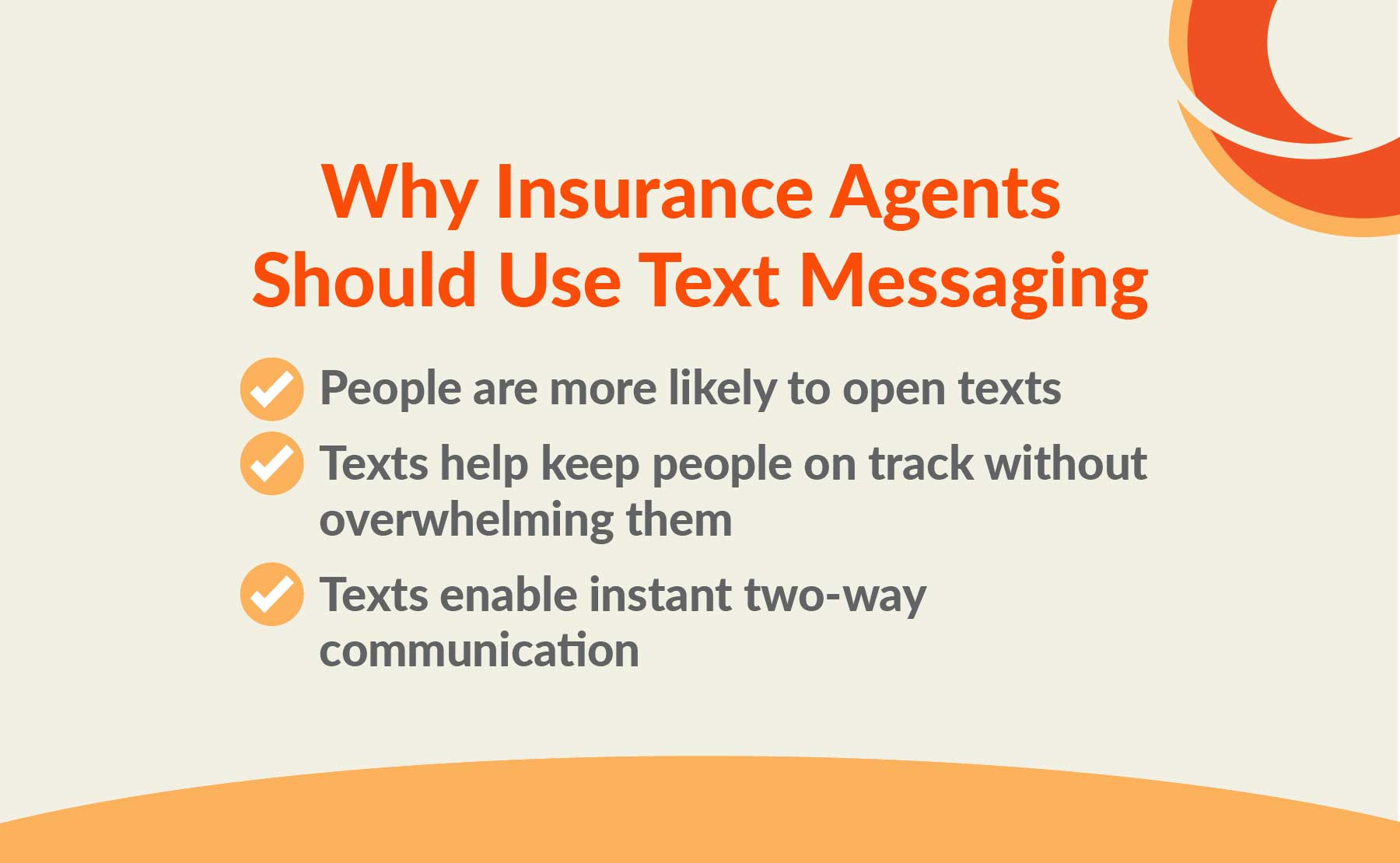
People are more likely to open texts
Like you, your audience is busier than ever and constantly feeling pulled in a hundred different directions. We’re frequently multitasking and rarely have the mental bandwidth for even a ten-minute phone call to discuss a quote or update an existing policy.
In fact, according to a Uswitch survey, nearly a quarter of 18 to 34-year-olds never answer phone calls — yet 61% said they’d prefer to receive a text. And while older generations may be slightly more likely to pick up a call, texts still beat phone calls and emails, with an open rate of 98%.
-
Texts help keep people on track without overwhelming them
From renewals to policy updates, payments to claims submissions, there’s a lot to remind your customers about. But keeping up with dozens of email threads can be exhausting, and in-app alerts are easy to ignore.
Text messaging helps you stay in touch and offer gentle nudges without bombarding policyholders with too many communications. And since most people already check their text inboxes several times a day, they’re less likely to overlook these reminders, helping reduce the risk of policy lapses or missed opportunities.
-
Texts enable instant two-way communication
When you have access to a reliable enterprise texting platform, like TrueDialog, it’s easy to automate reminders and set up autoresponses for quote requests. You can quickly engage new leads, answer their questions, and book an appointment before your competitors even have a chance to respond. Additionally, you can engage in secure conversations with existing customers and provide immediate assistance whenever they need you.
Best Use Cases for Insurance Text Messaging
One of the best things about text messaging for insurance agents is that it provides a reliable way to connect with contacts at every phase of the customer journey. Not only do texts have jaw-dropping open rates, but data also shows that 90% of people open them within three minutes. In other words, if you’re looking for speed and reliable engagement, text marketing for insurance is hard to beat.
Here are a few ways top insurance agents use texts to keep contacts engaged at every stage of the buying cycle:
-
Policy renewal reminders
As an insurance pro, you know policy renewals are a critical moment in the customer relationship. A well-timed text can help them avoid a coverage lapse and help you avoid losing your customer to a competitor who may be waiting to strike. In addition to setting automated reminders to notify policyholders as their renewal date approaches, agents can also use this time to reach out to see if your customer has any questions, concerns, or interests in expanding their coverage.
-
Appointment scheduling and confirmations
Scheduling is one of the most frustrating bottlenecks in the customer journey (and feels like a ridiculous reason to lose an opportunity). Texting gives you an easy way to book appointments if you need to review coverage or discuss claims, and automated reminders can help you reduce no-shows and late arrivals, ensuring a smoother, more convenient experience for everyone involved.
-
Claim updates and support messages
For customers, filing a claim can be a stressful, anxiety-inducing experience, and waiting hours (or days) for a response only makes it worse. But texting is a great way to put them at ease with immediate reassurance and support. It also makes it easy to provide updates throughout the process (without forcing your customers to navigate complicated phone trees or sit on hold).
Even a quick automated message letting your policyholder know you’ve received their documentation or that your team is reviewing their claim can go a long way toward easing concerns and building trust.
-
Lead nurturing and quote follow-ups
When it comes to quote requests, speed wins. Texting allows agents to respond to new leads quickly, ask qualifying questions, and follow up after delivering a quote, increasing their chance of beating out competitors for new business. Instead of chasing down prospects via phone calls (that they probably won’t answer), SMS gives you the power to keep conversations moving via a channel most people prefer.
-
Cross-selling and upselling campaigns
A great agent knows when to introduce new products or help customers expand their coverage, and texting lets you reach your policyholders at just the right moment. And if you’re leveraging a solution that integrates with your CRM, you can build workflows that help you capitalize on those vital opportunities.
For example, suppose a home insurance customer recently updated their address to an area with a higher flood risk. In that case, the system could prompt you to reach out about expanding their coverage. Or, you could set up a workflow to remind customers about bundling when they’re a couple of months out from renewing their home or auto policy.
Insurance Text Message Templates and Scripts
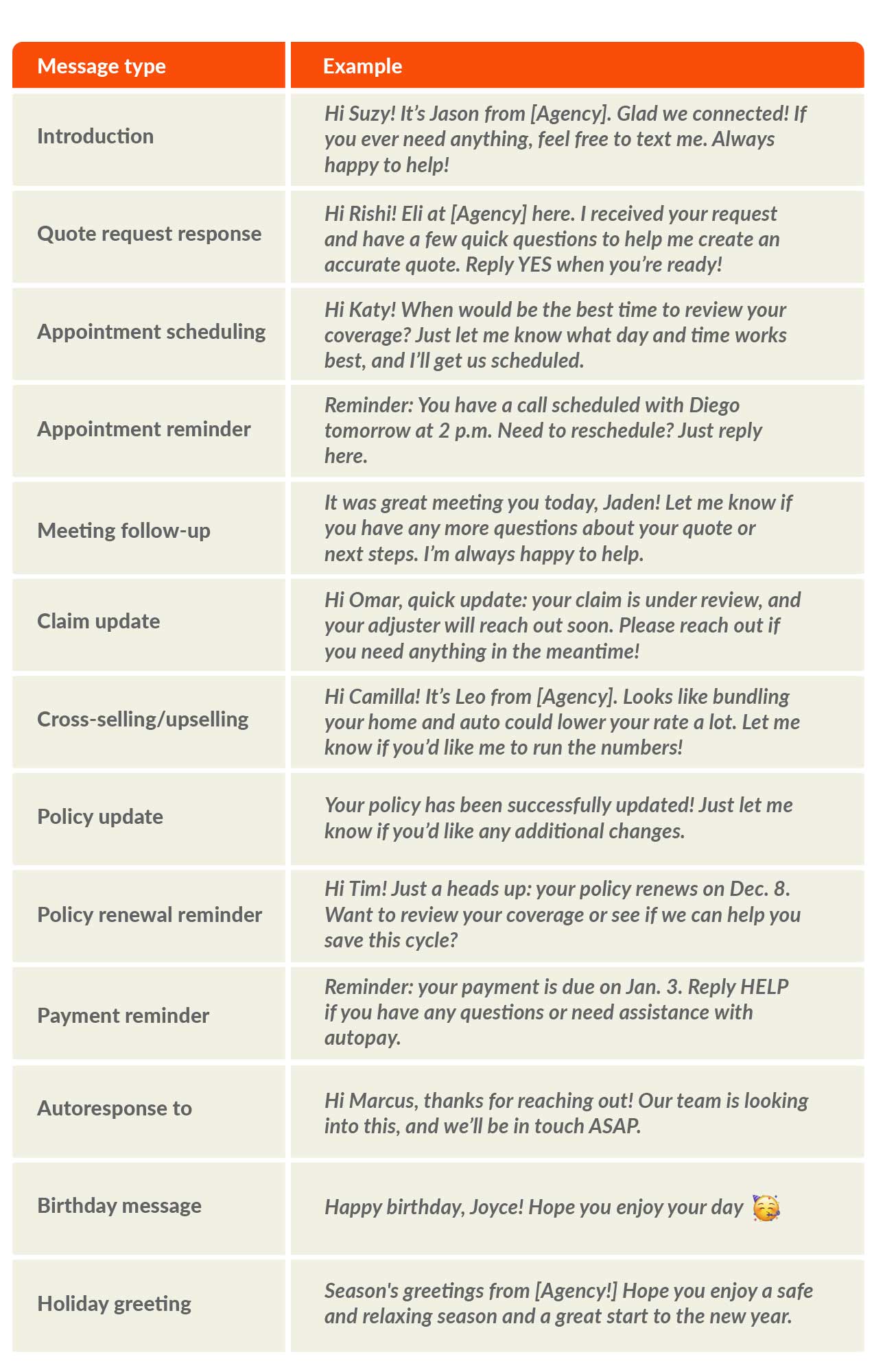
Having trouble imagining what these texts could look like? Here are a few car, home, or life insurance SMS messages examples to help spark your creativity:
How to Create Effective Insurance Text Campaigns
Whether you’re just getting started with SMS marketing for insurance or you’ve been using text marketing for a while and want better results, there are a few things you can do to maximize your success:
-
Step 1: Define your goal and target audience
As with any marketing effort, you need to get clear about your purpose. Why, specifically, do you want to use text marketing, and what are you hoping to achieve? For example, your goal may be to increase renewals or boost customer satisfaction with claim handling.
Then, decide which audience or segment you want to reach first. (While you should aim to engage your entire audience, it can be helpful to start with a smaller segment before you roll out your texting program company-wide.)
-
Step 2: Craft clear, compliant message copy
Make sure your text messages are concise, direct, and easy to understand. Avoid industry jargon that might confuse your audience, and keep your communications simple by sticking to one main idea per text.
Additionally, make sure you comply with regulatory requirements by obtaining explicit consent before texting contacts, including necessary disclosures, and making it easy for subscribers to opt out. (Keep in mind that failing to comply with these regulations can have severe consequences for your brand, so it’s crucial that you take the proper precautions.)
-
Step 3: Personalize your communication
Since building authentic relationships is a cornerstone of success in the insurance industry, it’s always a good idea to personalize your texts as much as possible. For example, use your customer’s first name, reference their policy type, and reference recent interactions.
By using an enterprise texting solution like TrueDialog that integrates with leading CRMs and marketing automation platforms, you can set up workflows to trigger texts based on life events, renewal dates, and other opportunities. These integrations also make it easy to personalize messages at scale.
-
Step 4: Automate and schedule campaigns
Automations are essential for keeping contacts engaged and making sure communications never slip through the cracks. For example, you can set up autoresponses to questions, claims submissions, or quote requests. You can also automate appointment reminders, renewal notifications, and payment alerts, and schedule mass campaigns for large portions of your list (such as holiday greetings, promotions, or product announcements).
-
Step 5: Track performance and optimize
In step one, you set a goal. Now it’s time to measure your performance to determine how well you’re meeting your objectives and whether you need to make any changes. Depending on which SMS software for customer service you choose, you should have access to reporting and analytics features that let you carefully track each campaign and review metrics such as delivery rates, click-through rates, opt-outs, and more.
By keeping a close eye on your performance, you’ll know what’s working, what’s not, and where you can optimize your approach for better results.
Compliance and Security in Insurance SMS Marketing
You already know the insurance industry is heavily regulated, and because your work involves a lot of sensitive personal and financial data, it’s crucial that you prioritize security in your text marketing efforts. Additionally, with text-based spam and scams on the rise, carriers and regulatory bodies are going to great lengths to protect consumers — which means it’s more important than ever to comply with industry regulations.
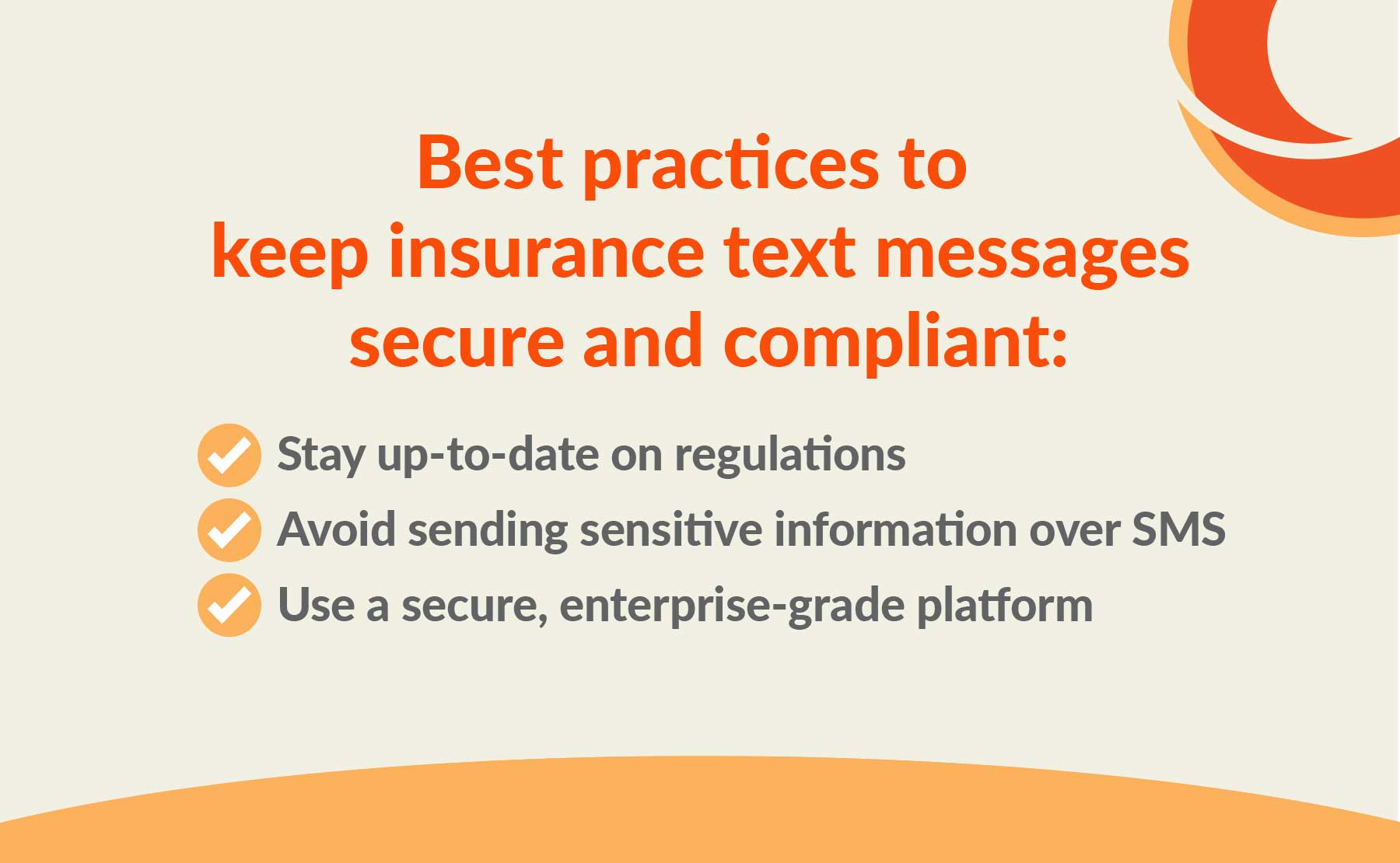
Here are a few best practices to ensure your insurance text message marketing program is secure and compliant:
-
Stay up-to-date on regulations
As an organization, there are specific legal and ethical standards you’ll need to meet when texting your audience. Although there are several regulatory bodies and even state-specific privacy laws you’ll want to familiarize yourself with, there’s also a lot of overlap. For example, most regulations and guidelines require that businesses obtain explicit (and verifiable) consent before sending texts, cease all text communications when someone opts out, include proper disclosures to identify their brand and explain what types of communications subscribers can expect, and avoid sending promotional texts during quiet hours (usually 9 p.m. and 8 a.m. in the recipients’ time zone).
-
Avoid sending sensitive information over SMS
While texting is an excellent channel for sending reminders, updates, and check-ins, SMS is not end-to-end encrypted. Despite your best efforts, there’s always a chance text messages can be intercepted or fall into the wrong hands. That said, be sure to avoid sending sensitive data, claim documents, policy details, or any other personally identifiable information via text. Instead, keep confidential information restricted to secure portals and encrypted channels.
-
Use a secure, enterprise-grade platform
One of the best ways to protect your customers’ data and reduce your regulatory risk is to choose a platform designed for highly regulated industries. For example, TrueDialog supports TCPA-compliant insurance messaging by offering built-in safeguards (like detailed audit trails and opt-in management). The platform also meets rigorous security standards, such as SOC 2 Type II and TX-RAMP, and leverages enterprise-grade security infrastructure.
How TrueDialog Empowers Insurance SMS Marketing
TrueDialog offers several features developed to support organizations like yours in building and deepening personal relationships while also remaining secure, compliant, and highly efficient. Here are a few ways the platform can power your text marketing efforts:
-
User-friendly 2-way and bulk messaging
Whether you want to send a personalized car insurance text message to follow up on a quote or a mass holiday greeting to all of your customers, TrueDialog makes it easy. Effortlessly build your own insurance sales text message templates to help speed up message composition, pull from your own custom-built library of AI-generated responses, and use the dynamic content feature to tailor messages at scale. Thanks to direct carrier connections, you can send messages quickly and reliably (regardless of whether you’re sending to one contact or a list of 100,000).
-
Easy contact management
TrueDialog helps you organize, segment, and manage your audience from one centralized location. The carrier lookup feature helps validate numbers (so you don’t inadvertently text a wrong number or a landline), and dynamic lists enable more precise segmentation (without needing to create a new list for each campaign). Plus, you can easily import contacts from external sources.
-
Fair and transparent pricing
TrueDialog is ranked No. 1 in “competitive pricing” by G2 for a reason: we are up-front about all costs, and you never have to worry about hidden fees or unexpected markups. Every plan comes with enterprise-grade messaging, unlimited users, and ultra-reliable support.
-
Enterprise-level security and compliance
The platform is built for highly regulated industries and fast-growing organizations looking to scale their efforts. In addition to meeting multiple security certifications, TrueDialog offers multi-factor authentication and single sign-on, and makes it easy to track who has opted in (or out) of your communications, helping you stay compliant.
There’s no doubt that text messaging is the future of insurance marketing. With the right platform, you can connect quickly with every member of your audience on a personal level and grow your business fast.
Frequently Asked Questions
-
Can insurance agents use text messaging to sell policies or send reminders?
As long as your contact has explicitly opted in to receive your messages, you can use SMS to support your sales and marketing efforts. Like, for example, discussing quotes, promoting policy upgrades, or sending helpful notifications (such as appointment or renewal reminders). Just be sure your health, auto, property, or life insurance SMS messages remain compliant, and avoid sharing any sensitive information via text since it’s not a fully encrypted channel.
-
What are the best examples of SMS campaigns for insurance agents?
Some of the best use cases for insurance text message marketing include: Policy renewal reminders, quote follow-ups, appointment scheduling, claims updates, and cross-sell promotions. Text campaigns are great for keeping customers informed, driving action, and maintaining an open line of communication that your contacts feel comfortable using.
-
How does SMS marketing improve customer engagement for insurers?
Text messages offer fast and streamlined communication (without the friction of phone calls). It gives you a direct line to your leads and customers so you can build genuine relationships, share timely reminders, and remain top-of-mind. Best of all, it allows you to stay in touch with your audience through a channel they use several times a day.