
In this day and age, companies are wise to bring SMS marketing into their outreach strategy. Customers are more connected than ever, and the role of mobile phones in day-to-day life is significant.
With the proliferation of online shopping and the ability to tap-and-go at brick-and-mortar stores, mobile phones are becoming an indispensable part of daily life for many. A large proportion of the modern population says they would rather forget their wallet at home than their phone, making it the best and most accessible means of reaching potential customers.
A modern marketing strategy isn’t complete without SMS marketing. While this approach will create more opportunities with potential and current customers, you should also be sure to write it into your budget. In this article, we’ll go into one crucial aspect: what a short code is and how much a short code costs for SMS marketing.
Today, SMS marketing boasts a 98% open rate and an average ROI of $71 for every $1 spent — and short codes are the engine that powers high-volume campaigns at scale. Here’s exactly what to budget for.
What You’ll Learn
- The difference between vanity and random short codes
- How much a short code costs to lease
- Additional fees to factor into your SMS marketing budget
- How short codes compare to 10DLC numbers
Why Short Codes Are Worth the Investment
It’s not just about what you want to say, but what your customers will hear and understand – that’s what a good marketing strategy is built upon. While flyers in the mail or ads in the back of the newspaper were once effective, the world has moved into new territory. Customers are more annoyed than intrigued by mass mail campaigns, for example, so it doesn’t make sense to invest your money there.
SMS marketing is flexible and more personal than an email newsletter. SMS is also less likely to be buried in an inbox or mistakenly moved to a spam folder. Sending messages to subscribers is easy using your own short code.
When considering how much a short code costs, there is an initial investment in order to start sending mass SMS to your contacts. From there, the investment and maintenance are minimal. You can easily begin sending SMS for lead generation, promotion, proactive reminders, and much more.
Related: SMS Short Codes for Marketing
Vanity vs. Random Short Codes: What’s the Difference?
Your short code will be recognizable by your recipients, but that’s not all. When incorporating SMS into your digital marketing strategy, you will likely add your short code to materials such as newsletters, banners, social posts, and more. You’ll share your short code to encourage subscribers.
As short codes are shorter than phone numbers, they are easier to remember. That said, there are some that are more memorable than others.
The lower cost for a short code is to have your number selected at random. You’ll receive your short code during the setup process, and it may or may not be a number that rolls off the tongue.
Vanity short codes put the power of choice into your hands. Select a number that is memorable, either due to sequence (think 12345 or 121212) or by spelling out a word related to your brand on the keypad (like PEPSI). Much like vanity plates on your car, these numbers stand out. Of course, they come at a premium. How much a short code costs will depend on how much say you have in those numbers.
Once you’ve decided which type of short code fits your brand, the next step is understanding how the leasing process works — and what it’ll cost.
How Short Code Leasing Works
Short codes are leased — not owned — through the U.S. Short Code Registry on a subscription basis, typically in three-, six-, or 12-month terms. Pricing generally breaks down as follows:
- Random short code: Approximately $500/month
- Vanity short code: Approximately $1,000/month
- With carrier connectivity included: Approximately $800–$1,500/month
Keep in mind that short code pricing can shift, and carrier fees, provisioning costs, and platform fees will add to your total investment. We recommend confirming current rates directly with your SMS provider.
Additional Short Code Costs to Budget For
In addition to the lease, there are other costs for a short code that you should take into account:
Provisioning
The short code provisioning process can be arduous for businesses without experience in the workflow. SMS aggregators and application providers often offer support in ensuring that your application is filled out fully and is approved by the U.S. Short Code Registry without hassle.
While this service is invaluable, it also contributes to how much a short code costs. This is a one-time setup fee that should be factored into the process. Approval can take 4-8 weeks, a timeline made even longer if you have to go back and fix your application. It is recommended to include provisioning support in your budget for the cost of a short code.
Hosting
Many SMS aggregators or application providers will charge a fee for hosting your short code on their system. Research with your application provider to understand if this will be a recurring bill to put into your budget.
SMS and MMS Messaging
Another cost for short codes arises when you begin sending messages. SMS aggregators or application providers may charge a fee for the text or visual messages you send. When selecting a platform for message creation and distribution, make sure you understand the billing model fully. Check with your wireless carrier as well, as they may also have messaging fees.
Platform Provider
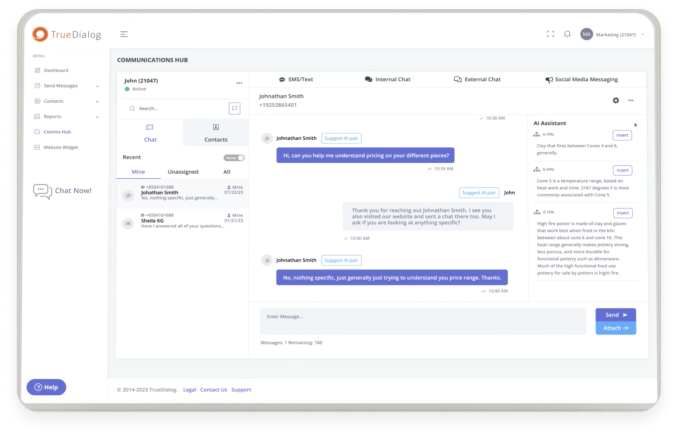
Sending business SMS is slightly different from what you’re used to. Instead of opening your phone, crafting a message, and hitting send, you’ll instead do this from an application provider. These platforms are created for business SMS and allow you to create messages to send to your audience or a subset of your subscribers.
Some providers offer no-code, native integrations with other platforms, such as a CRM. That means users can text directly from their CRM instead of toggling back and forth between systems. As with any software provider, the fees vary depending on who you choose, so research the cost when designing your budget.
Short Codes vs. 10DLC: Which Is Right for You?
Short codes aren’t the only option for business SMS. Ten-digit long codes (10DLC) are standard phone numbers registered and approved by carriers for business messaging. They’re a more affordable entry point — but come with lower throughput and are better suited for conversational or lower-volume messaging.
If you’re sending high-volume promotional campaigns to large contact lists, a short code is typically the better fit. If you’re focused on one-to-one customer conversations or just getting started with SMS, 10DLC may be the right starting point. TrueDialog’s automated 10DLC registration typically gets brands approved in three to five days — versus the weeks-long process customers face elsewhere. And because TrueDialog doesn’t mark up carrier fees, your cost per message stays predictable either way.
Not sure which is right for your organization? Talk to a TrueDialog expert to find the best fit for your needs and budget.
Choosing Your SMS Partner
When you’re ready to get into the world of SMS marketing, your best ally is your SMS platform. TrueDialog pairs an easy-to-use, no-code platform with the scale, compliance tooling, and native CRM integrations that mid-market and enterprise organizations require. We’ll help you reach your entire audience at scale with personalized customer engagement through text messaging.
Disclaimer: Please note that this advice is for informational purposes only and is neither intended as nor should be substituted for consultation with appropriate legal counsel and/or your organization’s regulatory compliance team.