
Remember Aesop’s fable about the race between the tortoise and the hare? At first, we all assumed the boastful hare would win because, well, he’s fast. Unfortunately, he’s also a little too sure of himself and, in the end, the persistent and consistent tortoise crosses the finish line first.
The lesson? “Slow and steady wins the race.”
The same holds true for marketing, which is why an SMS drip campaign is such a strategic choice. While it might seem more resourceful to flood your audience with as many exciting details as possible, you’re more likely to drive engagement and action when you deliver the goods in methodically scheduled, digestible bites.
Here’s what text message drip campaigns entail, why they’re smart to send, and a few tips and examples to help you succeed:
What Is an SMS Drip Campaign?
A drip campaign is a series of automated messages sent on a carefully planned schedule triggered by a contact’s action (such as a purchase or demo sign-up) or another event (such as a product release). Instead of cramming everything you think your audience needs to know into one massive marketing message or relying on manual follow-ups to drive the conversation forward, these campaigns slowly “drip” information at pre-determined intervals. The ultimate goal is to keep your brand top of mind and share timely, relevant details that guide your contact onto the next step without being intrusive or overwhelming.
(If you’ve ever managed email marketing, you’re likely already familiar with this concept. SMS drip campaigns follow the same structure, but leverage an SMS marketing platform to deliver messages via text instead.)
How SMS Drip Campaigns Work (The Anatomy of a Sequence)

Every text drip campaign has four essential components:
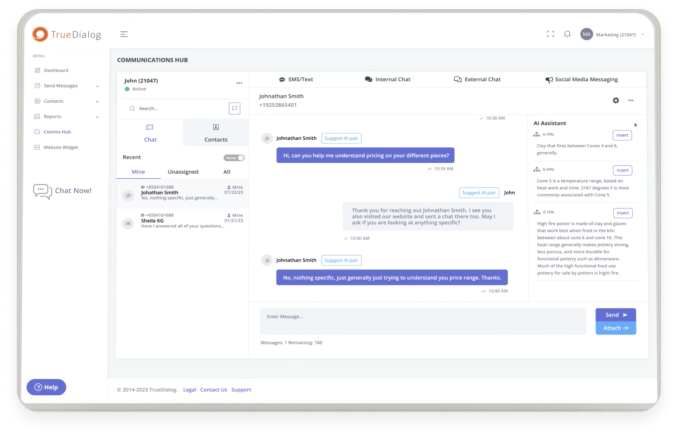
- A trigger: Your campaign will begin with a trigger of your choice, such as an opt-in, purchase, or event registration. Alternatively, a brand may set up a drip sequence to automatically begin on a pre-determined date, such as a few weeks before a product launch.Depending on the mass texting solution you use, you should be able to set up your drip campaign as an automated workflow. For example, TrueDialog integrates with several leading CRMs and marketing automation platforms (such as Salesforce, Marketo, and HubSpot) so you can create sequences that fire off depending on specific actions within those solutions.
- Timing and pacing: You’ll want to space out your messages so you don’t inundate recipients with too much information at once. But the timing and pacing of these flows vary depending on your campaign’s purpose. For example, a university might align its drip campaigns with natural decision points in the admissions process, such as sending tips and reminders every few days in the weeks leading up to an application deadline.
- Conditional logic: A text drip can use “if this, then this” logic to determine flow. For example, if a recipient clicks a link or takes another action, your sequence can adapt to route them to a different path (or, at the very least, skip sending unnecessary messages).
- A call to action: Every campaign sequence should include a CTA that guides recipients onto the next step or phase of a process. For example, a software company might encourage recipients to sign up for a free trial, while a sports and entertainment brand might nudge contacts to join a VIP perks program.
Planning Your Text Message Drip Campaign
If you’ve never created a drip campaign before, the idea of preparing a strategy and compiling a carefully planned series of messages might feel overwhelming. Fortunately, following these steps will make the process less daunting and help you achieve better results.
-
Define your goal and success metrics
As with any strategy, always begin with a clear objective. What, ultimately, do you hope to achieve from your campaign? For example, perhaps you want to drive more product trial sign-ups, boost purchases, or increase engagement among a specific segment of your audience.
Once you’ve defined your goal, you can decide which metric(s) you’ll use to measure success. For example, if you’re hoping to increase demo requests or ticket sales for an event, you’d probably want to measure conversion rate.
-
Segment selection
Second, decide which part(s) of your audience you want to reach, and how you can make the messaging relevant to each segment and individual.
According to Salesforce, 73% of customers expect personalization, and nearly two-thirds expect companies to adapt to their changing needs and preferences. In other words, the more you can tailor your message to your audience’s specific behaviors and preferences, the more likely your offer will resonate and achieve your intended goal.
In some cases, it might make sense to segment your audience by lifecycle stage. For example, do you want to address new contacts, re-engage inactive customers, or deepen relationships with VIP customers? In other cases, you might divide your audience by geographic area, job role/industry, or purchase history.
-
Choose the offer or value hook
Next, determine what will drive your audience to take action. What ultra-compelling offer can you provide to encourage recipients to take the next step?
For example, you might start by providing helpful information about a product they already have, transition to how they can benefit from pairing it with another offering, and finish with an irresistible limited-time incentive. As a marketer, you already know what’s most likely to motivate your audience (or each segment within your audience), so all that’s left to do is decide how to communicate that value within your campaign.
-
Map the customer journey
Finally, outline the path you want your audience to take and how many messages it will realistically take to drive action. You want the sequence to be long enough to convey all the information you want to share, but short enough that you don’t exhaust recipients.
Keep in mind that it can take some time (and A/B testing) to find the right sweet spot, but in most cases, a series of 3 to 6 messages, sent over 2 to 4 weeks, is a good place to start. Be sure to use SMS reporting to track what works and determine where you can optimize for better results.
Writing Drip Texting Messages That Get Responses
When it comes to sending a text message drip campaign, you’ll want to follow the same best practices as when composing and sending any text message to your audience:
-
Keep it concise
Regardless of whether you’re sending an SMS with a 150-character per-segment limit or an RCS message that allows for thousands of characters, it’s best to keep your messages short and sweet. People have short attention spans, and your audience has a lot of distractions vying for their attention, so aim to get your point across in as few words as possible.
-
Stay on theme
Don’t try to tackle too much in a single series. Instead, identify your end goal and devise a plan to get there by keeping your messages on track. For example, if a sports venue wants to drive season pass sales, the sequence might share various perks and benefits of season passes (rather than veering off track to discuss one-off, non-season-related promotions).
-
Write like a human
Text messaging is a conversational channel, so it’s important that your messages sound natural, friendly, and warm. Remember: this isn’t a brand broadcast, it’s a direct, one-to-one form of communication.
-
Personalize whenever possible
Speaking of one-to-one experiences, make sure you’re using relevant customer data to tailor messaging to each segment — or even to each individual. Personalization helps drive engagement and makes your contacts feel recognized and appreciated by your brand. (Instead of feeling like just a number.)
-
Use a clear CTA
Always end with a clear call to action. You never want recipients to guess about the next step, so make sure it’s easy to figure out (and simple to follow). For example, you might request a reply or provide a link directly to a demo request page. Your audience should be able to act in just a couple of taps.
SMS Drip Campaign Use Cases (with Templates)
Drip texting is an incredibly flexible campaign format and easy to use for a wide range of business objectives (and industries).
Here are a few popular SMS drip campaign examples to help inspire your next text series:
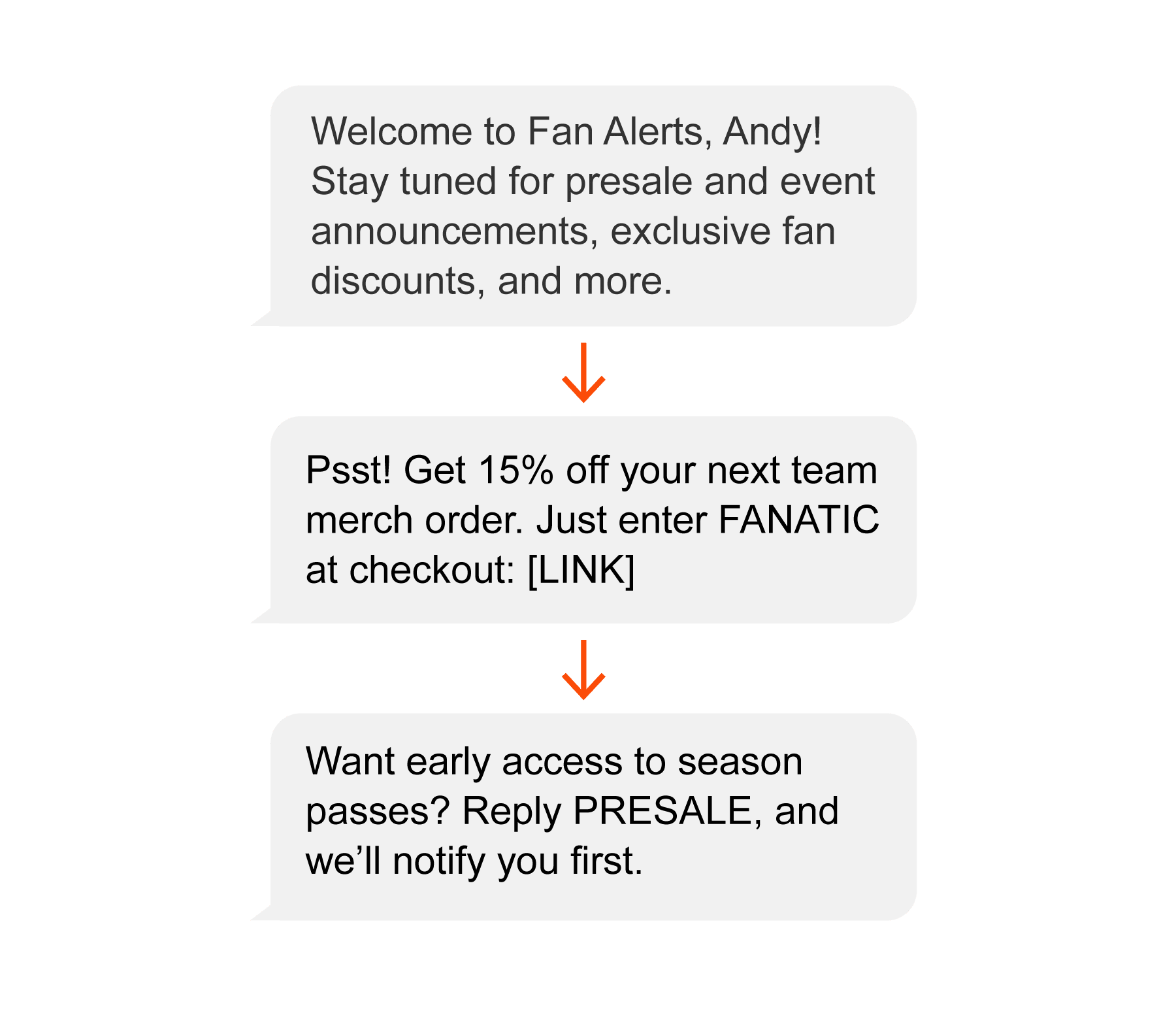
Welcome message series
Creating a welcome campaign is an excellent way to make a positive first impression, set expectations, and deliver immediate value. By building trust early, you’ll lay the groundwork for long-term loyalty and ensure subscribers don’t lose interest after opting in.
Example:
Lead nurturing campaign
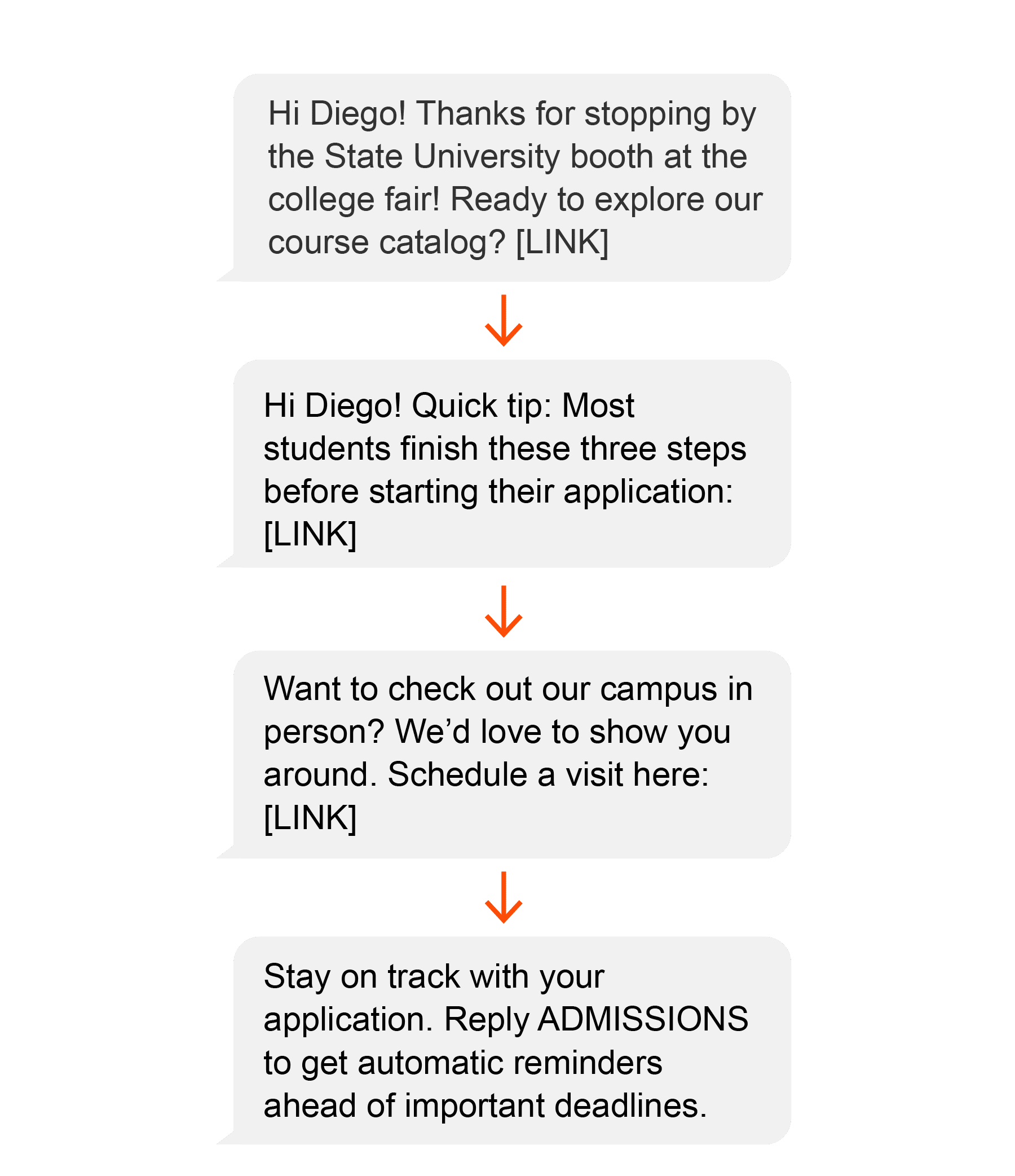
Often, even the most engaged prospects need a little guidance and a few gentle nudges before they convert — and an SMS drip campaign is the perfect way to keep your brand top of mind while reminding them of the exceptional value you offer. With the right incentives and clear CTAs, you can steer them through the decision journey until they’re ready to take the plunge.
Example:
Appointment reminder flow
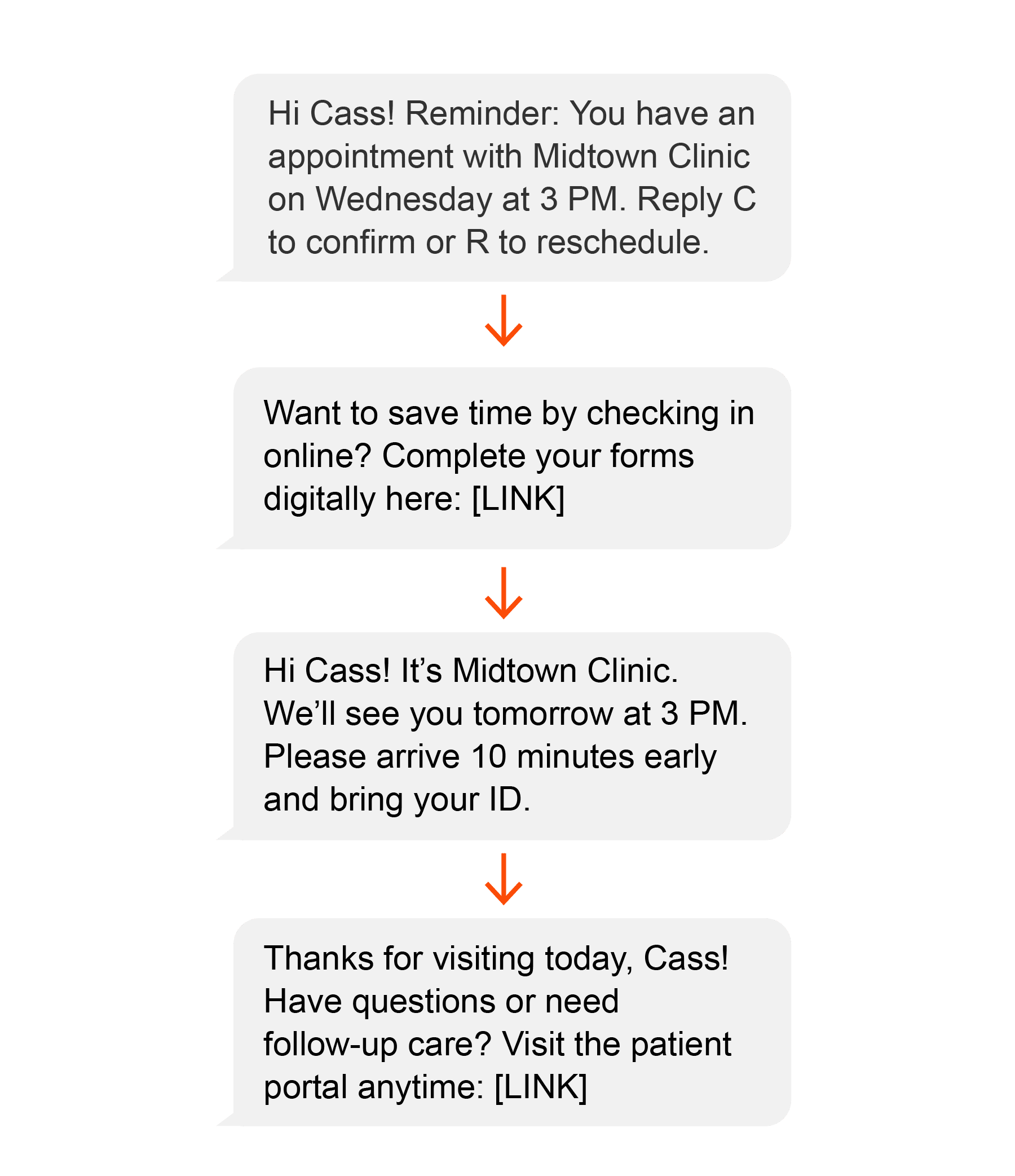
Appointment no-shows and last-minute cancellations can be a scheduling nightmare. Fortunately, sometimes all it takes is a few well-timed reminders to keep people on track.
Example:
Post-purchase series
The days and weeks following a purchase are vital to your relationship with a new customer and can significantly impact their satisfaction and decision to remain loyal to your brand. Compiling a drip campaign can help you deliver additional value by helping them get the most out of their new investment.
Example:

Win-back campaign
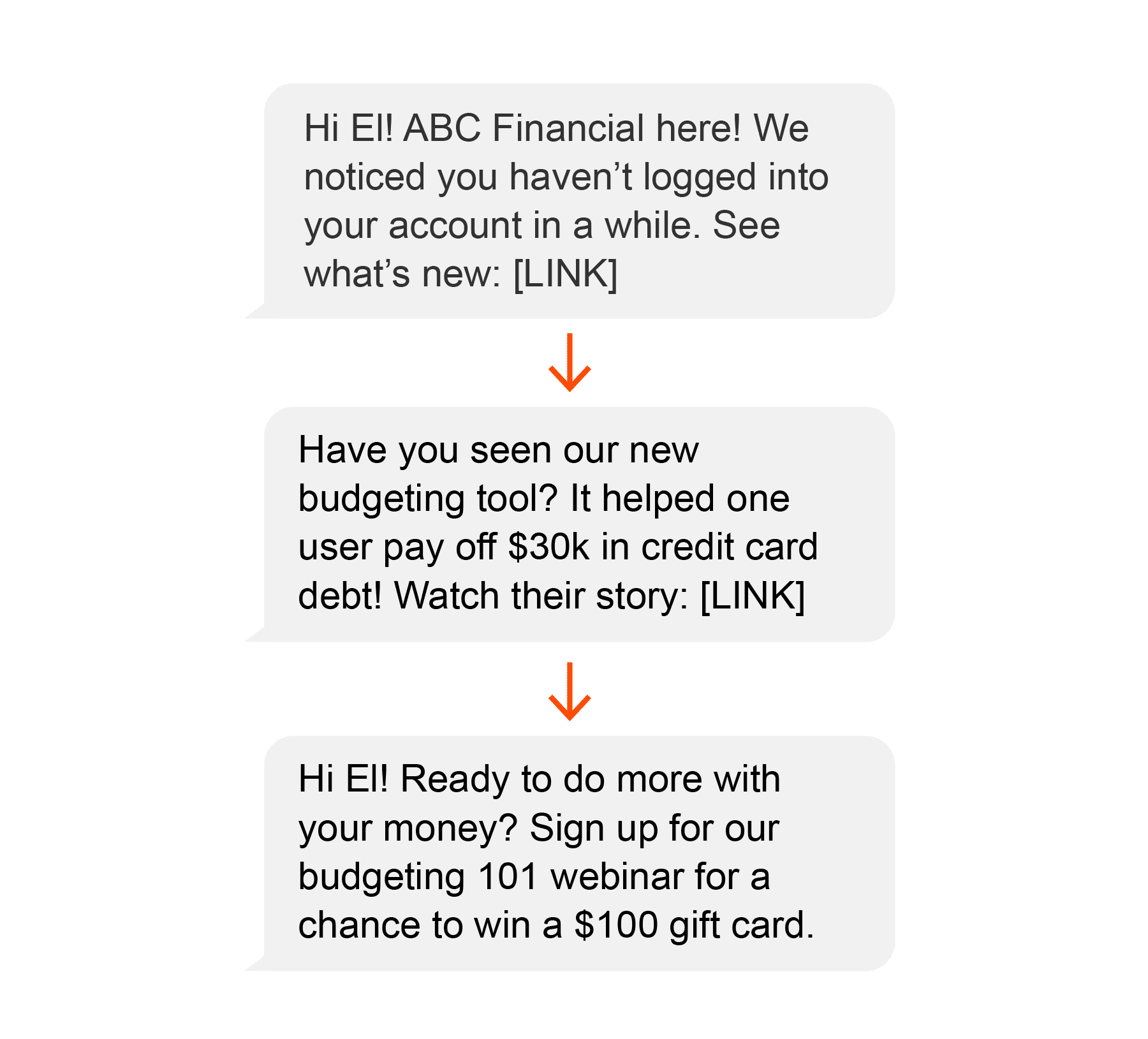
Just because a contact has gone quiet doesn’t mean you’ve lost them forever. Sometimes all it takes is a perfectly timed message and a powerful incentive to bring an inactive prospect back into the fold.
Example:
FAQs
-
How long should a drip campaign be?
While there’s no universal rule for the length of text drip campaigns, we recommend keeping your series to 3 – 6 messages. That said, the best length depends on your end-goal and your audience’s journey. Shorter sequences work well for reminders, but lead nurturing and onboarding campaigns may require more messages.
-
How often should you send messages in an SMS drip campaign
It’s important to strike a balance between messaging your recipient enough to stay relevant without causing message fatigue. However, the most effective message frequency and timing can vary depending on your audience’s decision cycle. For short-term promotions, you’ll want to send messages closer together (such as 1 or 2 days apart), but for a longer nurture series, you might find it’s best to only schedule one message per week.
-
Are SMS drip campaigns compliant?
Text drip campaigns are allowed by carriers — so long as you follow industry SMS compliance regulations. For example, never text contacts who have not explicitly opted in to your messages, respect quiet hours, and avoid using misleading language. TrueDialog also includes built-in compliance support to help ensure your campaigns follow best practices.
TrueDialog makes SMS drip campaigns a breeze. Request a demo to see how!