Over the past few months, we’ve seen an explosion in discussions about RCS (Rich Communication Services), especially within marketing and sales communities. Recently, with new developments in RCS for business, lots of folks are wondering what this evolution means for their existing SMS programs and the future of text marketing in general. The one question that seems to be on everyone’s mind is, “Will RCS replace SMS?”
Today, we’re addressing this question in depth, sharing insight into what RCS can help your brand accomplish, and what the future holds for SMS.
RCS Messaging vs SMS: What’s the Difference?
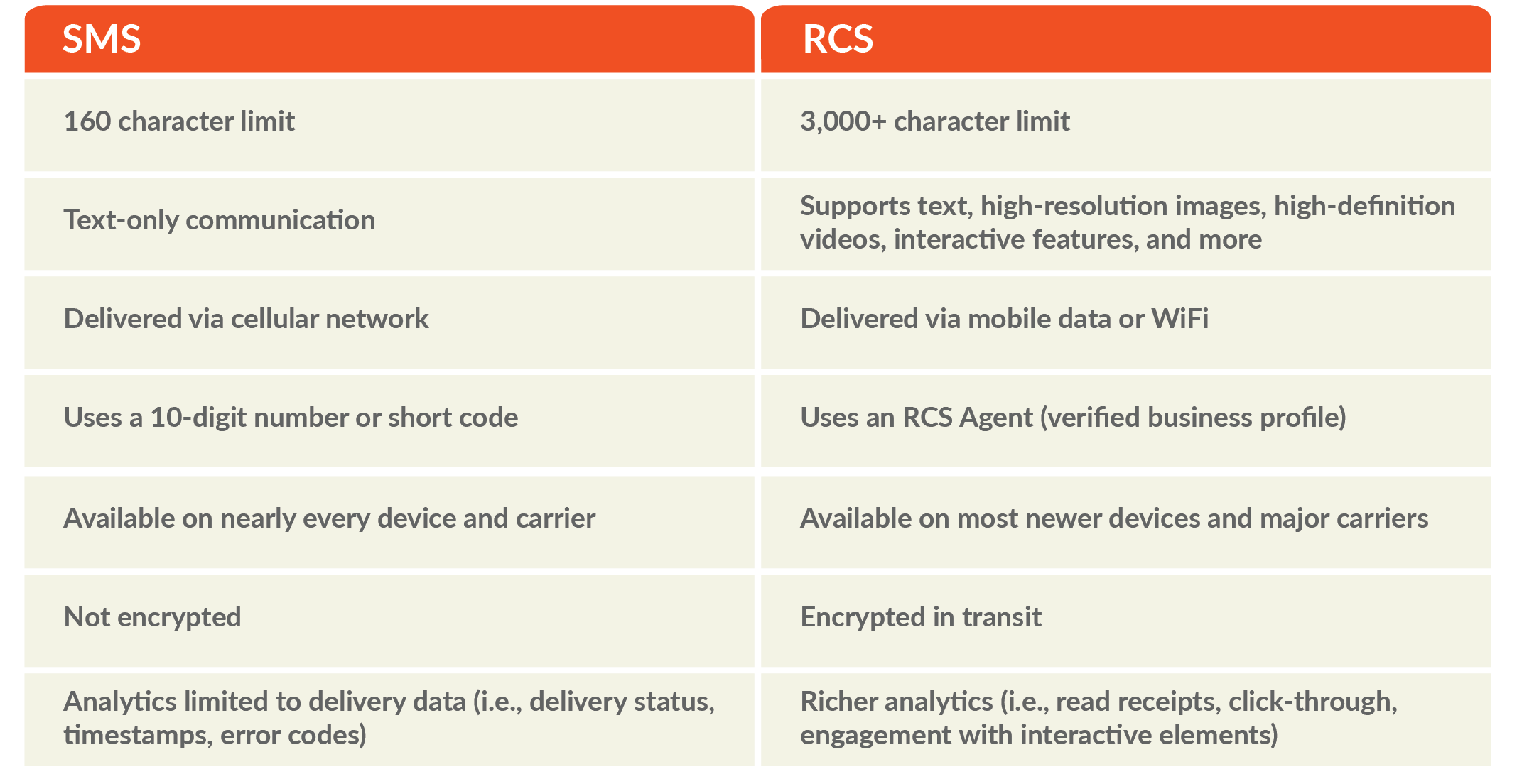
If you’re still new to the idea of RCS and not sure how it compares to traditional texting, here’s a quick breakdown of RCS vs. SMS and a few key ways they differ:
-
Media
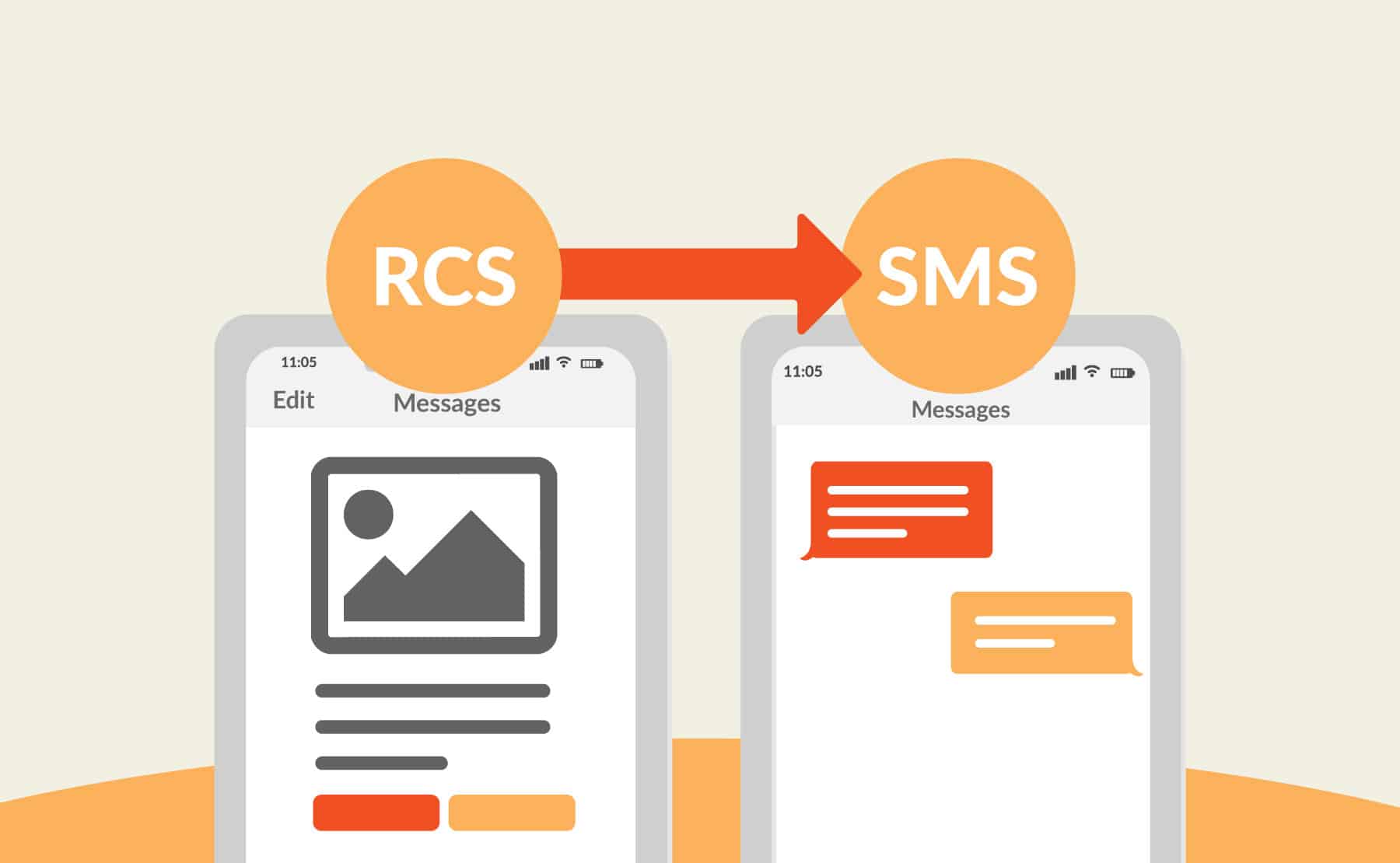
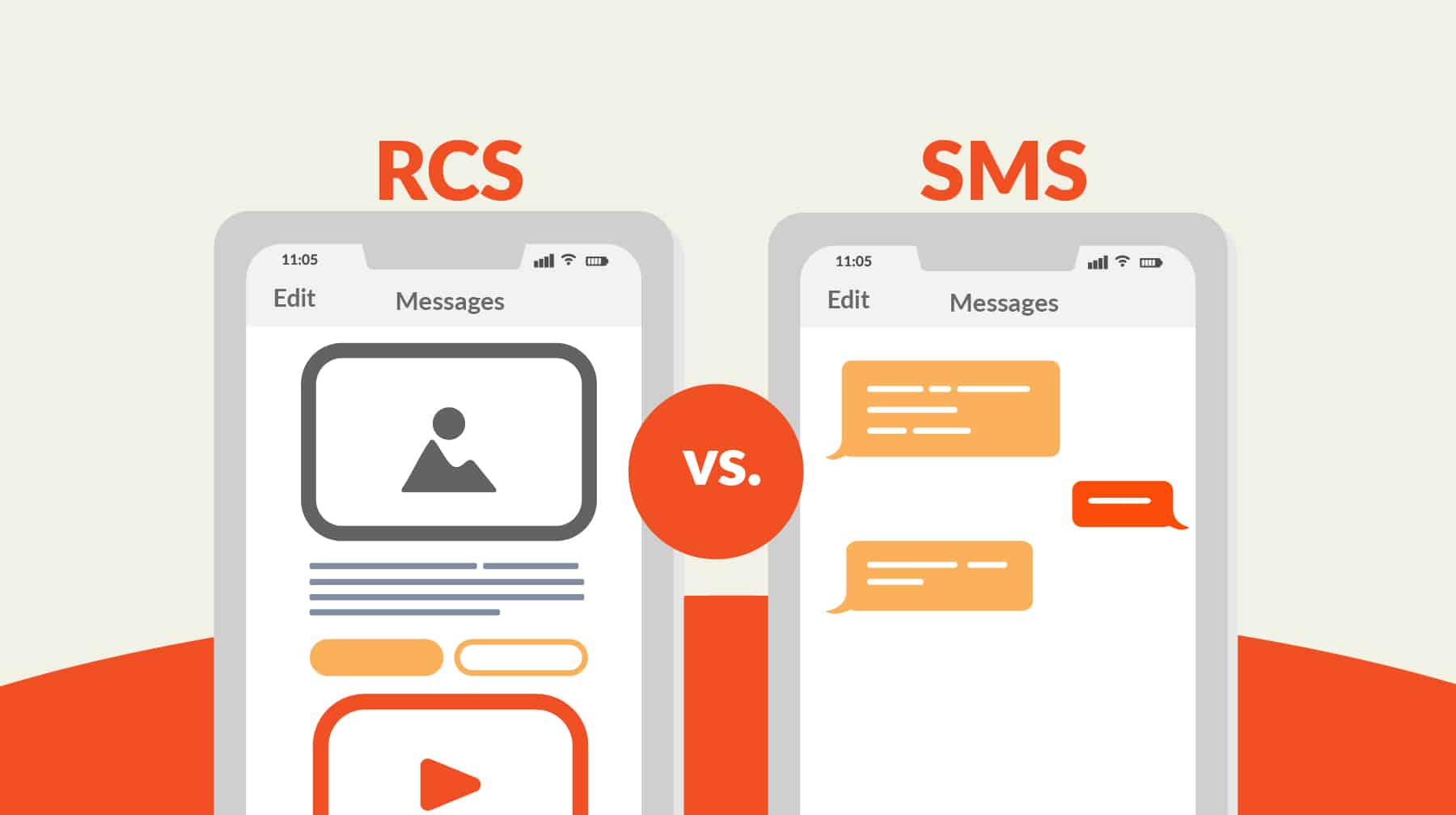
RCS supports rich media, including images, videos, GIFs, and audio files. It also supports more immersive, interactive features like customizable buttons, scrollable carousels, read receipts, and typing indicators. SMS, on the other hand, only supports text.
-
Security
RCS encrypts messages while they’re in transit, protecting them from being intercepted while traveling from one device to another. SMS messages are not encrypted, which makes this messaging protocol easier for cybercriminals to exploit.
-
Identity
There are two ways to send an SMS message: via a 10-digit phone number, or via a 5- or 6-digit long code. But RCS doesn’t use a phone number at all. Instead, brands send messages via verified brand profiles (which we delve into further below).
-
Delivery
SMS messages are transmitted via a cellular signal, so you can send and receive them even without mobile data or Wi-Fi. RCS, however, relies on internet servers and needs a stable internet connection.
-
Reach
Virtually every mobile device and carrier supports SMS, which makes it a more reliable option. That said, RCS is now available on nearly all newer Android and Apple devices, and supported by most U.S. carriers.
Why SMS is Not Going Away
Now on to the big question: Will RCS replace SMS?
The answer is a resounding no (at least, not anytime in the foreseeable future).
While RCS brings plenty of exciting new features to messaging and can help create powerful, modern, and deeply immersive brand experiences, SMS still plays a critical role — primarily as a reliable fallback to RCS.
What is SMS Fallback?
Some smaller carriers don’t support RCS (yet), and some older devices aren’t RCS-compatible, but SMS is available on nearly every device and supported by every carrier worldwide. It’s also transmitted via cellular networks, which means contacts can receive SMS messages even during an internet outage or when they don’t have a strong data connection.
As the universal standard, SMS serves as a safety net, and using it as a fallback for RCS ensures all your recipients receive your message in the format their devices accept. And while those who receive SMS messages won’t include the rich text elements available on RCS messages, these contacts will still receive the text portion of your message.
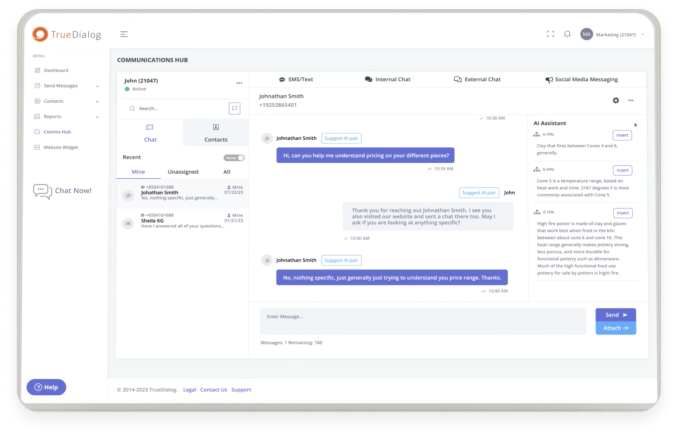
Additionally, depending on the enterprise texting platform you use, you can even craft a separate message just for SMS recipients. For example, with TrueDialog, you can add a fallback message of your choice before you send your campaign. Additionally, you don’t have to worry about how to switch from RCS to SMS because the platform automatically falls back to SMS for any contacts who can’t receive RCS.
Where RCS Outperforms SMS
RCS isn’t an SMS replacement, but it offers several newer, more interactive features that can help you connect with audiences in new ways. Here are three places where RCS outshines traditional text messages and other digital marketing channels:
Improved trust signals
With text-based spam and scams on the rise, plus weaponized AI making it easier to impersonate individuals and brands across text, email, and social media, building trust has never been more important.
It’s also never been more challenging. According to global data from Thales, trust has dropped across almost every industry. And as trust continues to erode, audiences will become even more wary of engaging with brand communications they receive. (But, on the flipside, 61% of consumers are willing to spend more with companies they trust, according to PwC. So, investing in trust certainly pays off.)
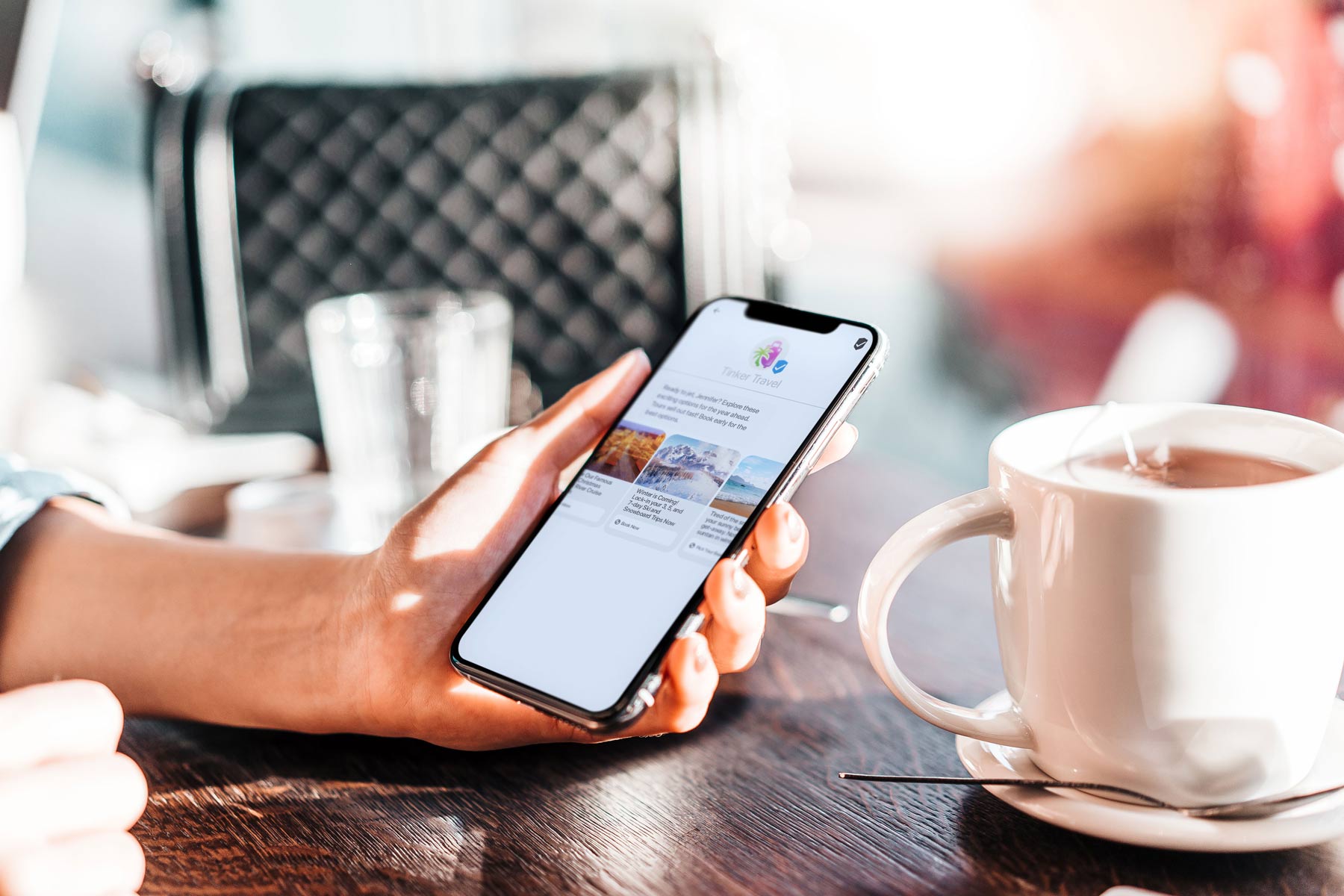
Fortunately, with RCS, brands can leverage carrier-authenticated, verified sender profiles that display their name, logo, and brand colors, along with a check mark to confirm their identity. This way, audiences don’t have to worry about being scammed by an impersonator and will feel more comfortable participating in conversations.
Increased visual appeal
Of course, if it’s difficult to earn audience trust, it’s even harder to hold their attention. Your contacts are just as busy as you, with countless obligations and distractions vying for their time, both on their screens and in real life. And it takes more than a good opening line to capture your audience’s interest and keep them engaged long enough to take action. Today, consumers expect richer, more polished, and more visually compelling content. And that’s precisely what RCS delivers.
Using this messaging protocol enables you to send high-resolution images and GIFs, high-definition videos, PDFs, scrollable carousels, and customized call-to-action buttons, helping you hold your audience’s attention longer.
App-like experiences (without the download)
Another benefit of using RCS messaging is that it allows you to deliver many of the same benefits and interactivity of an app, but without asking your audience to download yet another application or relying on app push notifications (which often go ignored). RCS gives you the opportunity to create a beautifully designed, branded experience with a modern interface that resembles popular OTT apps (such as WhatsApp).
You can also include buttons that launch embedded maps, calendars, web pages, or phone calls without directing your audience outside the conversation. Additionally, you can create tappable suggested responses (which saves contacts from having to type out a response).
For example, when using RCS to offer customer support, you might share a few common concerns for your contact to choose from:
Thanks for contacting our EZ Software user support! What are you experiencing an issue with today?
[Billing]
[Account Access]
[Admin Console]
[Other]
SMS Replacement Reality Check: What Still Limits RCS
It’s worth noting that RCS still has its limitations, and there are two use cases in which SMS still comes out on top:
-
Reaching your full audience
RCS adoption has come a long way over the past few years, especially now that it’s supported by Android, iOS, and most major carriers. That said, you likely still have a fraction of your audience that can’t receive RCS messages — as well as some that may be temporarily unable to accept RCS due to data or internet connectivity issues. Today, SMS is the only messaging protocol that’s universally supported (which is why it’s the preferred fallback).
-
Delivering time-sensitive messages
Given that it’s the universal standard, SMS is also a better choice for urgent notifications, such as a bank sending a fraud alert or a university issuing a campus safety warning. It’s also helpful in circumstances where rapid delivery is critical to the user experience (such as when sharing one-time passwords or multi-factor authentication codes).
The Best Strategy for Most Brands
When it comes to RCS, marketers often fall into two camps: On one side, you have those who are apprehensive about investing resources into leveraging something that doesn’t yet have full reach. On the other hand, you have early adopters who are ready to dive headfirst into RCS and leave older messaging protocols behind.
But, in our experience, the best strategy is to use both messaging protocols. In other words, instead of asking, “Will RCS replace SMS?” or “Should I use RCS or SMS?” the better question is, “How can I use RCS and SMS together as complementary layers of a modern messaging strategy?”
Here’s how we recommend combining these two protocols:
Start with SMS as your foundation
Many organizations already use SMS to some degree, and it’s wise to continue using this protocol as the baseline for your messaging program. And, because nearly every mobile phone user on the planet can receive an SMS, it’s crucial you keep this option as your fallback.
Layer in RCS one use case at a time
After you’ve set up your verified sender profile, decide where you want to test RCS first. Because RCS supports rich content (like high-resolution visuals and interactive buttons), it’s great for moments when visual elements or guided actions can make the biggest splash, such as a one-time event promotion, a product launch, or new customer onboarding.
Treat RCS as a progressive enhancement
Over time, you can use RCS for more campaigns and use cases and leverage other features like file sharing and carousels. And by using an enterprise texting platform like TrueDialog that integrates with leading CRMs and marketing automation solutions, you can also set up automated workflows as you become more comfortable with RCS.
How to Get Started With RCS
The idea of spinning up a whole new channel to engage your audience can feel overwhelming. But the good news is that RCS doesn’t require rebuilding your infrastructure from scratch. And, if you’re completely new to using text messaging to engage with your audience, you’ll be happy to know it’s much easier to accomplish than you might imagine — especially if you choose the right provider to support your brand.
Here are three steps you’ll need to take to successfully launch RCS for your business:
-
Choose the right texting platform
If you haven’t already, now is the time to choose a reliable enterprise texting solution. Ideally, your provider will not only have the capabilities to facilitate both SMS and RCS communications, but also the internal expertise to guide brands through setup and compliance, and the technical infrastructure to support high-volume campaigns as your program scales. It’s also wise to work with a partner who has experience in your industry, particularly if you’re in a highly regulated industry like finance, healthcare, or higher education.
Additionally, make sure the platform you choose integrates with your existing tech stack, including your CRM and marketing automation tools. For example, TrueDialog natively integrates with Salesforce, HubSpot, Eloqua, Marketo, and more to help ensure smoother, more streamlined workflows and effortless automations.
-
Register your RCS agent and verified profile
Next, you’ll need to create your RCS agent and submit an application for approval with messaging partners (like Google and Apple) and each mobile carrier.
This typically involves gathering necessary details and documents, such as legal proof of your organization’s registration in your country, verification of your company’s domain, and domain ownership (including the phone number you’ll use for SMS fallback), examples of the types of messages you’ll send, and a detailed breakdown of your compliance efforts (such as your opt-in and opt-out processes).
Then, you’ll set up your RCS agent (upload your logo, select your brand colors, and define whether your agent will be for promotional or transactional purposes) and prepare an example campaign.
Once everything is submitted for approval, you should receive your verification status within 8 – 10 weeks. Fortunately, your RCS service provider will assist you with this process to ensure your program is up and running as quickly as possible. And once you’ve onboarded with the right platform and registered your agent and profile, sending RCS messages will be pretty straightforward.
-
Ensure compliance
Rules and best practices for RCS compliance are still evolving, but be sure to review the CTIA Messaging Principles and the requirements set forth by the Telephone Consumer Protection Act (TCPA).
In general, make sure you have explicit permission from contacts before sending any type of message, make it easy for them to opt out if they decide they no longer want to receive messages from your brand, and avoid contacting your audience with promotional content during quiet hours.
Frequently Asked Questions About RCS Replacing SMS
Will RCS replace SMS for business messaging?
RCS is not an SMS replacement, but a complement to traditional texting. With RCS, you can deliver richer, sleeker, and more immersive app-like conversational experiences that can boost engagement and drive recipients to take action faster. However, SMS is still the universal standard for messaging and an essential fallback when contacts can’t receive RCS messages. Combining these two messaging protocols is the most effective way to consistently reach your entire audience.
What is the difference between RCS messaging and SMS?
SMS has remained the universal standard for text messaging for more than three decades, allowing you to rapidly send text-only messages (up to 160 characters each) to nearly any mobile device on the planet. RCS is a newer messaging protocol that allows you to send richer content, including higher-resolution images and videos, scrollable carousels, and interactive buttons (so long as the recipient’s carrier and device support it). RCS also enables more in-depth engagement analytics.
What happens when a customer’s phone does not support RCS?
If a recipient cannot receive an RCS message (either because their device or carrier does not support it, or they do not have a reliable internet or data connection), then the message will be delivered as an SMS instead. This is similar to how an HTML email defaults to plain text if a recipient’s email client cannot render the message in its rich-text format.
The bottom line? If you’re ready to explore RCS, make sure you partner with a provider that has the expertise and infrastructure to deliver the modern experiences your audience expects.
Request a demo to learn how TrueDialog supports RCS success.