

Over the past few years, higher education admissions teams have grappled with a barrage of challenges, from pandemic-related enrollment declines to waning faith in traditional college degrees and increasing tuition costs. While the National Center for Education Statistics predicts increases in undergraduate enrollment through 2031, projections remain shaky.
Today, connecting directly with prospective students and building strong relationships is more important than ever. That’s precisely why more colleges and universities have started meeting students where they already spend a lot of time: on their phones. And, armed with a reliable higher-ed texting platform, they’re seeing exceptional results.
While texting may not be a panacea for the many factors affecting college enrollment, it is a highly effective and affordable way to keep up with the fastest-changing trends in audience behavior. And, connecting with students through their preferred channel is an excellent way to help prevent potentially at-risk students from permanently drifting off course.
Understanding the Higher Ed Disconnect
In the past decade, more students have elected to delay or forego higher education in favor of online certification courses or diving directly into the job market. More often than not, this choice boils down to rising educational costs and concerns about the return on an investment in a degree.
However, data from the Georgetown University Center on Education and the Workforce shows that workers with a bachelor’s degree outearn workers with a high school diploma or GED by a median of $2.8 million over their lifetimes. Even if postgraduate degrees don’t always equate to higher earnings in certain industries, completing an undergraduate program consistently pays off.
The good news? This disconnect is an excellent opportunity for tech-savvy admissions boards who are well-poised to reach an increasingly mobile-centric student base. By reaching prospects with the right message, at the right time, and via the right channel, you can help them understand the tremendous value your institution offers.
Why SMS for Admissions is So Successful
Investing in more modern, personalized outreach is key to ensuring any contact with students generates positive experiences — especially at pivotal moments in the admissions process when prospects might otherwise drop off. (Like, for example, the “summer melt” period when high school grads who were accepted to college fail to enroll after encountering logistical issues, financial barriers, or a lack of guidance.)
Here are a few reasons why SMS excels as an admissions communication tool:
Texting Enables Fast and Accessible Support
Today’s students are accustomed to businesses offering more accessible, faster customer support, and they make their purchasing decisions accordingly. (Conversely, they’re also quick to dismiss brands that fall short.)
Given that a formal college education is such a major financial investment, having easy access to admissions teams for questions, concerns, and reassurance is essential. Fortunately, with two-way SMS messaging, students have a direct line to admissions officers who can guide them through every step of the process.
Students Already Text (A Lot)
According to Pew Research, about 95% of U.S. teens have a smartphone, and about half say they’re online “almost constantly.” SMS is an excellent way to reach prospective students on a channel they’re familiar with, via a device that’s rarely out of arm’s reach.
But it’s not just younger demographics who text. Pew also shares that smartphone ownership is high across all generations, and we know that texting is one of the most popular methods of communication, regardless of age. In other words, SMS is also a great tool for connecting with nontraditional students, too.
It’s Convenient for Admission Staff
Depending on the texting platform you choose, mass texting is user-friendly and fast for admissions teams, enabling them to connect directly with hundreds or even thousands of current and prospective students simultaneously. Furthermore, SMS aligns with many institutions’ goals to reduce operating costs and boost efficiency, since software-based texting is both affordable and easy to scale.
Meeting Your Future Students Where They Are Now
While email is still an effective way to reach students, few channels can engage audiences as quickly and effectively as SMS. In fact, texting has a 98% open rate, and 40% of consumers read their texts within 5 minutes of receipt.
Additionally, recent marketing stats show that texting earns high response rates, conversions, and customer satisfaction.
High school juniors and seniors receive a veritable onslaught of information as they prepare for graduation and future life plans. With so much competing for their attention, any communication that fails to engage this already busy and overwhelmed audience on a channel they prefer will likely end up in the digital dustbin. This is true even for students who are highly interested in attending college. But brief and timely text notifications can help students stay on track and avoid missing the numerous deadlines on their to-do lists.
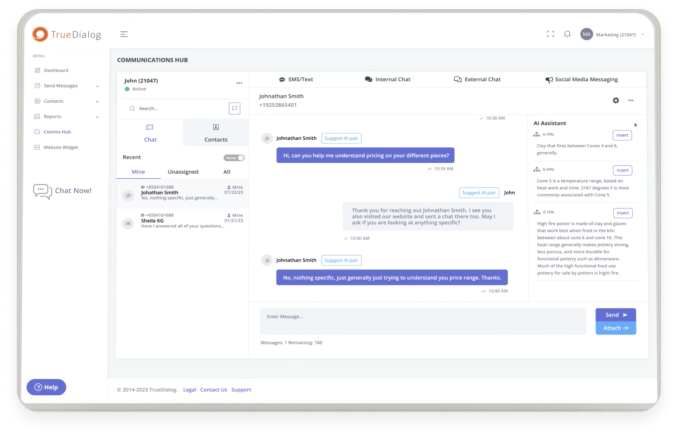
Implementing an enterprise-grade, scalable texting program is essential to reaching students, whether you’re sending a mass reminder about an important event or a personalized message to help spark a productive one-on-one chat. From boosting admissions numbers and easing the application process to promoting student services and connecting students with advisors, admissions texting tools like TrueDialog give you the power to manage a variety of communications from one centralized solution.
Simply let students know they can text you by promoting your SMS program on your website and marketing materials. (Just be sure you’re following all necessary SMS marketing regulations, such as getting a contact’s explicit consent before texting them and giving them an easy way to opt out.)
How Colleges Use SMS for Admissions to Increase Student Enrollment and Improve Retention
Despite having more communication channels than ever, it’s becoming increasingly difficult to reach audiences. After all, fewer people are answering phone calls, ever-changing algorithms make it difficult to drive engagement on social media platforms, and email messages frequently become buried in over-cluttered inboxes.
Yet, texting continues to perform exceptionally well. And given 77% of students want relevant information from colleges delivered via text, according to data shared by OHO, launching an SMS program is simply a smart move. For busy admissions teams, having a quick and seamless way to connect directly with current and prospective students can be a game-changer. Using the right student texting strategies can have a massive impact on enrollment.
Here are a few ways top universities are using this channel:
Mass Text Notifications
Mass SMS notifications are automated, high-volume campaigns that admissions teams frequently use to communicate vital, timely information to many recipients simultaneously.
In most cases, institutions use short codes for mass texting. (A short-code is a five- or six-digit number designated by wireless carriers to send large numbers of simultaneous text messages — especially for urgent alerts, opt-in SMS marketing campaigns, and other large-scale campaigns.)
Admissions teams can easily personalize these notifications using data such as names, appointment dates, and interests, but only if your higher-ed texting platform is built to integrate with CRM or SIS software or web services. A more cohesive and streamlined workflow for your staff will inevitably lead to a more cohesive experience for your audience at the other end.
Here are some examples of mass text notifications colleges may send to prospective students:
Application and Financial Aid Reminders

With so many forms to complete and deadlines to remember, it’s easy for applicants to miss a crucial step. Texting prospective students with well-timed reminders can help them stay on top of their to-dos so nothing slips through the cracks.
It can also be helpful to include links in your admission message for students so recipients can quickly locate relevant forms or details in your application portal. The faster and easier students can find what they need, the more likely they are to complete their applications on time.
Promoting Campus Tours
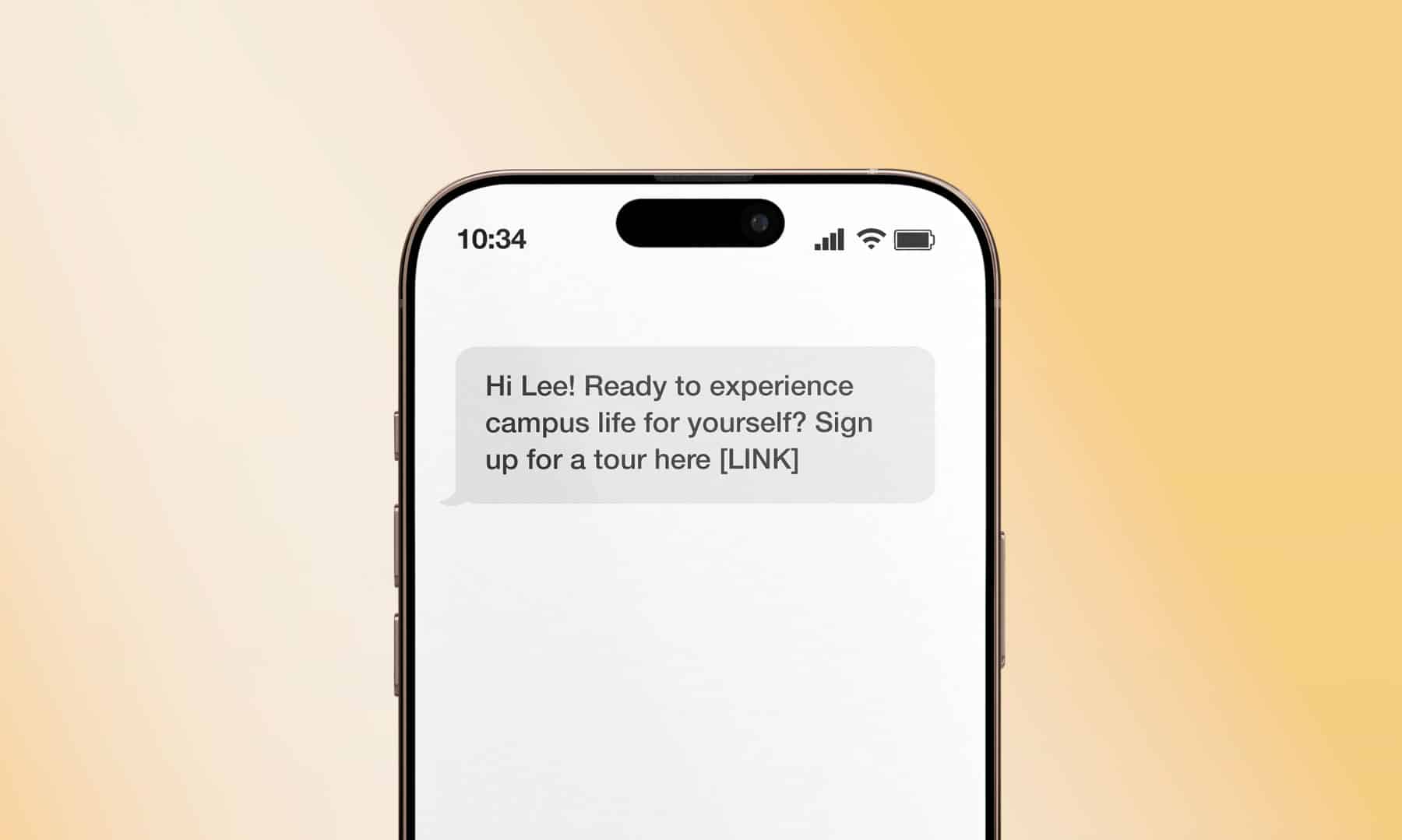
Even after generating initial interest, it often takes plenty of time and consistent engagement to keep your school top of mind. One of the most popular ways to foster interest in your university and galvanize action is to invite prospects to visit your campus and experience student life firsthand.
With texting, it’s easy to invite prospects to sign up for a campus tour using a registration link. Then, you can follow up with reminders, instructions, and useful “know before you go” information closer to their scheduled visit.
Scholarship Opportunities
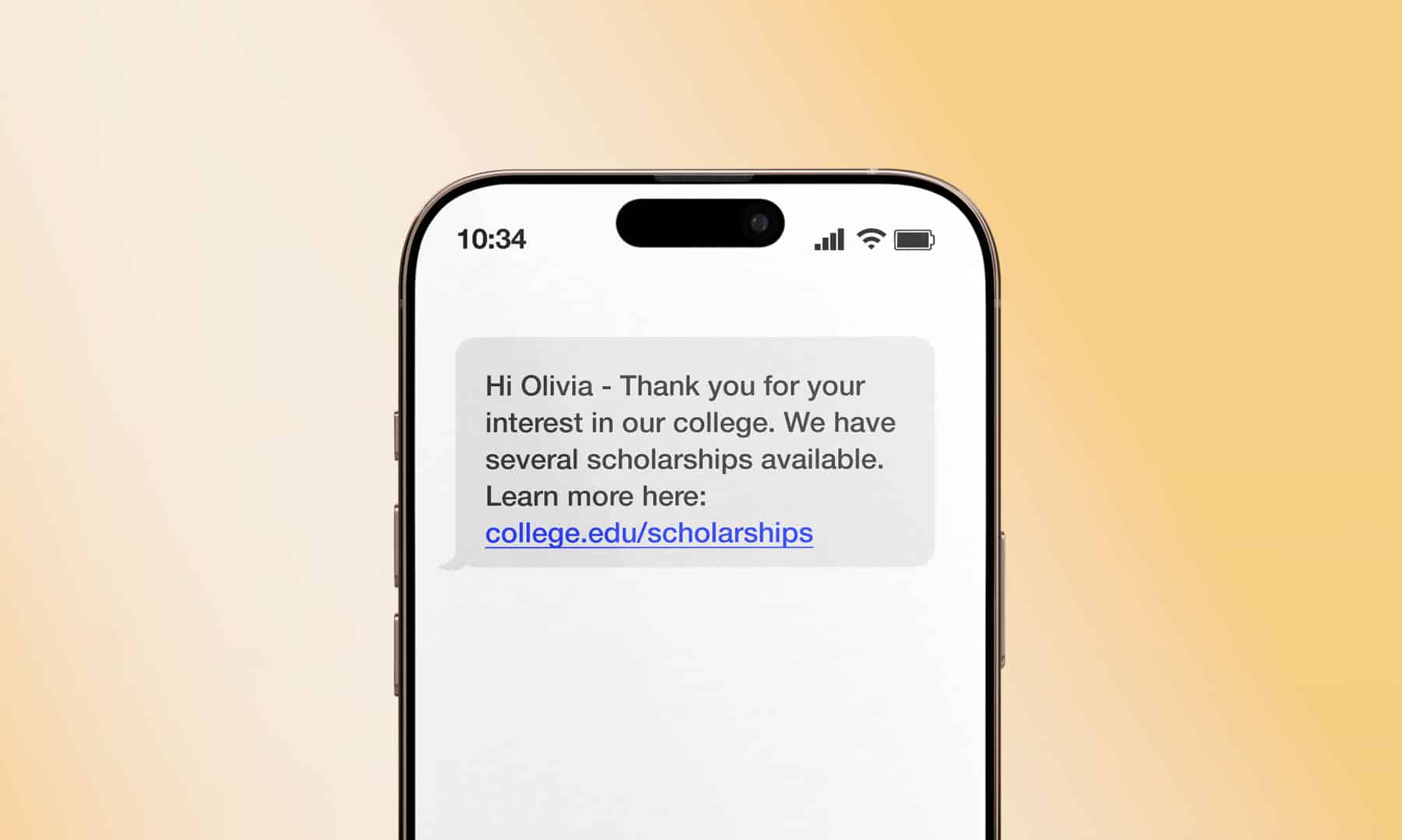
Scholarships easily capture the interest of prospective students (especially as tuition and living costs continue to rise), and text messages are an excellent way to promote these opportunities, so students don’t miss out on saving money.
Additionally, increased interest in scholarships can further incentivize sponsors and demonstrate the massive impact of grants and awards on admissions activity.
Event Promotions
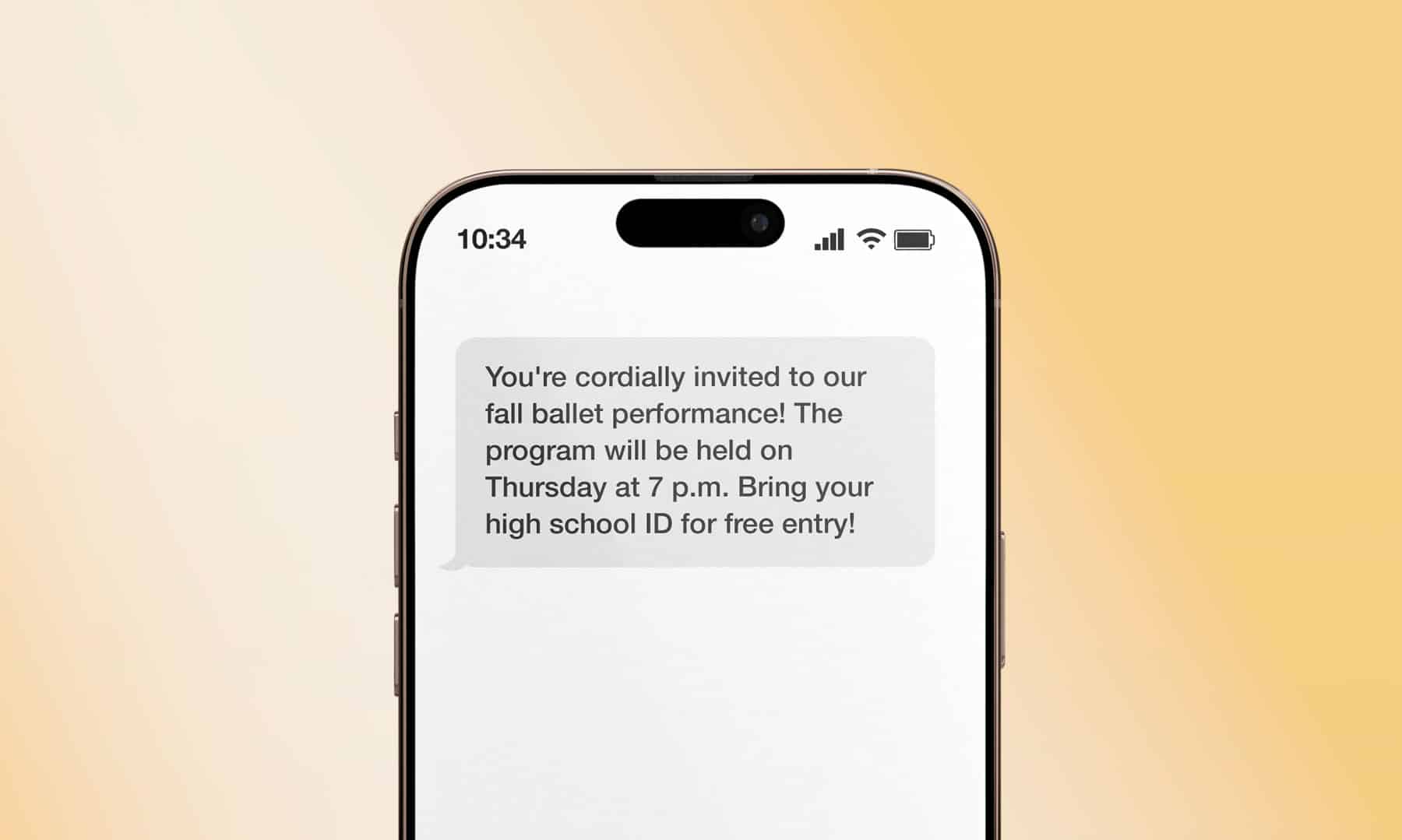
What better way to win over prospective applicants than by showing them how much fun it is to be a student at your school? After all, the more prospective students visit a school they’re interested in and form social connections, the more likely they are to apply. Whether you’re hosting a sporting event, performance, guest lecture, or student organization fair, text messaging can be a powerful tool for generating interest and boosting attendance.
General Marketing Messages
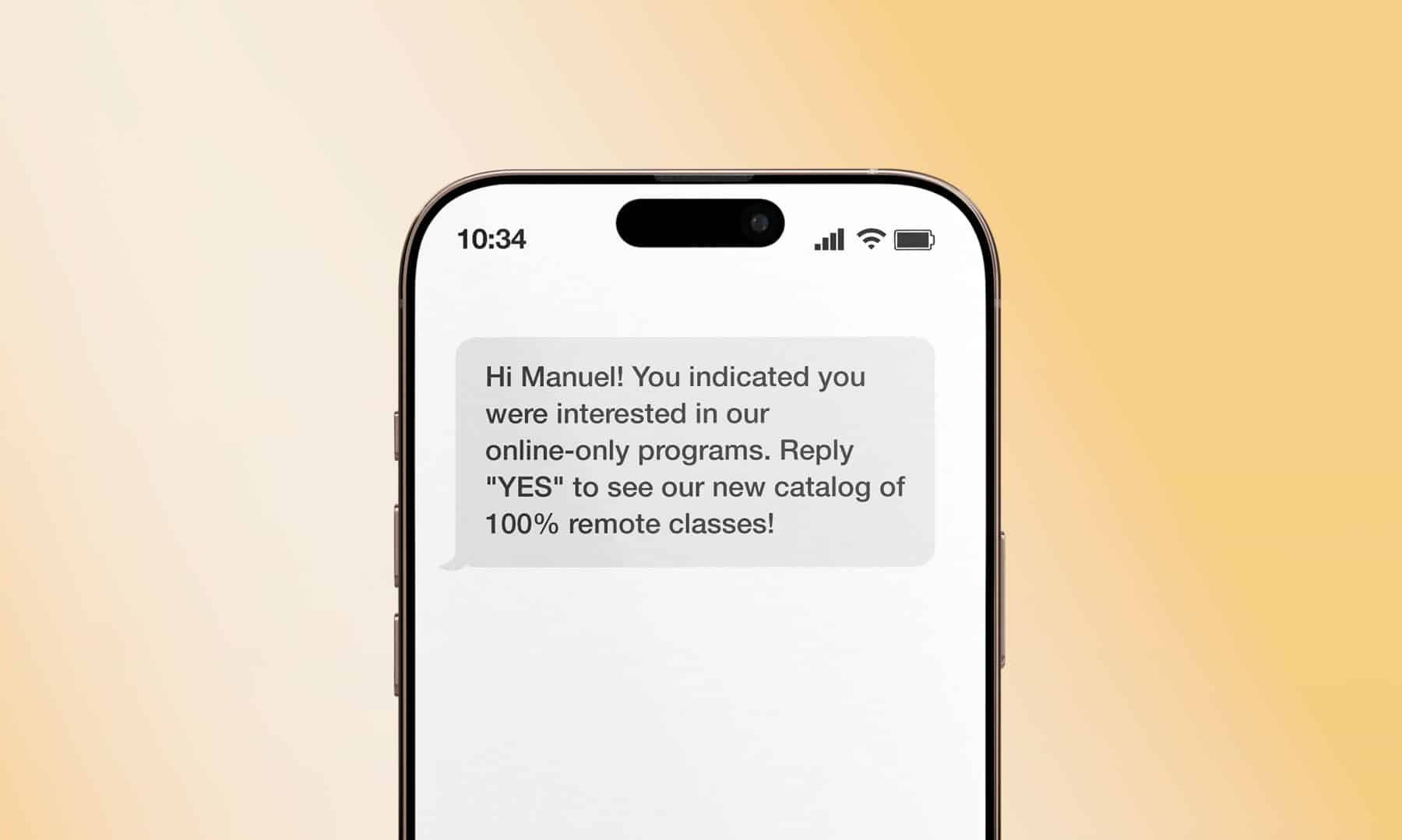
SMS for admissions is also ideal for promoting relevant offerings with strategically timed, personalized messages. For example, you can send a mass text to announce new course offerings, new student organizations to join, campus bookstore deals, sales on branded merch, or special awards (such as if your university lands on a “best colleges” list).
Seamless Two-Way Conversations
While alerts, notifications, and other types of mass texts can come in handy for reaching a large audience with a single message, one of the greatest benefits of admissions texting is that you can also engage with students one-on-one.
This is where a 10-digit long code (10DLC) comes in. (A 10DLC is a carrier-approved phone number that brands can use for two-way communications, such as when students have questions about admissions processes or need assistance addressing a technical issue.)
Connecting directly with a fluid, two-way conversation is a great way to demonstrate your team’s ability to deliver expert support and guidance — especially amid critical moments when students may be at risk of drifting away.
In fact, a study shared by the Office of Evaluation Sciences found that students who received personalized text messages were up to 6% more likely to complete enrollment than those who did not. (And while 6% may seem small, this size of enrollment bump can make a significant difference for many institutions.) Keeping students engaged via two-way texting can help remind them that there’s always someone there when they need support or just an encouraging nudge.
Here are some examples of how college admissions teams can leverage two-way texting:
Admissions Questions
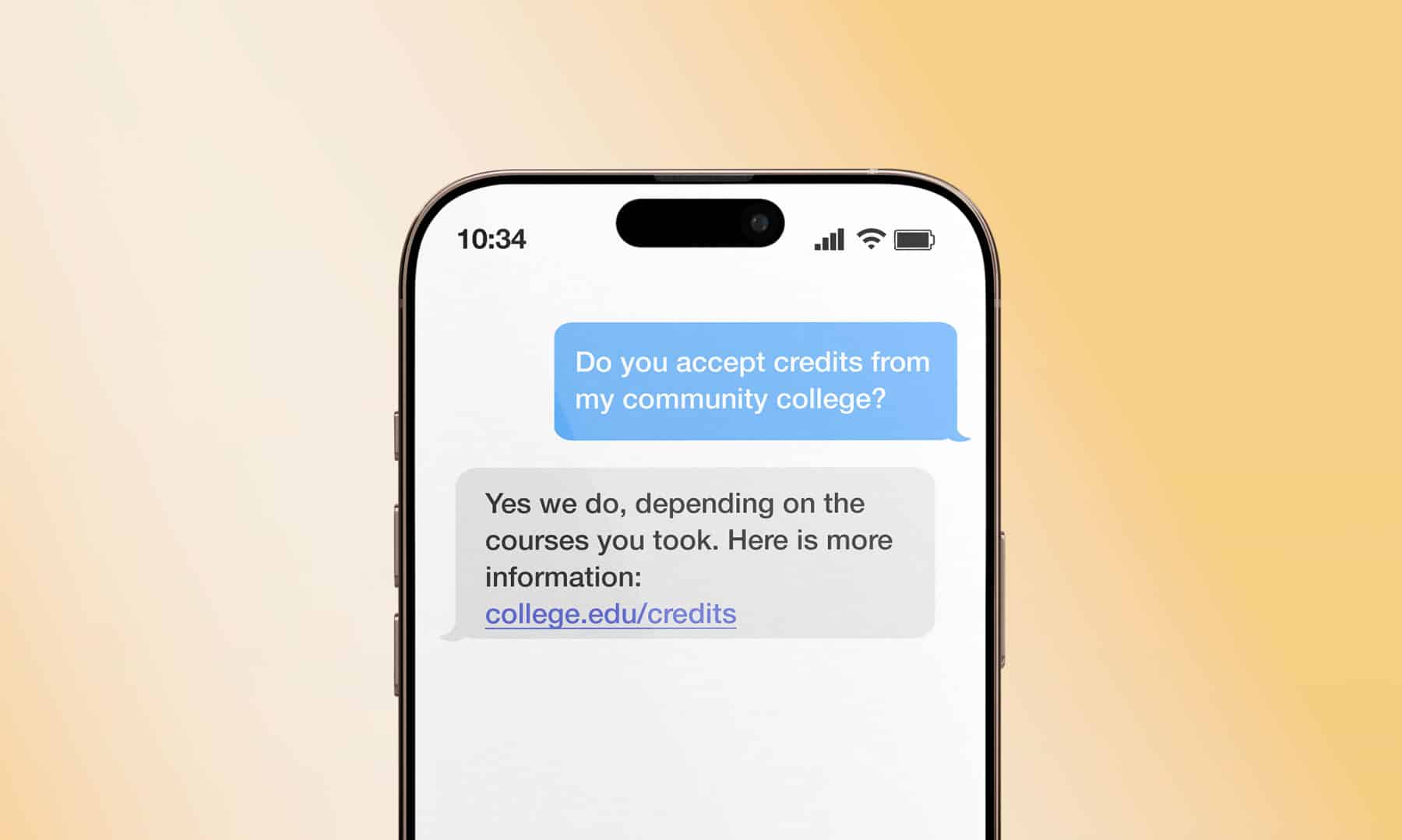
Admissions processes can be complex, especially for students (and parents) navigating them for the first time. It’s natural for prospects to have plenty of questions, and one-on-one texting makes it easy for them to get the answers they need fast. (Especially when the alternative is relying on emails and voicemails, which frequently get lost in the shuffle.)
Addressing these questions via text helps maintain momentum, increasing a student’s odds of applying and enrolling.
Counselor Check-ins

Going from high school to college is a significant transition, and can be especially bumpy for students who lack strong support systems. Fortunately, counselors and advisors can stand in the gap, helping students manage these changes and find their footing in their new environment.
With two-way texting, these professionals can send regular, tactful check-ins to help reduce drift and give students an opportunity to reach out about any concerns. For example, students are often worried about how to choose a major, pick the right classes, balance their course load, and manage daily challenges. Knowing expert guidance is just a text away can offer students tremendous peace of mind.
Admission and Specific School Questions
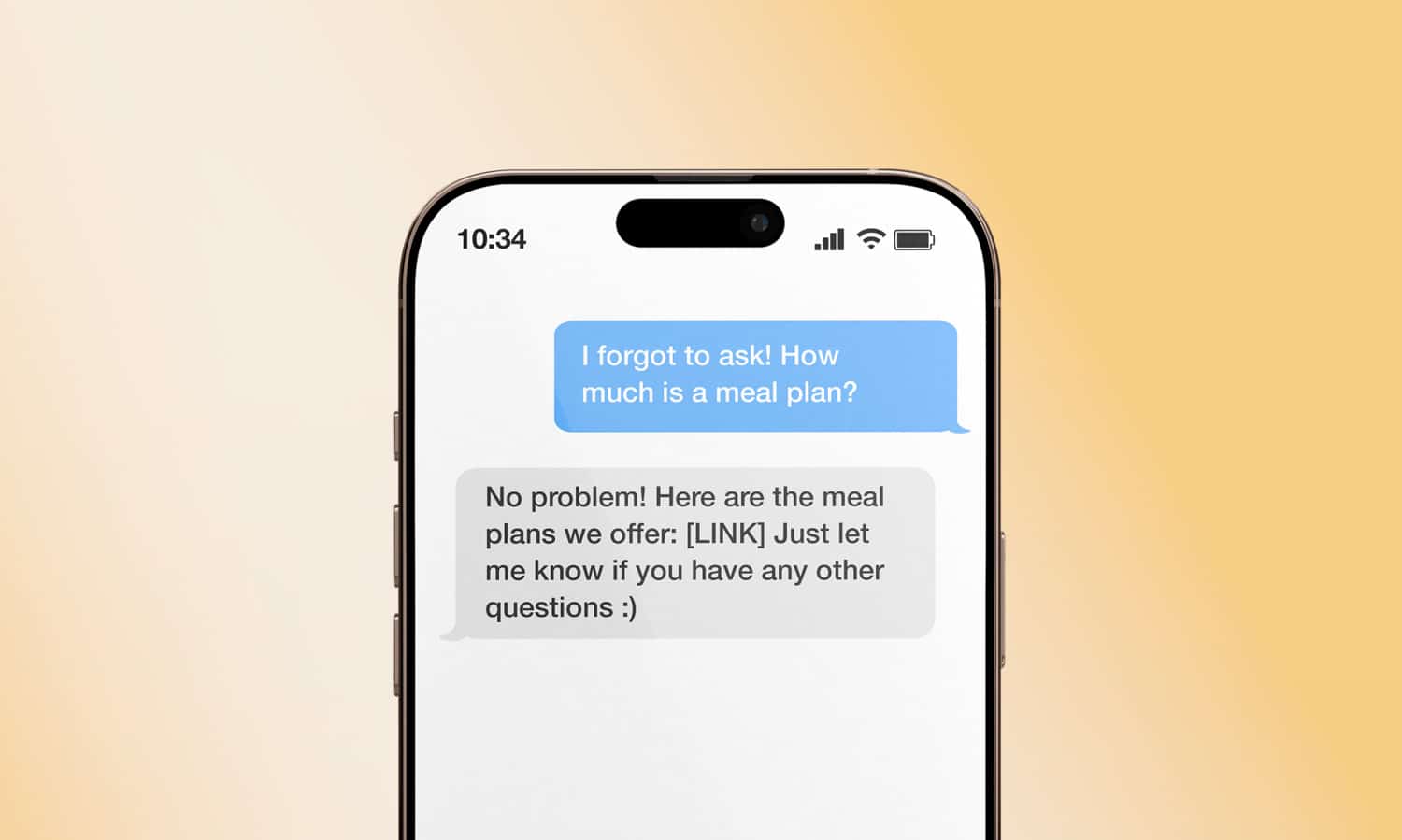
In addition to larger concerns that counselors can assist with, students may also have smaller questions they either forgot or were too shy to ask during a campus tour. Texting can facilitate open communication between students and staff (or even student ambassadors), establishing a place where prospects can feel comfortable engaging one-on-one. For example, they might be curious about campus amenities, how to apply for housing, or where to find various student services.
The more proactive assistance you can offer prospective students, the more confident they will feel about attending your university.
Transforming Admissions Communications with Texting
With murky college enrollment projections, rising educational costs, and so many students questioning traditional pathways, admissions teams have a lot on their shoulders. Meanwhile, given all of the changes in the way audiences engage with brands, it’s becoming increasingly difficult to reach students directly to assuage their concerns and help them choose the right path for their future.
Fortunately, text messaging gives colleges and universities a direct line to students, allowing them to communicate everything from time-sensitive deadlines and useful notifications to personalized support and expert guidance. By landing directly in front of prospective students on a channel and device they already know and love, you can keep them engaged through admissions, enrollment, and into their college career.
Ready to explore what SMS for admissions can do for your school? Request a demo today!