

If you’re a marketer who stays up-to-date on SMS compliance, you might be hesitant to send your audience an after-hours text message. After all, scheduling late-night or early morning campaigns could violate quiet hours regulations, rack up legal fines, and cause reputational damage.
But, there are some cases when it’s not only acceptable to send an after-hours message — it’s strongly encouraged.
Today, we’re setting the record straight on when you can (and should) send messages outside of standard hours, considerations to keep in mind, and guidance on automating your after-hours messaging for greater efficiency and better customer experiences.
Why After-Hours Text Messaging Matters
An after-hours text message is exactly what it sounds like: a message a business sends outside of its typical business hours — such as on an evening, weekend, or holiday.
In a perfect world, your customers would never have a single question or concern outside of business hours. Every dilemma would surface and reach a resolution during the workday, leaving your support team with plenty of availability to power through tickets and no need to make anyone wait. Unfortunately, for most organizations, this corporate utopia is far from reality.
So, while it can feel intrusive to send messages after hours, there are times when your contacts are especially eager to hear from you and would rather not wait until your business reopens. So long as it’s genuinely helpful, an after-business-hours text message can help you build trust with your audience, reduce call volume to your support team, and facilitate easier resolutions for customer concerns.
Offering text messaging as an after-hours option also shows customers that you’re accessible, available, and ready to deliver support whenever they need it (including when your office is closed).
When It’s Appropriate to Send After-Hours SMS

Of course, while an after-hours text message can be beneficial, it’s not always appropriate. Promotional messages, for example, aren’t worth disrupting your audience’s sleep (or infringing on quiet hours). So, what type of messages can you send after hours?
Here are a few scenarios when it’s acceptable to send an outside-of-business-hours message:
-
Time-sensitive updates
Critical alerts and notifications are among the most popular after-hours messages for good reason: these are situations in which the information you share can impact your contacts’ daily lives, and even protect their safety.
For example, if a college cancels classes due to severe weather, the communications team might choose to send a notification at 5 a.m., well before students risk commuting to campus. Additionally, a bank might notify customers of suspicious account activity as soon as it’s detected — even if it’s at 11 p.m. — so customers can address the situation as quickly as possible.
-
Customer-initiated conversations
If someone texts your business after hours, you don’t want to leave them hanging. If you have a 24-hour SMS call center available to handle these sorts of situations, they should feel empowered to respond. However, even an automated acknowledgement letting your contact know you’ve received their message and a time frame when they can expect a response is better than silence.
For example, suppose a B2B software user is burning the midnight oil when they discover a technical issue with their account and texts the provider for support. The software company doesn’t have an after-hours support team to deliver an immediate resolution, but still sends an auto-response acknowledging that the team has received the message and assuring the customer that they’ll be in touch as soon as possible the following day. Alternatively, if on-call support is available, the team can engage with the customer immediately.
-
Non-Promotional
Shipping notifications and appointment reminders fall into this category since they contain essential information but are not promotional.
After Hours Text Message Examples
Here are a few after-hours message examples to illustrate the types of messages that businesses can (and should) feel comfortable sending outside of quiet hours:
-
Event change:
Update: Tonight’s game is delayed due to lightning in the area. Gates will open at 7:30 p.m. Stay tuned for additional details.
-
Fraud detection:
ABC Bank has detected suspicious activity on your checking account ending in -1123. Please log in to your account to review these charges.
-
Support team auto-reply:
We’ve received your request! We’ll review your ticket and reach out as soon as we have any updates. Please allow 24 hours for a response.
-
Opt-in auto-reply:
USC here! Reply YES to confirm you want to receive reminders, safety alerts, and messages about campus events. Reply STOP to unsubscribe.
-
Appointment reminder:
Reminder: You have an appointment with CPA Jo Smith today at 8:30 a.m. at 147 Park Ave., Suite 200. Please check in at the front desk. See you soon!
Compliance and Etiquette Considerations

No matter what type of messages you’re sending (or when you’re sending them), you should always treat your audience with the utmost respect and consideration. Remember: connecting with your contacts via text is a privilege — and it’s one they may choose to revoke if your messages become too frequent, disruptive, or unhelpful. Or, if you fail to comply with industry regulations, carriers may choose to block you to protect consumers from spammy behavior.
Here are a few things to keep in mind to ensure you maintain compliance and retain audience trust:
-
Legal requirements
Be sure to stay up-to-date on all SMS compliance requirements to avoid making costly mistakes. For example, many regulations, including the Telephone Consumer Protection Act (TCPA), require businesses to obtain explicit consent and provide clear opt-out instructions before sending any type of text message. Additionally, brands are prohibited from sending promotional content during quiet hours (typically 8 p.m. to 9 a.m. local time, though it can vary by state).
Meanwhile, some states have their own requirements, such as stipulations regarding how many times an organization can text recipients about a single topic within a 24-hour period. Additionally, if you’re sending messages to international audiences, you’ll want to familiarize yourself with the General Data Protection Regulation (GDPR), Canada’s Anti-Spam Legislation (CASL), and other country-specific and regional laws.
-
Respecting quiet hours and cultural norms
In addition to following compliance laws, you’ll also need to consider your audiences’ personal boundaries, preferences, and habits. For example, don’t send messages outside of regular business hours unless they contain truly urgent or essential information. (In other words, a software user probably doesn’t want a 2 a.m. reminder that it’s time to update their password.)
Additionally, always take cultural expectations into account. Sending messages during holidays or religious observances could come off as disrespectful.
-
Striking the balance between helpful and intrusive
If you’re unsure about whether it’s appropriate to send an after-hours text message, ask yourself: Is this information useful to my recipient right now, or can it wait until regular business hours?
In most cases, emergency alerts, fraud notifications, appointment reminders, shipping updates, and responses to customer-initiated conversations are valuable in the moment because they can help resolve a contact’s issue, ensure their safety, and ease their frustration. These types of messages can benefit your brand while helping you foster deeper connections with your audience.
However, event announcements, promotional offers, flash sales, and other marketing messages are not as critical and should never be sent outside of business hours. In addition to violating quiet hours rules, it can also irritate your audience by infringing on personal boundaries.
How to Automate After-Hours Communication
One of the biggest challenges with after-hours message sends is managing campaign launches and responses. Since most organizations don’t have marketing pros on staff 24/7 every day of the year, you need a way to automate these communications. Fortunately, with an SMS platform like TrueDialog, it’s pretty simple.
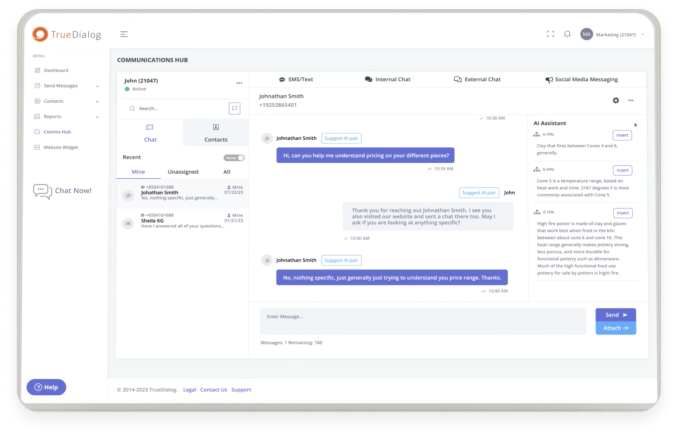
Because TrueDialog integrates with leading CRMs and marketing automation platforms (like HubSpot, Salesforce, Marketo, Eloqua, and more), you can build seamless workflows and easily automate any SMS campaign — including personalized after-hour messages. You can also set up recurring triggers and create automated replies in just a few clicks by leveraging your own library of AI-generated responses. Additionally, with the TrueDialog inbox auto attendant, you and your team can set up auto replies and schedule them for specific dates, weeks, hours, or actions.
Furthermore, TrueDialog offers real-time alerts so you’ll be notified in-app, via email, and through push notifications when someone replies. This way, you can ensure customer responses or support requests never fall through the cracks, and no one has to wait too long to hear back from your team.
These features, combined with our enterprise-level security infrastructure and built-in compliance support, are just a few reasons why TrueDialog is a leading texting software for universities, sports and entertainment organizations, financial services, and B2B software companies.
Building Trust with After-Hours SMS
When you do it thoughtfully (and with consideration for your audience and their needs and preferences), after-hours texting can help your business be more responsive, reliable, and connected to your audience. From critical campus safety alerts to assuring customer support responses, useful appointment reminders to informational auto-replies, the right kind of after-hours text message will help you build more trust with your audience and ensure more positive customer experiences.
By properly obtaining consent, following industry regulatory requirements, being respectful in your communications, and leveraging the right enterprise SMS platform to streamline your campaigns, you can turn after-hours texting into a competitive advantage.