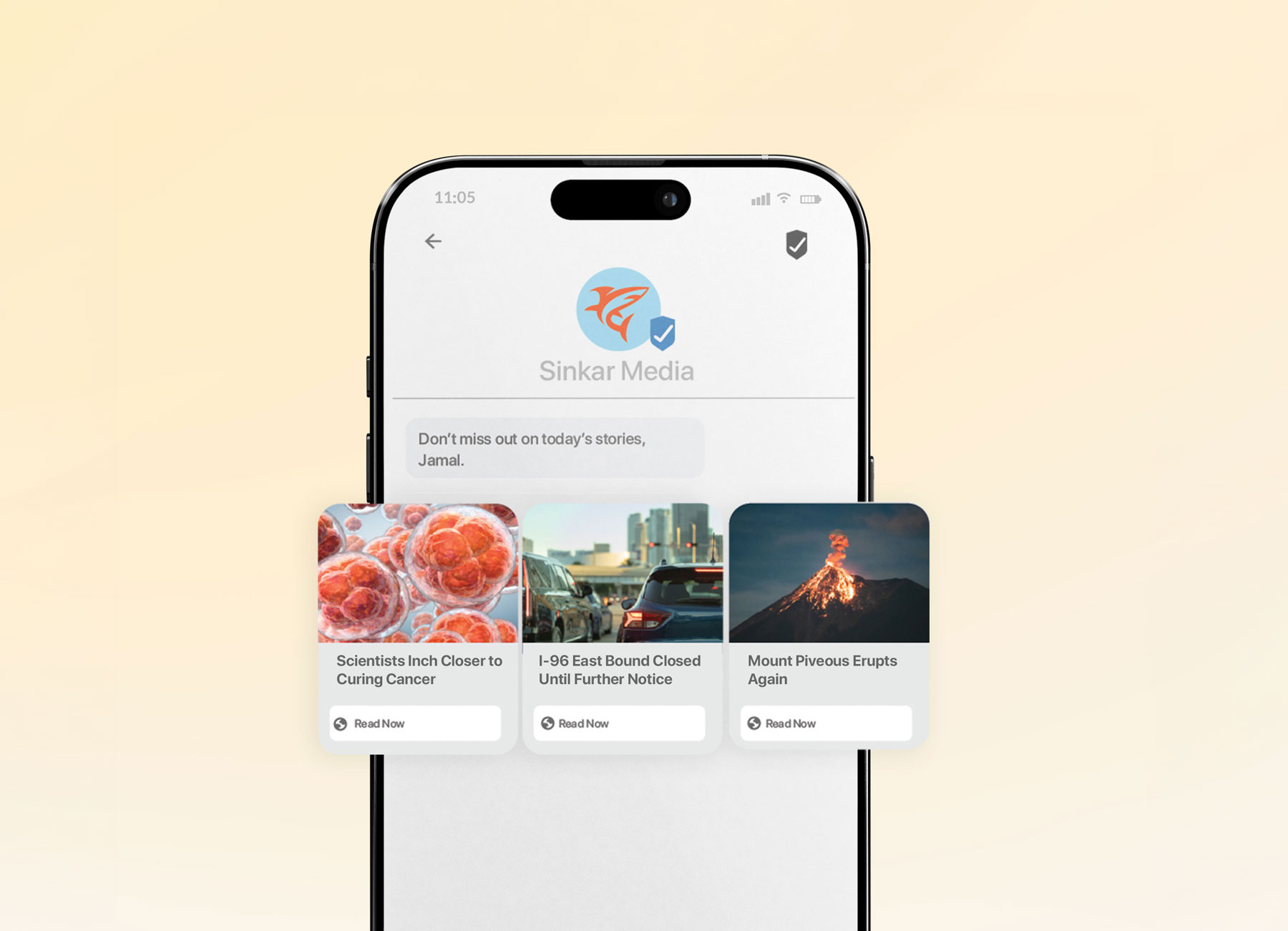
In a world of communication overload and marketing fatigue, Rich Communication Services (RCS) is opening the door to a new kind of messaging. Now, brands can appear in native messaging inboxes as verified senders and share rich visuals and interactive elements (while still relying on SMS fallback to reach audiences whose devices or carriers don’t yet support RCS).
In our RCS masterclass series, we’ve covered a lot about what makes RCS such a powerful option for organizations that want to boost engagement, and shared several use cases to help you visualize this protocol in action. In the third and final episode, we zoomed in on what teams will need to put in place before they can launch.
Missed the live webinar? No problem! Here are six key highlights from the third episode of our RCS masterclass:
-
Start the agent registration process now
If you haven’t yet registered your RCS Agent, you’ll want to begin this process immediately. Why? Because starting early will give you more options (and less stress) later.
“It takes eight to ten weeks to get approved,” TrueDialog CMO and CRO Amanda McGuckin Hager explains. “If you start the process now, you’ll have your registered agent. Then, you can either activate it or sit on it until you’re ready to launch RCS in your business.”
As Amanda noted, the approval doesn’t force you to launch immediately. Once your agent is registered, you can activate right away or hold it until your internal teams are ready. But by putting approval in motion, you can plan creative, line up use cases, and decide how RCS fits into your channel mix — rather than doing all of the work up front, then having to wait months for approval before you can launch.
-
“Agent strategy” is a different way of thinking, and it comes before campaign strategy
With RCS, you’re not simply “turning on a new message type.” You’re defining an identity and a purpose upfront, and that’s a mental shift for a lot of teams.
“Agent strategy starts at the beginning,” says product marketing expert Sara Haynes. “In fact, it’s almost before the beginning.”
In other words, before you consider what your first campaign should be, you need to decide what your first agent should represent.
(As a reminder, the term “agent” refers to your brand and declared use case. The more clearly you define that purpose, the smoother your setup and the clearer your customer experience will be.)
-
Remember that changes to your RCS Agent can mean resubmission
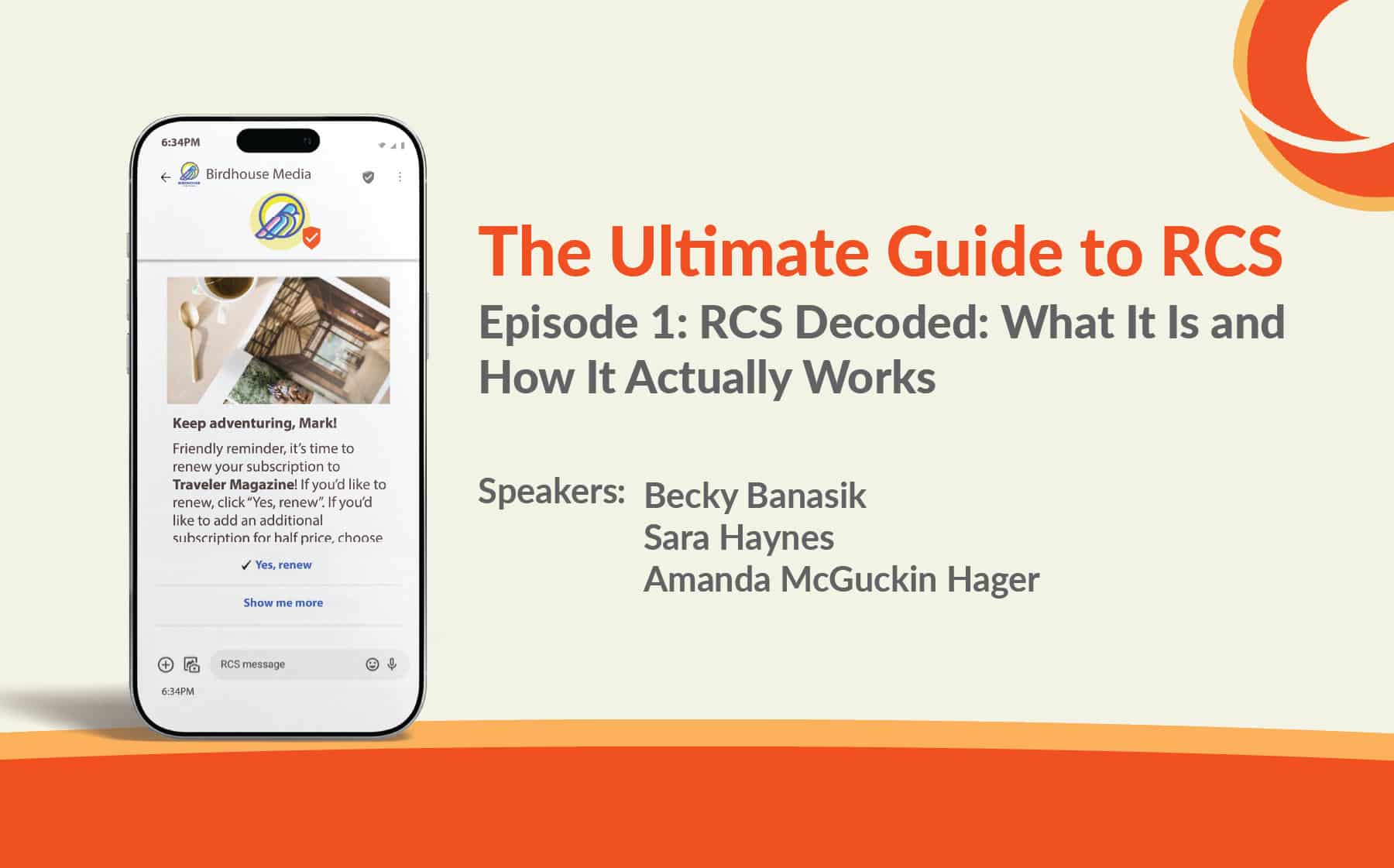
As we covered in the highlights from the first episode of our RCS masterclass, having an RCS Agent allows you to display your brand name, logo, and colors. But it’s important to note that if you ever decide to change certain elements, you will likely need to resubmit your agent for reapproval.
In other words, planning matters.
“Talk about how you want to split up into different agents and who’s responsible for what,” says TrueDialog VP of Customer Success, Becky Banasik. “Making changes to the use case, your logo, or your banner requires a resubmission. So knowing it ahead of time creates less work in the long run.”
Of course, this doesn’t mean you should freeze your branding forever. It just means it’s worth choosing a stable starting point (like a core brand logo and evergreen banner) and then using the message content itself for frequent promotions.
-
The approval process is strict to protect trust
While the second masterclass episode focused on practical applications and examples, the third repeatedly returned to the “why” behind the process: RCS is impactful largely because it’s verified — and verification only matters if the channel stays clean.
“One of the value propositions of RCS is the ability to send as a verified sender,“ Amanda says. “And to keep tight reins around that, there is a rather strict approval process.”
As a verified sender, your customers know they’ll receive only authentic messages from your brand. And in a world rife with spam, scams, and unwanted communications, the importance of this direct conduit can’t be overstated.
-
You’ll need a fallback number for universal reach
RCS adoption may be growing rapidly, but you still need to have a plan for recipients who can’t receive messages in this format. For this reason, your agent application must include an SMS fallback number. (i.e., An approved 10DLC or short code number.)
“RCS is dependent on the device, and it’s sometimes dependent on the carrier,” Amanda explains. “Having the fallback number ensures that your RCS message has the alternative option of plain text.”
In other words, you’ll want your fallback message to be simple and short (under 160 characters). Keep in mind that your RCS campaign might include multiple cards, media, and CTAs that won’t carry over, so creating a plain-text version that conveys the essentials helps ensure recipients who receive the message as an SMS won’t be confused.
-
Approval is carrier-by-carrier, but launch isn’t all-or-nothing
How do agent approvals work across carriers? Our team noted that the process is more dynamic than many brands might expect. With 10DLC and shortcode, you go through a single registration body. And since the carriers partner with that registration body, you only need to submit one application, and the resulting approval is valid across all of them.
But RCS is different because each carrier has its own process, and some move faster than others. That said, you can still move forward if you haven’t gotten all the approvals you’re seeking. For example, if T-Mobile hasn’t granted approval, recipients using that carrier would simply receive your SMS fallback until the approval process is complete.
That’s a big deal for planning, because it lets you launch RCS in phases rather than waiting several weeks or months for every carrier to give you the green light before you send a single RCS message. (This also reinforces why having SMS fallback is so critical to your success.)
Get all the details and insights from Episode 3
Episode 3 is the most tactical session in the series, with a step-by-step walkthrough of what it takes to submit and approve your first RCS agent, plus the strategic considerations that will help you save time (and avoid headaches) later.
And if you’re ready to get started, the team’s clearest advice is to begin the submission process early, plan your agent strategy up front, and partner with a provider that can guide you through the carrier-by-carrier approval journey.
Request a demo today to learn more about how TrueDialog can support you in launching and growing your RCS program.