
As brands look for new ways to stand out in increasingly crowded digital spaces, Rich Communication Services (RCS) is unlocking more engaging, trustworthy, and measurable messaging experiences than traditional communication options.
By helping organizations deliver a verified, branded messaging experience complete with high-resolution visuals, customizable buttons, and interactive features in audiences’ native messaging apps, RCS is changing the game. Meanwhile, SMS serves as a reliable fallback to ensure the widest possible reach.
To help you make sense of RCS, we assembled our team of experts to share real-world examples and spark ideas for how your organization can leverage RCS across marketing, sales, and customer service.
Here are a few highlights from the second episode of our RCS masterclass:
1. RCS belongs in growth plans for B2C and B2B
One of the biggest takeaways from this episode is that RCS isn’t a “nice-to-have” channel confined to a single part of the funnel or a single business model. It dynamically supports awareness, conversion, and long-term retention. And whether your business is B2C, B2B, or a combination of both, RCS provides crucial benefits.
“Consumer apps and messaging have become so much a part of our lives, and everybody’s expecting something similar from B2B messaging,” says TrueDialog VP of Customer Success, Becky Banasik. “People are looking for that same kind of imaging and interactivity, and they’re expecting us to make these things overlap a lot more than we have been doing previously.”
The bottom line is that if you want your messages to earn attention (and drive action), they need to feel modern, useful, and intentional. RCS is a user-friendly way to transcend the generic and deliver the experiences your audience desires most.
2. The “app-like experience without an app” is where RCS shines
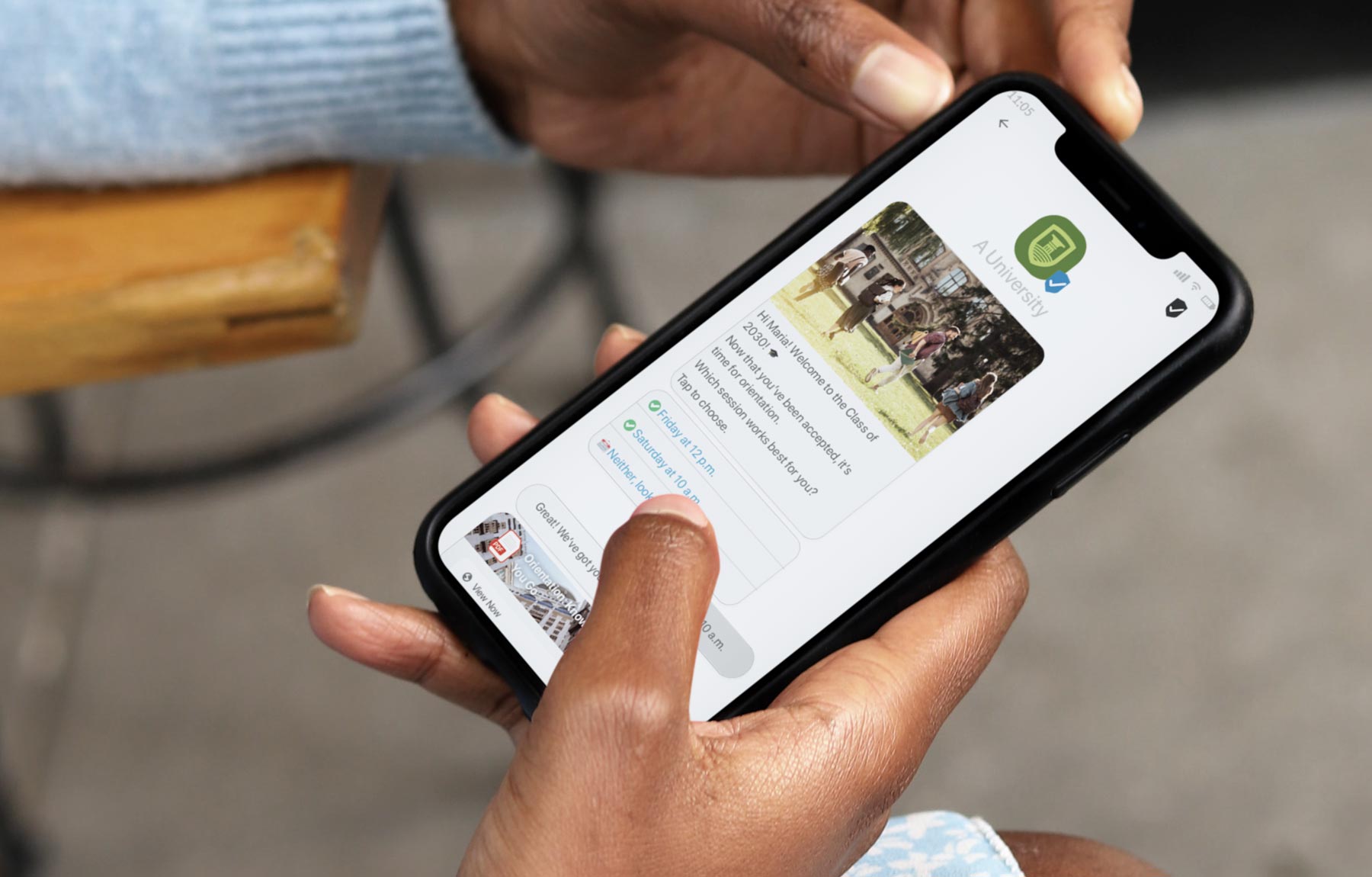
RCS can deliver app-like experiences directly within the native messaging inbox, without requiring recipients to download, update, or reopen a separate app.
This theme showed up across multiple use cases shared by our team, including college and university communications, event logistics, ticketing, sports “know before you go” details, and simple reminders.
3. Buttons and CTAs make messages more helpful (and more measurable)
One of the best benefits of RCS is its interactivity, which not only offers your audience clear next steps but also provides you with more in-depth performance insights.
“All kinds of companies wonder if their CTAs will work,” explains product marketing expert Sara Haynes. “And with RCS, you have the ability to customize that language. It can vary dramatically, depending on what you need it to say. You can then test the language to see how to get the kind of response that you need to run your business.”
From appointment reminders to demo follow-ups to higher-ed deadlines, CTAs make it easier for people to take the right action right now. And on the other end of the line, your team gets critical insight into what’s working and what needs to be optimized.
4. Rich media sparks creativity and drives precision
The team explored how carousels, images, and multiple CTAs can make experiences feel more engaging and aligned with what audiences actually want.
“You can showcase up to 10 images, and every one of those can have multiple CTAs,” says Sara. “RCS helps you promote products really precisely, rather than just with generic pictures.”
This idea applies far beyond retail. For example, a travel company might segment offers by geography and season. Or, a B2B software company might use video cards to promote new product features and nudge free users toward paid upgrades.
5. RCS strengthens opt-ins and list growth by being genuinely useful
Another subtle but powerful theme is that the more value your messages provide, the more likely people are to stay opted in and even refer others.
These benefits make RCS a sustainable upgrade to your messaging strategies, helping you deepen engagement and scale your reach over time.
(Psst! If you haven’t already, be sure to check out the takeaways from episode 1 of our RCS masterclass.)
6. Trust is the payoff
Trust is foundational to your success, especially amid rising rates of text-based spam. Fortunately, RCS helps organizations earn audience confidence with verified brand profiles. The blue checkmark and verified sender status serve as a hard-working defense against spam, impersonation, and “is this real?” hesitation.
“It all comes down to trust,” said Sara. “I don’t think there’s anyone on this call who hasn’t gotten fake emails and texts. So when it comes to being able to send a legitimate alert or notification with that trust, nothing can replace that.”
As RCS adoption grows, the brands that provide those trust signals early will be better positioned to earn attention and retain their audience. This is especially true for high-stakes messages like one-time passwords, delivery alerts, billing notifications, and account confirmations.
Get all the details and insights from Episode 2
There’s more where these came from! Be sure to check out the full episode for more examples and discover how to fit RCS into your funnel, channel mix, and creative strategy.