
If you’ve ever been a jet-lagged traveler, dragging your luggage through a hotel lobby after a grueling journey, you already know how much a positive hospitality experience can impact your trip. Sometimes all it takes is a warm greeting and an easy check-in to totally transform your mood (and your impression of a hotel brand).
Travel is often inconvenient and exhausting, yet hotels have countless opportunities to delight guests, even before they arrive — and an SMS program can help streamline those positive experiences. From planning and booking a stay to checking in and out, and everything in between, text messaging is an excellent way to make sure your guests feel informed, supported, and valued.
In this guide, we’re diving into the fundamentals of SMS marketing for hotels, including what makes it so powerful, compliance considerations, tips, use cases, and ideas to help you build an ultra-engaging SMS program.
Why SMS Marketing Works for Hotels
Today’s hotel guests want (and expect) fast, convenient communication. Whether your customers are traveling for business or pleasure, they likely have a lot on their plates, and removing friction from their experiences is a surefire way to strengthen brand sentiment.
SMS messaging makes it easy to directly connect with your guests and effortlessly guide them through activities that might otherwise cause frustration (such as preparing for check-in on a busy travel day) or clue them in to special deals (such as discounted stays or limited-time upgrade offers). Whether you want to boost bookings, foster brand loyalty, or drive up satisfaction scores, a strategically timed SMS message can help.
Best of all, with hotel text messaging, you can reach your audience where they’re already spending much of their time: on their phones. And while emails and push notifications are easily buried or ignored, text messaging boasts impressively high open rates. (Plus, most people read their messages within a few minutes of delivery.)
Hotel Text Messaging Compliance Basics
Before we dive into examples and best practices, it’s important to cover a few compliance considerations. While it’s crucial you carefully review the rules laid out by the Telephone Consumer Protection Act (TCPA) as well as the Cellular Telecommunications Industry Association (CTIA) guidelines (and any state-specific laws), here are a few core requirements that span multiple regulations:
-
Opt-in and consent
Before you text a contact, make sure you have their explicit written consent. In other words, they must knowingly agree to receive text messages from your brand with a clear, recorded affirmative. (For example: Checking a box on a form or texting a keyword to your number.)
Keep in mind that assuming a contact is okay with receiving texts (because they provided their phone number when booking) or pre-checking boxes on consent forms are not considered valid forms of consent.
-
Transparency and disclosures
In an effort to curb spam, regulators often require brands to provide clear disclosures when someone consents to receiving text messages, which businesses usually include in the first message they send. It’s always a good idea to include your brand name, how many messages someone can expect to receive, the type of content you’ll be sending, and reminders about message and data rates.
For example:
Rose Hotel here! You’re subscribed to marketing SMS & alerts. 2 – 4 msgs/month. Reply HELP for support or STOP to cancel. Msg & data rates may apply.
-
Quiet hours
Regulations prohibit brands from sending promotional messages during quiet hours (generally 8 p.m. to 9 a.m., though some states have additional timing restrictions). That said, if necessary, organizations can send transactional messages during quiet hours (such as opt-in auto-replies or time-sensitive information about a booking).
-
Opt-outs
Brands are also required to make it easy for contacts to opt out of SMS messages (and to stop texting them immediately if they do). Often, businesses allow recipients to unsubscribe by texting “STOP” or “CANCEL.” It’s also a good idea to respond to these messages with a confirmation text and quickly remove the contact from all SMS marketing lists.
Best Practices for Successful Hotel SMS Marketing
In addition to compliance, here are a few expert tips to boost the impact (and ROI) of your SMS marketing efforts.
Keep Messages Concise and Conversational
Like most people, your guests live busy lives, and it’s rare to capture more than a few seconds of their undivided attention. By keeping your messages clear, friendly, and easy to consume, you’ll be more likely to hold your audience’s focus and inspire them to take immediate action.
Monitor and Optimize
Be sure to set clear goals for each SMS campaign, then choose relevant KPIs to measure performance. For example, if your goal is to increase bookings, you might monitor direct booking conversions. Or if your goal is to drive interest in your loyalty program, you might include a trackable link to the program sign-up page and measure clicks.
Additionally, always keep a close eye on your opt-out rate. A surge in this number could indicate that you’re bombarding your audience with too many messages, or that your texts aren’t relevant to your audience.
Use Automations to Streamline Communications
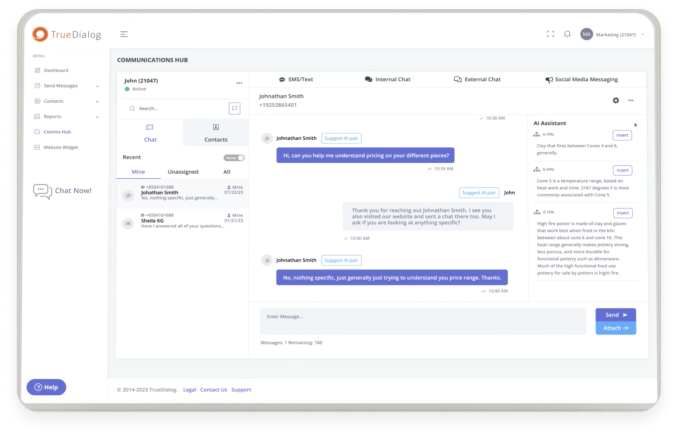
The right SMS marketing platform makes it easy to reach thousands of contacts with personalized messages in minutes or connect directly with guests one-on-one. By integrating your enterprise SMS solution with your CRM or marketing automation software, you can create seamless workflows and set up automations to trigger messages at just the right time.
For example, you might schedule messages containing check-in details to arrive just a few hours before a guest’s arrival, or trigger check-out reminders to send the evening before a guest plans to leave. Or you might send a mass SMS campaign to hundreds of recent guests to promote a special offer.
To make this process even easier, TrueDialog natively integrates with leading CRMs and marketing automation tools — including Salesforce, HubSpot, Marketo, and more. This way, hotel marketing and communications teams can build workflows without assistance from developers.
7 SMS Marketing Ideas for Hotels That Drive Direct Bookings
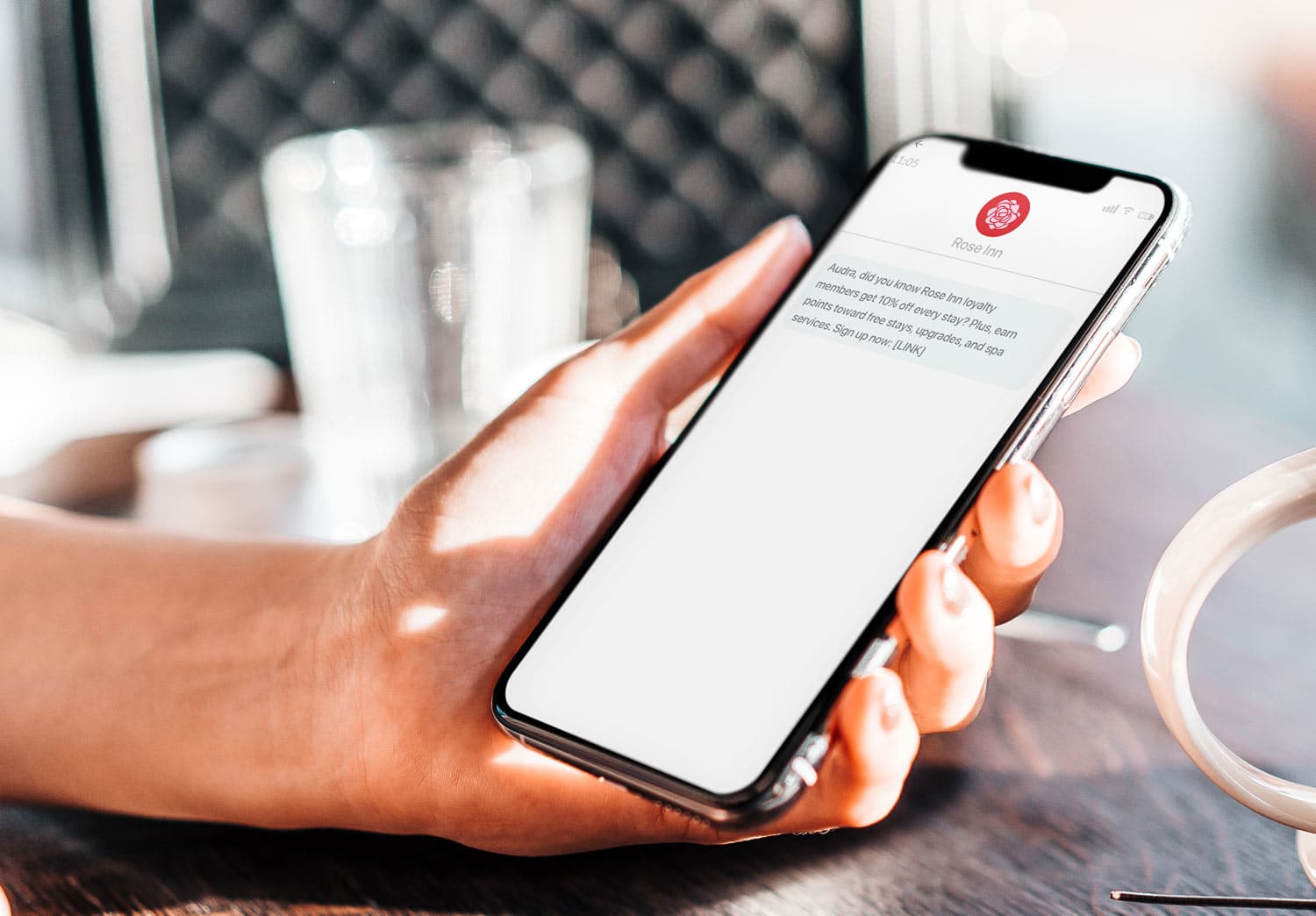
If you’re new to text messaging as a marketing or transactional communication channel, it may be challenging to visualize it in action.
Here are a few ways you can incorporate SMS for hospitality into your marketing and communication efforts:
-
-
Boost loyalty program participation
Introduce guests to your hotel’s loyalty program and provide a direct link so they can easily sign up and begin enjoying its benefits.
Example:
Audra, did you know Rose Inn loyalty members get 10% off every stay? Plus, earn points toward free stays, upgrades, and spa services. Sign up now: [LINK] -
Share special offers to increase bookings during slow seasons
Promote flash sales and limited-time offers via SMS to help fill rooms during shoulder seasons or mid-week booking slumps.
Example:
Did someone say midweek escape? Save 20% on Sunday – Wednesday stays through the end of March. Book now: [LINK] -
Re-engage past guests with personalized offers to return
It’s often easier to earn repeat business from existing customers than to acquire new customers, and a great way to engage previous guests is to tailor offers to their interests and behaviors. For example, if someone has previously booked a stay for their wedding anniversary, they may also be interested in a couple’s package.
Example:
Hi Nidhi! Valentine’s Day is just around the corner! Book a romantic weekend getaway for 10% off with code LOVE26
-
Leverage local events and demand spikes
From concerts and conferences to weekend festivals and sporting events, local happenings often create massive demand for hotels. An expertly timed SMS message can help you capitalize on these tourism spikes.
Example:
Alex, heading to Austin City Limits in October? Stay 10 minutes from the festivities and beat surge pricing. Book here [LINK]!
-
Drive interest around referral campaigns
Transform your satisfied guests into brand advocates. Offering perks and discounts can go a long way toward encouraging customers to refer friends and family.
Example:
Hi Guillermo! Get a friend 15% off their first stay and earn a $100 credit toward your next stay. Check out our referral program now: [LINK]
-
Promote gift cards and special packages around holidays
Gift certificates towards hotel stays can make great gifts and introduce new guests to your property. Leverage hotel mobile marketing to drive more traffic to your site amid the busy holiday shopping season.
Example:
Hi Lo! Looking for last-minute gift ideas? Shop spa gift cards, specialty products, and holiday package deals on the Rose Inn’s online store: [LINK]
-
Enhance guest support and concierge services
While mid-stay transactional texts don’t necessarily qualify as marketing messages, they still have a major impact on brand perception. In fact, 58% of customers said helpful customer service was a top motivating factor when selecting a hotel, according to data from Qualtrics.
Using SMS makes it easy for guests to communicate their needs and get answers to questions throughout their time on your property.
Example:
Good morning, Flora! It’s Max at the Rose Inn concierge desk. How is your stay so far? Any way we can make it more comfortable?|
-
Build an SMS Program Around the Guest Journey
Creating a thoughtful strategy is crucial to driving success with SMS marketing for hotels, and one of the best ways to get started is to align your program with the guest’s journey. Consider each major touchpoint and how a tactfully timed message can strengthen the customer experience.
Here’s a breakdown of how small boutiques and large chains alike can use hotel SMS marketing and transactional texts to keep audiences engaged at every stage of the guest journey, plus example templates to help inspire your creativity:
Pre-stay
The days leading up to a guest’s stay are the perfect time to set expectations, reduce uncertainty, and introduce upgrades and optional add-ons that might improve their experience. (For example, you might share information about your on-site spa so your guest can book a service during their stay.) Additionally, explaining the check-in process in advance can help reduce call volume and front-desk wait times.
Examples:
Hi [NAME]! We can’t wait to host you at [BRAND] next week! Interested in early check-in and upgrade options? Reply YES, and we’ll send details your way.
Hi [NAME]! Looking forward to having you stay with us at [BRAND]. Our spa is offering 15% off for new guests. Would you like to see a service menu?
Arrival and check-in
Arrival can be a high-stress experience for travelers — especially if they’re staying with you for the first time and not familiar with your property. Fortunately, leveraging hospitality text messaging during this phase can help reduce friction, provide reassurance, and demonstrate the exceptional customer service experience you want every guest to associate with your brand. (For example, you might share parking and check-in instructions, or send automatic alerts when their room is ready.)
Examples:
Welcome to [BRAND], [NAME]! Your room is ready. Head to room 715, and access your mobile key card here: [LINK]
Hi [NAME]! [BRAND] here. Feel free to unload your luggage at the marked zone in front, then park anywhere on floors 2 – 5 in our garage.
During stay
SMS is an extremely powerful channel for connecting with your guests during their stay and for opening lines of communication should they have any questions or concerns. Initiating a 2-way SMS conversation makes it easy for guests to request assistance or amenities and discover on-site experiences without calling the front desk. It can also help make sure hotel staff are immediately aware of guest issues that may tarnish the guest experience if left unaddressed. (Such as AC issues or glitchy Wi-Fi connections.)
Examples:
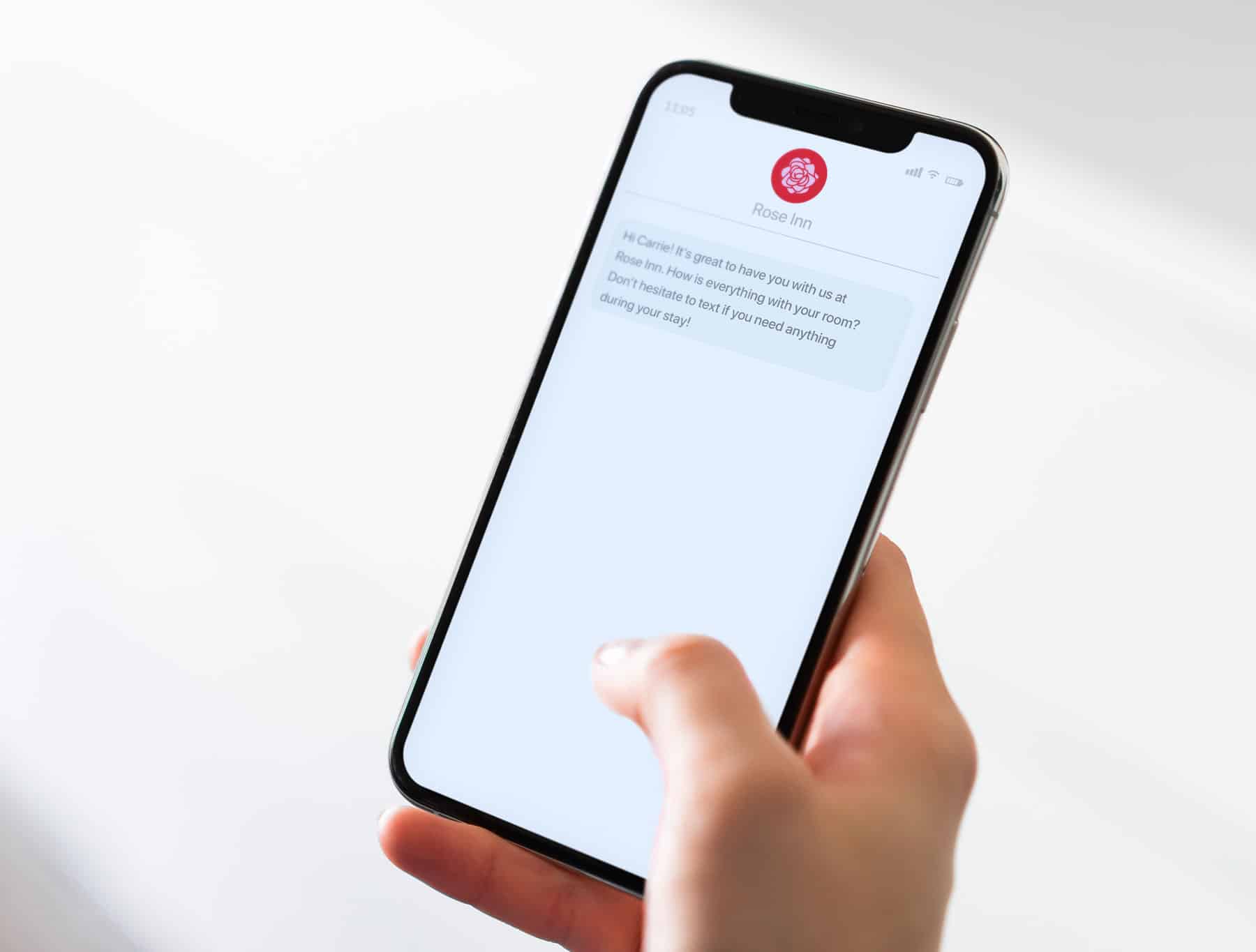
Hi [NAME]! It’s great to have you with us at [BRAND]. How is everything with your room? Don’t hesitate to text if you need anything during your stay!
Hi [NAME]! Happy hour starts at 3PM! Head to the rooftop to check out our daily drink specials and half-off appetizers.
Checkout
Text messaging can also ensure a smoother departure, leaving your guests with one final positive impression before they hit the road. This is a great time to send reminders about checkout processes, offers for delayed checkout and luggage storage, or details on arranging transportation.
Examples:
Hi [NAME]! Reminder: You are scheduled for checkout at 10AM tomorrow. Need a little more time? Reply LATE to push checkout to 11AM.
Hi [NAME]! Need airport transportation? Our shuttle service is available from 8AM to 8PM. Just let us know if you’d like us to schedule your ride!
Post-stay
Even after your guests leave your property, you can still engage them via SMS to build loyalty by sharing exclusive deals and personalized offers. This is also a prime time to market loyalty programs and gather feedback to help improve future guest experiences.
Examples:
Thanks for staying with us, [NAME]! We’d love your feedback. On a scale of 1 to 5 (with 5 being excellent), how would you rate your experience?
Hi [NAME]! Planning a spring break getaway? Get 15% off your stay at any of our properties through May 2026 with code RETURN15. Book here: [LINK]
FAQs
-
What is SMS marketing for hotels, and how is it different from hotel text messaging for guest support?
Text marketing for hotels refers to promotional messages sent to prompt a purchase or future stay. For example, these messages often encourage guests to book a room, upgrade, join a loyalty program, or take advantage of a special offer.
Guest support messages, on the other hand, are sent to improve the guest experience. These messages often streamline check-in, connect guests with on-site services, or address guest concerns.
-
What hotel SMS messages require guest consent, and which ones are transactional?
All SMS messages require consent, regardless of whether they’re sent for marketing or transactional purposes.
While transactional messages tied to existing reservations are not typically subject to the same level of consent as promotional messages, we recommend obtaining express written consent before contacting guests via SMS, regardless of message intent.
- How can SMS marketing for hotels help drive more direct bookings?SMS enables hotels to reach contacts directly and near-instantly with personalized offers and direct-booking incentives. Plus, since text messages have higher open rates than email and are often read within minutes of receipt, they’re highly effective for generating excitement and urgency around time-sensitive offers. Additionally, the conversational nature of SMS helps brands build authentic relationships with contacts, giving them another reason to book directly (rather than through third-party travel sites).